I didn’t review this directly after watching it because I wanted to do something interesting with my review. I wanted to watch Spielberg’s other alien inspired films as well since each came out during a different era of his career, and American culture. I’m not going to review his other films in depth, but mention them to get a greater understanding of where Disclosure Day stands.
In 1977, Spielberg directed and released Close Encounters of the Third Kind. In the film, government entities pushed a false narrative about encounters with U.F.O.s to keep people away from the site where they wanted to make official contact. Two characters who came into contact with the alien craft find themselves on the hunt for the location both of them are seeing in their minds. The aliens featured in this film were not dangerous. In fact, they returned abductees unharmed. The light and sound used in the film gave us one of the most memorable first contact scenes in cinema. It was released over a decade after Star Trek started airing on television, so this positive view of aliens arriving on Earth isn’t a new one.
In 1982, E.T. The Extra Terrestrial showed a strong connection between a boy from a broken family and an alien who was left behind on Earth by his own family. The whimsical nature of the story, memorable performances by Drew Barrymore and Henry Thomas, and practical effects of bringing E.T. to life showed how magical Spielberg’s direction of a children’s film could be. It also included government men showing up at the home so they could understand the alien in question. The underlying tropes about family win out in the end as the connection between E.T. and Elliot remains unbroken even as E.T. leaves. Those of us who were raised in the 1980s know that latchkey parenting was very real, so having a movie where the mother finds new connection with her kids through this alien was a large part of the emotional thread that runs through the film.
In 2005, Spielberg directed a remake of War of the Worlds in a society that was very much changed since 1982. We had internet. Cell phones. The post 9/11 understanding that there would always be someone who wanted to do us harm. In this film, a dead beat father takes his kids for the weekend as his ex-wife goes to visit her in-laws in Boston. Aliens, who had apparently been among us for a quite a while and planted their ships below our very feet, make their presence known and this father must find a way to get his kids to their mother without dying in the process. It’s a reporter who tells Tom Cruise about these aliens and gives the viewer context on this journey. This negative view of aliens that sees them as the enemy, the villain that wishes to annihilate us, is a far cry from the two first alien inspired films that were far more whimsical in nature. A change that went with the era we were living in.
Now, in 2026, we live in a society that has seen social media play a pivotal role both positively and negatively in our lives. It allows us to stay in touch, but also allows for the spread of fake news and is detrimental to having good self esteem for those who chronically stay on the apps in question. Any move we make online gives advertisers the ability to bombard us with anything and everything we might want or need. The internet allows us to stay in a constant news cycle where we are fed one horrible, terrifying story after another. War. Shootings. Climate change. Political division. Fear. Fear. More fear before we are returned to the football game. How the times have changed.
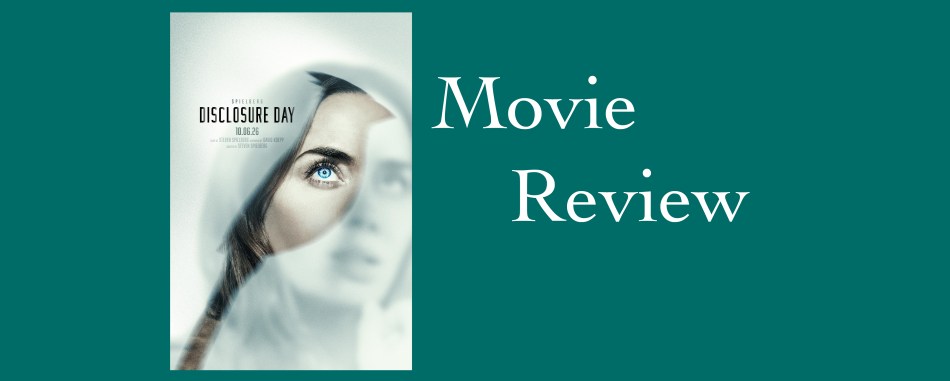
In Disclosure Day, the film follows Kansas City weatherwoman Margaret (Emily Blunt) as she suddenly finds she can speak multiple languages and know what someone is going through just by looking at them. A trigger given to her by a cardinal of all things. One little red bird shows up and a switch was turned on. It also follows scientist Daniel (Josh O’Connor) and his girlfriend Jane (Eve Hewson) who are on the run from a large corporation that Daniel used to work at. He stole video evidence of proof of alien life and how humans experimented on them and killed them in hopes of giving it to the media for everyone to see. Of course, Margaret and Daniel realize they must find each other but they don’t know why until the climax of the film.
The first two thirds of the film are one chase sequence after another during which both Margaret and Daniel escape the men chasing them. The third act of the film sees these two characters finally find out that aliens had given them everything they needed to accomplish the task at hand. It just had to be turned on at the proper moment. Margaret and Daniel return to Margaret’s workplace in Kansas City so that they can show all of the videos stolen to everyone. The sequence during which these videos are shared is some great filmmaking. While the first part of the film is just okay, this final act is just about perfect.
Disclosure Day is like Close Encounters in that two characters meet and circumvent the authority of powerful people in search of the truth. It’s like E.T. because the connection between Margaret and Daniel is strong and unfaltering as is their connection to the aliens. And it is like War of the Worlds in that the aliens have been here all this time. We just didn’t know it. Only in Disclosure Day, the aliens aren’t here to harm us. And both Disclosure Day and War of the Worlds are essentially extended chase scenes.
Performance wise, everyone really gives it their all. It is Emily Blunt who really stands out. Her character is endearing. Strong yet vulnerable, her emotions palpable. Josh O’Connor is great too, but it was the actress playing his girlfriend that outshone him a bit. Eve Hewson has one of the strongest scenes in the earlier part of the film during which another character is able to access her mind through an alien artifact. In her struggle to keep control, Hewson’s gives such a convincing portrayal of that struggle that it adds much needed drama to the first half of the film.
What I find most striking, however, is the final line of the film. Emily Blunt’s Margaret looks at the camera and says, “Listen.” Fade to black. Roll credits. End scene. Many speculate that John Williams’ score during the credits somehow gives us a code of some kind to decipher since that is part of how Margaret and Daniel communicated – with a code of clicks and sounds that Daniel could decipher through mathematics. I believe differently. I believe that the final word of the film means exactly that. To listen. To each other. To what goes on around us. To what is said between the lines. To what the truth really is. To be critical in our thinking when we are fed so much information all at once. Spielberg is talking to us again through film. If we would only listen.
This film won’t be for everyone. It isn’t perfect, but the final act is such a perfectly fine piece of filmmaking that it makes up for what the first part of the film lacks. And having recently watched the three other films I mentioned today, I can say that each of those films takes small breaks in the action just like Disclosure Day does. It gives the viewer a breather before the chase continues. It is something Spielberg does well. He did it in Jaws and in Jurassic Park. A heartfelt scene with Laura Dern having a heart to heart over ice cream with Richard Attenborough. Three men sitting on a boat at night reminiscing about their scars as the ocean waves rock their boat. Disclosure Day does this too, and I think with time, people will come to love this film for what it is.
4 out of 5 stars.
Discover more from Becky Tyler Art and Photography
Subscribe to get the latest posts sent to your email.




I didn’t review this directly after watching it because I wanted to do something interesting with my review. I wanted to watch Spielberg’s other alien inspired films as well since each came out during a different era of his career, and American culture. I’m not going to review his other films in depth, but mention them to get a greater understanding of where Disclosure Day stands.
In 1977, Spielberg directed and released Close Encounters of the Third Kind. In the film, government entities pushed a false narrative about encounters with U.F.O.s to keep people away from the site where they wanted to make official contact. Two characters who came into contact with the alien craft find themselves on the hunt for the location both of them are seeing in their minds. The aliens featured in this film were not dangerous. In fact, they returned abductees unharmed. The light and sound used in the film gave us one of the most memorable first contact scenes in cinema. It was released over a decade after Star Trek started airing on television, so this positive view of aliens arriving on Earth isn’t a new one.
In 1982, E.T. The Extra Terrestrial showed a strong connection between a boy from a broken family and an alien who was left behind on Earth by his own family. The whimsical nature of the story, memorable performances by Drew Barrymore and Henry Thomas, and practical effects of bringing E.T. to life showed how magical Spielberg’s direction of a children’s film could be. It also included government men showing up at the home so they could understand the alien in question. The underlying tropes about family win out in the end as the connection between E.T. and Elliot remains unbroken even as E.T. leaves. Those of us who were raised in the 1980s know that latchkey parenting was very real, so having a movie where the mother finds new connection with her kids through this alien was a large part of the emotional thread that runs through the film.
In 2005, Spielberg directed a remake of War of the Worlds in a society that was very much changed since 1982. We had internet. Cell phones. The post 9/11 understanding that there would always be someone who wanted to do us harm. In this film, a dead beat father takes his kids for the weekend as his ex-wife goes to visit her in-laws in Boston. Aliens, who had apparently been among us for a quite a while and planted their ships below our very feet, make their presence known and this father must find a way to get his kids to their mother without dying in the process. It’s a reporter who tells Tom Cruise about these aliens and gives the viewer context on this journey. This negative view of aliens that sees them as the enemy, the villain that wishes to annihilate us, is a far cry from the two first alien inspired films that were far more whimsical in nature. A change that went with the era we were living in.
Now, in 2026, we live in a society that has seen social media play a pivotal role both positively and negatively in our lives. It allows us to stay in touch, but also allows for the spread of fake news and is detrimental to having good self esteem for those who chronically stay on the apps in question. Any move we make online gives advertisers the ability to bombard us with anything and everything we might want or need. The internet allows us to stay in a constant news cycle where we are fed one horrible, terrifying story after another. War. Shootings. Climate change. Political division. Fear. Fear. More fear before we are returned to the football game. How the times have changed.
In Disclosure Day, the film follows Kansas City weatherwoman Margaret (Emily Blunt) as she suddenly finds she can speak multiple languages and know what someone is going through just by looking at them. A trigger given to her by a cardinal of all things. One little red bird shows up and a switch was turned on. It also follows scientist Daniel (Josh O’Connor) and his girlfriend Jane (Eve Hewson) who are on the run from a large corporation that Daniel used to work at. He stole video evidence of proof of alien life and how humans experimented on them and killed them in hopes of giving it to the media for everyone to see. Of course, Margaret and Daniel realize they must find each other but they don’t know why until the climax of the film.
The first two thirds of the film are one chase sequence after another during which both Margaret and Daniel escape the men chasing them. The third act of the film sees these two characters finally find out that aliens had given them everything they needed to accomplish the task at hand. It just had to be turned on at the proper moment. Margaret and Daniel return to Margaret’s workplace in Kansas City so that they can show all of the videos stolen to everyone. The sequence during which these videos are shared is some great filmmaking. While the first part of the film is just okay, this final act is just about perfect.
Disclosure Day is like Close Encounters in that two characters meet and circumvent the authority of powerful people in search of the truth. It’s like E.T. because the connection between Margaret and Daniel is strong and unfaltering as is their connection to the aliens. And it is like War of the Worlds in that the aliens have been here all this time. We just didn’t know it. Only in Disclosure Day, the aliens aren’t here to harm us. And both Disclosure Day and War of the Worlds are essentially extended chase scenes.
Performance wise, everyone really gives it their all. It is Emily Blunt who really stands out. Her character is endearing. Strong yet vulnerable, her emotions palpable. Josh O’Connor is great too, but it was the actress playing his girlfriend that outshone him a bit. Eve Hewson has one of the strongest scenes in the earlier part of the film during which another character is able to access her mind through an alien artifact. In her struggle to keep control, Hewson’s gives such a convincing portrayal of that struggle that it adds much needed drama to the first half of the film.
What I find most striking, however, is the final line of the film. Emily Blunt’s Margaret looks at the camera and says, “Listen.” Fade to black. Roll credits. End scene. Many speculate that John Williams’ score during the credits somehow gives us a code of some kind to decipher since that is part of how Margaret and Daniel communicated – with a code of clicks and sounds that Daniel could decipher through mathematics. I believe differently. I believe that the final word of the film means exactly that. To listen. To each other. To what goes on around us. To what is said between the lines. To what the truth really is. To be critical in our thinking when we are fed so much information all at once. Spielberg is talking to us again through film. If we would only listen.
This film won’t be for everyone. It isn’t perfect, but the final act is such a perfectly fine piece of filmmaking that it makes up for what the first part of the film lacks. And having recently watched the three other films I mentioned today, I can say that each of those films takes small breaks in the action just like Disclosure Day does. It gives the viewer a breather before the chase continues. It is something Spielberg does well. He did it in Jaws and in Jurassic Park. A heartfelt scene with Laura Dern having a heart to heart over ice cream with Richard Attenborough. Three men sitting on a boat at night reminiscing about their scars as the ocean waves rock their boat. Disclosure Day does this too, and I think with time, people will come to love this film for what it is.
4 out of 5 stars.
Discover more from Becky Tyler Art and Photography
Subscribe to get the latest posts sent to your email.
Share this: