Chapter 34
Horror in Victorian Literature Part 15
The final foray into literature and film inspired by the Victorian Era in this blog series is Virginia Feito’s deliciously unhinged Victorian Psycho. I know we’re two weeks out of Spooky Season and it’s nearly Thanksgiving, but the film adaptation of the book was just released. On Friday the 13th, no less. What follows is a comparison of the book and the film adaptation and how both use yellow.
If you haven’t had the chance to read Victorian Psycho, the story follows Winifred Notty as she arrives at Ensor House to be the governess of two children. The book leads up to Christmas as Winifred, already suffering from a darkness she talks about a lot, struggles to maintain her position and her sanity among snobby rich folk. In a surprisingly dark, satirically funny turn of events, she kills a baby and replaces it with one she kidnaps and the parents – friends of the family who own the house – don’t even notice. She licks a maid she develops a crush on and kills her when the maid freaks out when Winifred licks her face. Winifred also kills a footman she mistook for a painting in the dead of night. And that’s just the beginning of the blood bath that ensues on Christmas when the house if filled with family and friends.
Author Victoria Feito uses the color yellow in multitudes throughout her book. Descriptions of a yellow-eyed tooth glinting in the flicker light of a candelabra and leaves strewn on the ground in colors of bile and blood are peppered throughout the book giving it the horrific vibrancy that gothic Victorian horror is known for. One use of the color is in reference to the daughter Drusilla who Winifred imagines the family locking her up in a yellow room which will cause her to go mad and “bleed into her childhood clothing” as she grows up. This is in reference to a treatment common in the Victorian era where women were locked in yellow rooms to help their depression. The remark being included here really sets the book in the Victorian Era, not that it wasn’t already. You can read more on this treatment here as I already talked about it in length.
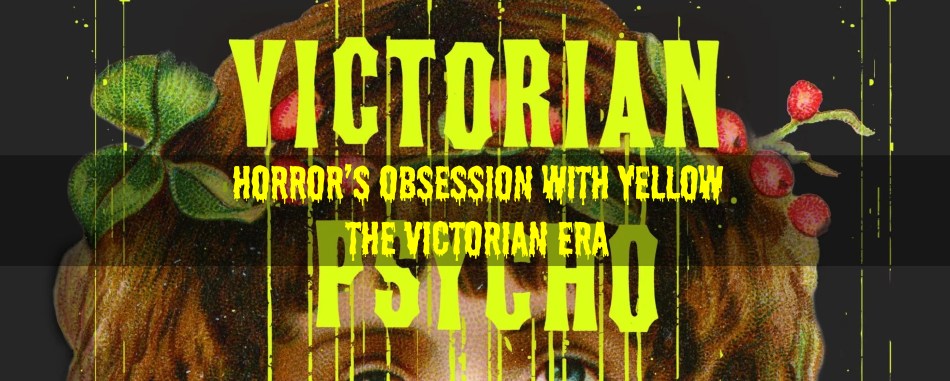
The book design used yellow in such a way that the text was dripping with infection. With the descent into feminine madness and rage that happened when women were mistreated in the Victorian Era. It shows the innocent painting of a girl behind this text that appears to drip with moral decay associated with patriarchal trauma.
The film pulls heavily from the descriptions in the book, using an old house as the setting that is filled with dark green silk wallpapers and tapestries that change as Winifred descends further into her own madness. The tapestry in question features a boar whose eyes burn yellow when Winifred makes eye contact with it. There are gilded frames and candelabras that cast long shadows on the proceedings. The film perfects the visual nature of the book. A bloody, gothic feast for the eyes and the imagination.
One of my favorite descriptions is the dress that Winifred wears on Christmas Eve. The author describes the Scheels green dress as “dressed in death from head to toe.” During the 1800s, Scheels green and Paris green dyes contained arsenic so they were poisonous to the wearer. In that way, the color became a symbol of death and illness. The film takes this and rolls with it giving Winifred a Victorian era green dress that looks as ill as she is in the head.
Maika Monroe brings to life Winifred Notty in such a way that even as she begins her killing spree, you feel for her. You understand her plight even as you know she is not at all right in the head. Monroe puts the patriarchal trauma that women experienced during the Victorian Era into each off kilter movement and pained facial expression. Her performance carries the film as she watches the characters sleep from the shadow of night and intentionally scares the son and heir to the family fortune. Not gonna lie. The kid deserves. He is as insufferable as they come.
Ruth Wilson brings to life Mrs. Pounds, the wife of the family patriarch. Book Mrs. Pounds hates Winifred from the moment she sets foot in the house and dismisses her from her post, but allows her to stay on through Christmas. Movie Mrs. Pounds doesn’t quite hate Winifred as much in the beginning, but by the end she believes Winifred is after Mr. Pounds after seeing Winifred walking out of his bedchamber in the middle of the night. During the finale of the film, she wears a golden dress that shows the moral decay of the family and the fear she feels as Winifred goes on her killing spree with a shotgun.
Jason Isaacs is Mr. Pounds, a man who believes he can tell who a person is by measuring their skull. People high on the social hierarchy used phrenology and craniometry to categorize human behavior and intelligence. The irony here is that Mr. Pounds couldn’t see what was right in front of him while he judged others’ intelligence by the shape of their skull. That Winifred was his daughter from an affair with a maid nor does he see coming what his other daughter, Drusilla, is willing to do during that fateful massacre at the end of the story. I won’t ruin it for you, but it drips with revenge on the patriarchy since Mr. Pounds treated Drusilla as if she wasn’t worthy of inheriting anything because she was a girl.
My only complaint with this film is that it does away with the Christmas time setting and replaces it with Andrew’s (the son and heir) birthday. In the book, Winifred not only kills the family but also takes an axe to the friends who stayed with them for the holiday, but those friends are not present for the birthday party. There is a Christmas Eve scene that in the book that features decadent dishes of roasted swan, sucking pig, garlands of sausage, and bowls of wassail. This feast followed these rich folk gorge themselves messily on food as Winifred described the proceedings. I wish these scene were in the film and that the kept the holiday setting for it would have given us an unhinged holiday film that would have been rather poignant parallel to the wealth gap in our modern society. The rich feast on swan whilst the rest of us struggle to buy groceries. But, alas, we just get a birthday scene that is lit with sickly yellow candlelight as Winifred arrives with Mr. Pounds’ shotgun.
That said, I find this film to be an unhinged addition to Maika Monroe’s horror filmography that included Longlegs, It Follows, and Watcher. It’s funny in a what-the-hell-is-happening kind of way. Darkly satirical in a I-can’t-believe-she-just-killed-a-baby kind of way. Cinematography and set design add to this atmosphere for a film that adapted the book well, but not perfectly without the Christmas scenes.
4 out of 5 stars.
Discover more from Becky Tyler Art and Photography
Subscribe to get the latest posts sent to your email.



Chapter 34
Horror in Victorian Literature Part 15
The final foray into literature and film inspired by the Victorian Era in this blog series is Virginia Feito’s deliciously unhinged Victorian Psycho. I know we’re two weeks out of Spooky Season and it’s nearly Thanksgiving, but the film adaptation of the book was just released. On Friday the 13th, no less. What follows is a comparison of the book and the film adaptation and how both use yellow.
If you haven’t had the chance to read Victorian Psycho, the story follows Winifred Notty as she arrives at Ensor House to be the governess of two children. The book leads up to Christmas as Winifred, already suffering from a darkness she talks about a lot, struggles to maintain her position and her sanity among snobby rich folk. In a surprisingly dark, satirically funny turn of events, she kills a baby and replaces it with one she kidnaps and the parents – friends of the family who own the house – don’t even notice. She licks a maid she develops a crush on and kills her when the maid freaks out when Winifred licks her face. Winifred also kills a footman she mistook for a painting in the dead of night. And that’s just the beginning of the blood bath that ensues on Christmas when the house if filled with family and friends.
Author Victoria Feito uses the color yellow in multitudes throughout her book. Descriptions of a yellow-eyed tooth glinting in the flicker light of a candelabra and leaves strewn on the ground in colors of bile and blood are peppered throughout the book giving it the horrific vibrancy that gothic Victorian horror is known for. One use of the color is in reference to the daughter Drusilla who Winifred imagines the family locking her up in a yellow room which will cause her to go mad and “bleed into her childhood clothing” as she grows up. This is in reference to a treatment common in the Victorian era where women were locked in yellow rooms to help their depression. The remark being included here really sets the book in the Victorian Era, not that it wasn’t already. You can read more on this treatment here as I already talked about it in length.
The book design used yellow in such a way that the text was dripping with infection. With the descent into feminine madness and rage that happened when women were mistreated in the Victorian Era. It shows the innocent painting of a girl behind this text that appears to drip with moral decay associated with patriarchal trauma.
The film pulls heavily from the descriptions in the book, using an old house as the setting that is filled with dark green silk wallpapers and tapestries that change as Winifred descends further into her own madness. The tapestry in question features a boar whose eyes burn yellow when Winifred makes eye contact with it. There are gilded frames and candelabras that cast long shadows on the proceedings. The film perfects the visual nature of the book. A bloody, gothic feast for the eyes and the imagination.
One of my favorite descriptions is the dress that Winifred wears on Christmas Eve. The author describes the Scheels green dress as “dressed in death from head to toe.” During the 1800s, Scheels green and Paris green dyes contained arsenic so they were poisonous to the wearer. In that way, the color became a symbol of death and illness. The film takes this and rolls with it giving Winifred a Victorian era green dress that looks as ill as she is in the head.
Maika Monroe brings to life Winifred Notty in such a way that even as she begins her killing spree, you feel for her. You understand her plight even as you know she is not at all right in the head. Monroe puts the patriarchal trauma that women experienced during the Victorian Era into each off kilter movement and pained facial expression. Her performance carries the film as she watches the characters sleep from the shadow of night and intentionally scares the son and heir to the family fortune. Not gonna lie. The kid deserves. He is as insufferable as they come.
Ruth Wilson brings to life Mrs. Pounds, the wife of the family patriarch. Book Mrs. Pounds hates Winifred from the moment she sets foot in the house and dismisses her from her post, but allows her to stay on through Christmas. Movie Mrs. Pounds doesn’t quite hate Winifred as much in the beginning, but by the end she believes Winifred is after Mr. Pounds after seeing Winifred walking out of his bedchamber in the middle of the night. During the finale of the film, she wears a golden dress that shows the moral decay of the family and the fear she feels as Winifred goes on her killing spree with a shotgun.
Jason Isaacs is Mr. Pounds, a man who believes he can tell who a person is by measuring their skull. People high on the social hierarchy used phrenology and craniometry to categorize human behavior and intelligence. The irony here is that Mr. Pounds couldn’t see what was right in front of him while he judged others’ intelligence by the shape of their skull. That Winifred was his daughter from an affair with a maid nor does he see coming what his other daughter, Drusilla, is willing to do during that fateful massacre at the end of the story. I won’t ruin it for you, but it drips with revenge on the patriarchy since Mr. Pounds treated Drusilla as if she wasn’t worthy of inheriting anything because she was a girl.
My only complaint with this film is that it does away with the Christmas time setting and replaces it with Andrew’s (the son and heir) birthday. In the book, Winifred not only kills the family but also takes an axe to the friends who stayed with them for the holiday, but those friends are not present for the birthday party. There is a Christmas Eve scene that in the book that features decadent dishes of roasted swan, sucking pig, garlands of sausage, and bowls of wassail. This feast followed these rich folk gorge themselves messily on food as Winifred described the proceedings. I wish these scene were in the film and that the kept the holiday setting for it would have given us an unhinged holiday film that would have been rather poignant parallel to the wealth gap in our modern society. The rich feast on swan whilst the rest of us struggle to buy groceries. But, alas, we just get a birthday scene that is lit with sickly yellow candlelight as Winifred arrives with Mr. Pounds’ shotgun.
That said, I find this film to be an unhinged addition to Maika Monroe’s horror filmography that included Longlegs, It Follows, and Watcher. It’s funny in a what-the-hell-is-happening kind of way. Darkly satirical in a I-can’t-believe-she-just-killed-a-baby kind of way. Cinematography and set design add to this atmosphere for a film that adapted the book well, but not perfectly without the Christmas scenes.
4 out of 5 stars.
Discover more from Becky Tyler Art and Photography
Subscribe to get the latest posts sent to your email.
Share this: