Chapter 33 – Horror in Victorian Literature Part 14
English writer Thomas de Quincey is best known for writing Confessions of an English Opium-Eater, an account of how his laudanum addiction effected his life. It is credited with inspiring modern literature and film accounts about addiction and opening a broader discussion on the subject during the Victorian era. His poetic prose in the novella, Suspiria de Profundis (Latin for Sighs from the Depths), further chronicled the visions he had while taking laudanum. The essays within the novella also explore memory, grief, and deep childhood trauma.
One section of Suspiria de Profundis entitled Levana and Our Ladies of Sorrow is what I’ll be discussing here because it inspired Dario Argento’s 1977 film Suspiria and both of its sequels before Luca Guanagnino remade the film of the same title in 2018. Levana is an ancient Roman goddess who symbolizes the lifting of a baby from the ground by the father to be accepted into the family. Thomas de Quincey reframed this goddess and suggested that she continues to raise human spirits throughout life through the power of psychological sorrow and the pain of adulthood. Remember, Suspiria de Profundis concentrates heavily on the grief and sorrow of de Quincey’s childhood so using Levana in such a way aligns with his drug induced point of view.
The author invented The Three Mothers to accompany Levana as her sisters and I believe in his high state of mind, these three women represented de Quincey’s dead sisters whom he lost in childhood. The eldest sister, Our Lady of Tears, he named Mater Lachyrmarum who represented acute sorrow and grief – meaning she dealt with the loss of children and on a larger scale, the weepings of humanity. Our Lady of Sighs, the middle sister named Mater Suspiriorium, represented deep, silent despair. She looked over those feeling hopeless suffering – the poor, captive, and exiled. Our Lady of Darkness, Mater Tenebrarum and the youngest sister, ruled over madness, depression, and the darkest recesses of the human psyche.
Upon de Quincey’s death in 1859, a list of 32 items was discovered that would have completed the Suspiria de Profundis narrative if he had ever lived long enough to finish the work. I discovered in my research that because he often worked in the dark by candlelight while he was high on opioids, de Quincy had a propensity to set his papers – or even his hair – on fire. Somehow, this made his poetic, heartbreaking prose all the more tragic.
Dario Argento’s Suspiria Trilogy
On a personal note, I tried to watch Argento’s Suspiria in the mid-2000s and was not a fan. Twenty-five-year-old me was not ready for it and did not understand the subgenre that was Giallo horror. I didn’t try watching it again for many years. It wasn’t until Luca Guadagnino remade the film in 2018 that I started revisiting the Giallo era. I started at the beginning of Mario Bava and Dario Argento’s careers and made my way through the 60s, 70s, and 80s over the course of several years before finally getting to Suspiria again in 2025. This time, I was ready. The bad taste it had left younger me with had been washed clean and I could watch it with fresh eyes. Now I understood what a masterpiece it was. And still is, even if neither of the sequels reached that level of cinematic art.
Argento’s take on the Three Mothers starts in the 11th century at the beginning of witchcraft when the Three Mothers are on the coast of the Black Sea. Everywhere they went, they amassed great power and wealth but left death in their wake. In the 19th century, soundly in the Victorian era, they commissioned E. Varelli, an Italian architect, to design and construct three buildings for these women. The architect learned of the women’s evil nature and he believed that the land upon which they were built would become pestilential. He supposedly leaves six published copies of his memoirs behind after his death, and four were likely destroyed in Inferno, the second film in the trilogy.
Mater Tenebrarum, the youngest and cruelest, lives in New York City and she masquerades as Professor Arnold’s nurse in the second film, Inferno. Mater Lachrymarum, the most powerful, and her home is revealed to be the Palazzo Varelli in the third film, The Mother of Tears. Mater Suspiriorium, the oldest, has the given name of Helen Markos. In 1895, she founded Tanz Akademie (Dance Academy in German), a place where one could study dance and the occult sciences in Freiburg, Germany. After locals suspected she was a witch, she faked her death in 1905 and the academy would be transitioned to a ballet school.
That’s all backstory found out through all three films. In Suspiria, the ballet academy lures young American Suzy Bannion to Germany hoping she could become a dancer. She arrives in Germany in the rain, with red lights surrounding her. Suzy doesn’t take this color as a warning, but perhaps she should have. Just as Suzy arrives, a girl dies and Suzy takes her place within the academy. As the film moves on, Suzy discovers secret rooms the witches use for their evil doing.
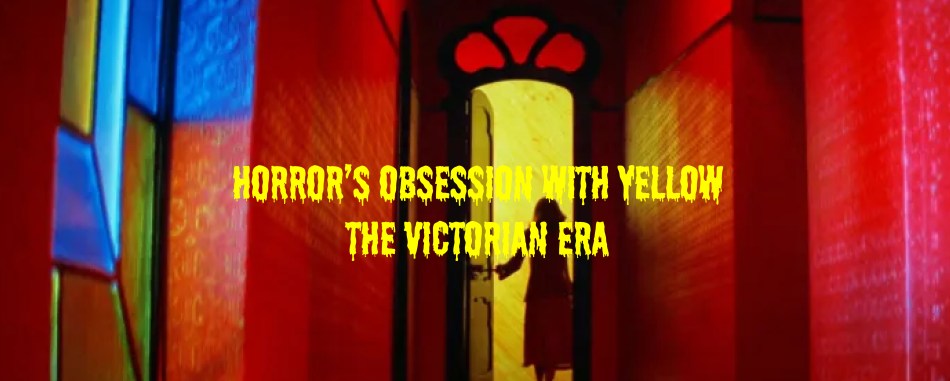
The house this dance academy uses is truly something to behold. One room has royal blue velvet wallpaper with gold accents. Many of the hallways are red with off-white accents. The dressing room features yellow and brown in its design aesthetic. The patterns on the wallpaper mimic that of the Art Nouveau era and late Gothic architecture which, if you’ve been following along with my Victorian era series, you’ll know that Art Nouveau came about during the Victorian era. Many of these rooms have gold highlights on trim and nature themes of flowers and vines were featured in various ways throughout the house. Though Argento’s film takes place in the 1970s, his use of Art Nouveau and the Gothic architecture give a nod to the time period during which Thomas de Quincey lived. The deep reds used in multiple set pieces and lighting create a nightmarish atmosphere as this innocent American walks unwittingly into this witch’s coven.
The yellow walls of the dance studio within the house is a sickly yellow with stained glass windows that show vibrant purples and reds. In the first scene where Suzy tries to dance, she passes out as red light floods into the room and surrounds her. Right away, the viewer knows that she isn’t safe. A shot of her bathroom sink bathed in yellow light follows this scene, an in-your-face allegory for her safety and mental health going down the drain.
Giallo films are known for their colorful lighting, masked and gloved killers, and vibrant set pieces intermingled with gore. Suspiria is the epitome of that which is why it remains the most famous film in the genre. Many of the dyes in the Victorian era were made using toxic chemicals, especially Paris Green which contained arsenic and Mauvine which was accidentally made when a scientist was trying to make an anti-malaria medicine. The lighting seems to mimic this, setting each scene against bright reds and blues and yellows. One scene in particular uses a sickly green as Suzy sleeps and one of her fellow dancers fears for her life. The music, a whimsical score by rock band Goblin that offsets a fairytale like theme with off-putting drum beats, adds to the fantastical sensory overload. Argento also utilizes maggots in one sequence to show just how sick the house really is internally. The architect was right. It was on the verge of becoming pestilential.
Inferno and The Mother of Tears do not reach the level of artistry that Suspiria does, but if you’re willing to go all in on this trilogy, they are worth a watch.
Luca Guadagnino’s Suspiria
It was love at first sight for me with this film. While Argento’s take was more surrealist in nature with its use of expressionist color, Guadagnino chose to lean heavily into the deep trauma and grief that populated de Quincey’s writing. While he kept the narrative of an American coming to Germany to be a dancer within the academy, he gave the main protagonist deeper connections to the coven. He uses the historical trauma that existed in Cold War era Berlin in 1977, and gave us a denser plot about motherhood and psychoanalysis. There is no fairytale here. It’s bleak Bauhaus and Brutalist architecture set against the red outfits that the dancers use for their final dance. Melancholic music by Thom Yorke highlights the bleak feeling of the film.
Madame Blanc’s apartment shows the faded decadence of a bygone era as it draws on 1920s Parisian design accented by obsidian tones and lacquered studio spaces. The coven is not what it used to be and has obviously declined in the modern post-WWII era, especially when they vote between Markos and Blanc to be their leader going forward. In what turns out to be a great twist, Susie Bannion turns out to be the embodiment of Helen Markos, Mater Suspiriorium. She takes the lives of those who voted for Madame Blanc, and gives the victims of this coven – the dancers – the choice between life and death. This aligns closely with de Quincey’s writing since he viewed Mator Suspiriorium as the Mother who looked after the poor, captive and exiled.
The remake does include red in the attire worn by the dancers during their final dance and in the blood visible whenever someone dies brutally. It is also the color of Dakota Johnson’s robe when she finds everyone in the bowels of the academy and reveals herself to be Mater Suspiriorium herself. Because red is used so sparingly amid the otherwise muted color palette, it stands out as the color of evil. Of pain and grief. But also of kindness when Suspiriorium gives the other dancers a choice between life an death and honors those choices. She is the embodiment of motherhood and all the love and grief that goes with it.
What both Argento and Guadagnino have in common in their adaptations of this narrative is that they made films that could easily be from the perspective of someone who is under the influence of an opioid. While Argento’s is far more fantastical and Guadagnino’s bleak, both directors put their best into these films about a sinister witch’s coven created by a man so high on Victorian Era pain killers that his trauma created something otherworldly. Both deserve your attention.
Discover more from Becky Tyler Art and Photography
Subscribe to get the latest posts sent to your email.




Chapter 33 – Horror in Victorian Literature Part 14
English writer Thomas de Quincey is best known for writing Confessions of an English Opium-Eater, an account of how his laudanum addiction effected his life. It is credited with inspiring modern literature and film accounts about addiction and opening a broader discussion on the subject during the Victorian era. His poetic prose in the novella, Suspiria de Profundis (Latin for Sighs from the Depths), further chronicled the visions he had while taking laudanum. The essays within the novella also explore memory, grief, and deep childhood trauma.
One section of Suspiria de Profundis entitled Levana and Our Ladies of Sorrow is what I’ll be discussing here because it inspired Dario Argento’s 1977 film Suspiria and both of its sequels before Luca Guanagnino remade the film of the same title in 2018. Levana is an ancient Roman goddess who symbolizes the lifting of a baby from the ground by the father to be accepted into the family. Thomas de Quincey reframed this goddess and suggested that she continues to raise human spirits throughout life through the power of psychological sorrow and the pain of adulthood. Remember, Suspiria de Profundis concentrates heavily on the grief and sorrow of de Quincey’s childhood so using Levana in such a way aligns with his drug induced point of view.
The author invented The Three Mothers to accompany Levana as her sisters and I believe in his high state of mind, these three women represented de Quincey’s dead sisters whom he lost in childhood. The eldest sister, Our Lady of Tears, he named Mater Lachyrmarum who represented acute sorrow and grief – meaning she dealt with the loss of children and on a larger scale, the weepings of humanity. Our Lady of Sighs, the middle sister named Mater Suspiriorium, represented deep, silent despair. She looked over those feeling hopeless suffering – the poor, captive, and exiled. Our Lady of Darkness, Mater Tenebrarum and the youngest sister, ruled over madness, depression, and the darkest recesses of the human psyche.
Upon de Quincey’s death in 1859, a list of 32 items was discovered that would have completed the Suspiria de Profundis narrative if he had ever lived long enough to finish the work. I discovered in my research that because he often worked in the dark by candlelight while he was high on opioids, de Quincy had a propensity to set his papers – or even his hair – on fire. Somehow, this made his poetic, heartbreaking prose all the more tragic.
Dario Argento’s Suspiria Trilogy
On a personal note, I tried to watch Argento’s Suspiria in the mid-2000s and was not a fan. Twenty-five-year-old me was not ready for it and did not understand the subgenre that was Giallo horror. I didn’t try watching it again for many years. It wasn’t until Luca Guadagnino remade the film in 2018 that I started revisiting the Giallo era. I started at the beginning of Mario Bava and Dario Argento’s careers and made my way through the 60s, 70s, and 80s over the course of several years before finally getting to Suspiria again in 2025. This time, I was ready. The bad taste it had left younger me with had been washed clean and I could watch it with fresh eyes. Now I understood what a masterpiece it was. And still is, even if neither of the sequels reached that level of cinematic art.
Argento’s take on the Three Mothers starts in the 11th century at the beginning of witchcraft when the Three Mothers are on the coast of the Black Sea. Everywhere they went, they amassed great power and wealth but left death in their wake. In the 19th century, soundly in the Victorian era, they commissioned E. Varelli, an Italian architect, to design and construct three buildings for these women. The architect learned of the women’s evil nature and he believed that the land upon which they were built would become pestilential. He supposedly leaves six published copies of his memoirs behind after his death, and four were likely destroyed in Inferno, the second film in the trilogy.
Mater Tenebrarum, the youngest and cruelest, lives in New York City and she masquerades as Professor Arnold’s nurse in the second film, Inferno. Mater Lachrymarum, the most powerful, and her home is revealed to be the Palazzo Varelli in the third film, The Mother of Tears. Mater Suspiriorium, the oldest, has the given name of Helen Markos. In 1895, she founded Tanz Akademie (Dance Academy in German), a place where one could study dance and the occult sciences in Freiburg, Germany. After locals suspected she was a witch, she faked her death in 1905 and the academy would be transitioned to a ballet school.
That’s all backstory found out through all three films. In Suspiria, the ballet academy lures young American Suzy Bannion to Germany hoping she could become a dancer. She arrives in Germany in the rain, with red lights surrounding her. Suzy doesn’t take this color as a warning, but perhaps she should have. Just as Suzy arrives, a girl dies and Suzy takes her place within the academy. As the film moves on, Suzy discovers secret rooms the witches use for their evil doing.
The house this dance academy uses is truly something to behold. One room has royal blue velvet wallpaper with gold accents. Many of the hallways are red with off-white accents. The dressing room features yellow and brown in its design aesthetic. The patterns on the wallpaper mimic that of the Art Nouveau era and late Gothic architecture which, if you’ve been following along with my Victorian era series, you’ll know that Art Nouveau came about during the Victorian era. Many of these rooms have gold highlights on trim and nature themes of flowers and vines were featured in various ways throughout the house. Though Argento’s film takes place in the 1970s, his use of Art Nouveau and the Gothic architecture give a nod to the time period during which Thomas de Quincey lived. The deep reds used in multiple set pieces and lighting create a nightmarish atmosphere as this innocent American walks unwittingly into this witch’s coven.
The yellow walls of the dance studio within the house is a sickly yellow with stained glass windows that show vibrant purples and reds. In the first scene where Suzy tries to dance, she passes out as red light floods into the room and surrounds her. Right away, the viewer knows that she isn’t safe. A shot of her bathroom sink bathed in yellow light follows this scene, an in-your-face allegory for her safety and mental health going down the drain.
Giallo films are known for their colorful lighting, masked and gloved killers, and vibrant set pieces intermingled with gore. Suspiria is the epitome of that which is why it remains the most famous film in the genre. Many of the dyes in the Victorian era were made using toxic chemicals, especially Paris Green which contained arsenic and Mauvine which was accidentally made when a scientist was trying to make an anti-malaria medicine. The lighting seems to mimic this, setting each scene against bright reds and blues and yellows. One scene in particular uses a sickly green as Suzy sleeps and one of her fellow dancers fears for her life. The music, a whimsical score by rock band Goblin that offsets a fairytale like theme with off-putting drum beats, adds to the fantastical sensory overload. Argento also utilizes maggots in one sequence to show just how sick the house really is internally. The architect was right. It was on the verge of becoming pestilential.
Inferno and The Mother of Tears do not reach the level of artistry that Suspiria does, but if you’re willing to go all in on this trilogy, they are worth a watch.
Luca Guadagnino’s Suspiria
It was love at first sight for me with this film. While Argento’s take was more surrealist in nature with its use of expressionist color, Guadagnino chose to lean heavily into the deep trauma and grief that populated de Quincey’s writing. While he kept the narrative of an American coming to Germany to be a dancer within the academy, he gave the main protagonist deeper connections to the coven. He uses the historical trauma that existed in Cold War era Berlin in 1977, and gave us a denser plot about motherhood and psychoanalysis. There is no fairytale here. It’s bleak Bauhaus and Brutalist architecture set against the red outfits that the dancers use for their final dance. Melancholic music by Thom Yorke highlights the bleak feeling of the film.
Madame Blanc’s apartment shows the faded decadence of a bygone era as it draws on 1920s Parisian design accented by obsidian tones and lacquered studio spaces. The coven is not what it used to be and has obviously declined in the modern post-WWII era, especially when they vote between Markos and Blanc to be their leader going forward. In what turns out to be a great twist, Susie Bannion turns out to be the embodiment of Helen Markos, Mater Suspiriorium. She takes the lives of those who voted for Madame Blanc, and gives the victims of this coven – the dancers – the choice between life and death. This aligns closely with de Quincey’s writing since he viewed Mator Suspiriorium as the Mother who looked after the poor, captive and exiled.
The remake does include red in the attire worn by the dancers during their final dance and in the blood visible whenever someone dies brutally. It is also the color of Dakota Johnson’s robe when she finds everyone in the bowels of the academy and reveals herself to be Mater Suspiriorium herself. Because red is used so sparingly amid the otherwise muted color palette, it stands out as the color of evil. Of pain and grief. But also of kindness when Suspiriorium gives the other dancers a choice between life an death and honors those choices. She is the embodiment of motherhood and all the love and grief that goes with it.
What both Argento and Guadagnino have in common in their adaptations of this narrative is that they made films that could easily be from the perspective of someone who is under the influence of an opioid. While Argento’s is far more fantastical and Guadagnino’s bleak, both directors put their best into these films about a sinister witch’s coven created by a man so high on Victorian Era pain killers that his trauma created something otherworldly. Both deserve your attention.
Discover more from Becky Tyler Art and Photography
Subscribe to get the latest posts sent to your email.
Share this: