Those of us who frequent the sci-fi and fantasy genres of television, film, and books probably know the written works of William Gibson and Tom Maddox. Maddox only wrote one full length novel entitled Halo that explored the nature of artificial intelligence as a cyberpunk society transitioned from Earth to a space habitat. He also published a variety of short stories in the same genre and coined the term Intrusive Countermeasures Electronics – or ICE – which was used in a collaboration with William Gibson on the novel Neuromancer. Gibson’s novels explore the effects of AI and and life in cyberspace on fractured societies. Gibson also wrote an unused script for Alien 3 in which Hicks, Bishop, and Newt were still alive with Ripley to fight a new strain of xenomorph while dealing with the political divide of rival human factions at a space station. A movie I would have loved to see.
William Gibson and Tom Maddox collaborated on two episodes of The X-Files. Both episodes involved artificial intelligence in some form. The first aired as episode eleven of season five, nestled between episodes about an evil doll and vampires. Kill Switch was reportedly the most expensive episode to film and took a total of 22 days to complete. It required more than one explosion and several on location shots that were not filmed in Vancouver but in the surrounding area. The production even constructed an actual functional robot that reportedly cost $23,000 to build. If you’re going to hire two great sci-fi writers to pen a script for your episode, might as well go all in.
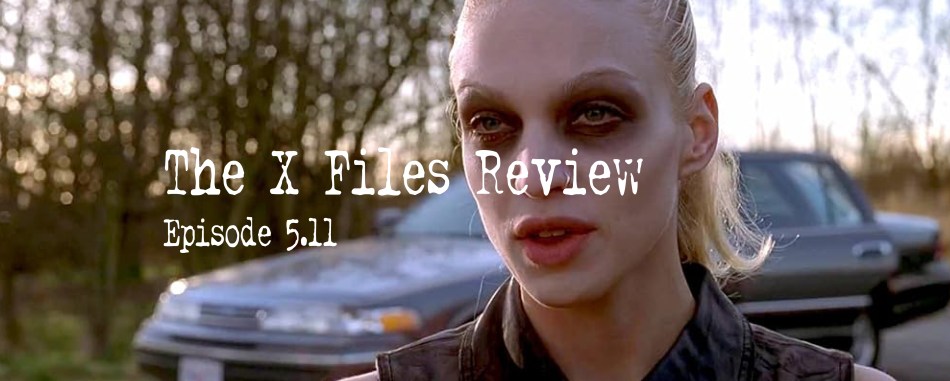
Kristin Lehman was cast as the guest lead in the episode as Invisigoth, a cyberpunk character with dark eye makeup and a blunt, blonde ponytail. Chris Carter did minor rewrites on the script to give the character a harder edge, but its Lehman’s acting that really sells the idea that her tech savvy ways have gotten her mixed up in a Defense Department conspiracy that has satellites shooting particle beams at her known location when they find her. She would go on to have a prolific career in film and television starring in Earth: Final Conflict, Poltergeist: The Legacy, The Outer Limits, Strange World, Andromeda, The Killing, Midnight Mass, and two iterations of The Twilight Zone. It’s her part as Invisigoth – or Esther Nairn as we find out as the episode progresses – that I always think of when I see her in something else.
In the late 1990s, cyberpunk wasn’t a new idea but it was an underused one in film and television as it wasn’t mainstream enough for the masses. The X-Files was the perfect place for an episode like this as Mulder and Scully arrive at the crime scene of multiple murders. Mulder identifies one man with a laptop as Donald Gelman who was trying to create an artificial intelligence. Mulder also finds a CD with the victim which plays the song Twilight Time by The Platters. I love the feel of this song in this episode as the reactions to Invisigoth vary depending on the character. Mulder trusts her while Scully is ambivalent to her. The Lone Gunmen immediately fall in love with her in a hilarious scene told from a decidedly male perspective. In the season’s next episode, Bad Blood, the opposite happens and Scully is attracted to a small town police officer. Having these two episodes back-to-back is a great juxtaposition between the male and female gaze associated with this show.
Mulder follows clues to Invisigoth’s partner’s whereabouts and it leads him to a trailer where he becomes entrapped by the AI that Invisigoth is trying to destroy. While Mulder is drugged, he has vivid dreams about half naked nurses taking care of him and Scully trying to rescue him. During this sequence, Scully does some amazing karate movements. CGI was used for this scene, much to Gillian Anderson’s chagrin for she really wanted to kick some ass.
Scully doesn’t necessarily bond with Invisigoth as they search for Mulder, but she does come to understand her. Scully was always the empathetic agent. When they find Mulder, they use the CD with Twilight Time on it as the kill switch for the AI which releases him. He and Scully escape the trailer but Invisigoth remains. Mulder believes that she loaded her consciousness to the AI moments before the satellite destroyed the trailer with its laser beam. The Lone Gunmen receive a message from her that says, Bite Me. The episode ends at another AI run trailer in another location as a boy approaches it.
Rob Bowman directed this episode in such a way that it feels like a David Cronenberg film. Cronenberg often had man vs. tech or man vs. machine in his films that were decidedly dark in nature. This was common among science fiction films and television in the 1990s as the era brought cyberpunk to mainstream audiences. The Outer Limits used similar themes technology set against societal decay or rebellion. Films like Terminator 2: Judgement Day and Tetsuo II: Body Hammer used cybernetic enhancements and AI consciousness to tell stories about identity and the consequences of technological advancement. Keanu Reaves starred in two films following these themes in the 1990s. Johnny Mnemonic – based on a William Gibson story – was one of the more notable early designs for a cyberpunk film. Four years later in 1999, The Matrix was released and was a huge jump forward for cyberpunk films. The film’s themes about human rebellion and simulated reality were continued in three other films over the years. Stephen Spielberg even weighed in on the genre when he released Minority Report starring Tom Cruise. The film about precognition and whether we are guilty of things we haven’t done yet is still relevant today. It also aligns with the original Matrix film when the Oracle tells Neo that he’ll wonder if he would have broken the vase in her home if she hadn’t said anything about it.
Ridley Scott directed the decidedly dark Blade Runner which was released in 1982. It was misunderstood and bombed at the box office, but now it is considered one of the best sci-fi films in existence. It seamlessly combined detective noir with cyberpunk and in a way, The X-Files borrowed a little from it to make Kill Switch. Switch out the bioengineered replicants with the AI fearing for its termination, and the questions about existence are very similar. The popularity of The X-Files during the 1990s as well as other films like Ghost in the Shell and The Matrix can certainly be traced back to films like Blade Runner. And by the stories of William Gibson and Tom Maddox. With the influx of AI in our current society, its only a matter of time before the themes in these movies and shows become our reality.
Until next week, the truth is out there.
Discover more from Becky Tyler Art and Photography
Subscribe to get the latest posts sent to your email.




Those of us who frequent the sci-fi and fantasy genres of television, film, and books probably know the written works of William Gibson and Tom Maddox. Maddox only wrote one full length novel entitled Halo that explored the nature of artificial intelligence as a cyberpunk society transitioned from Earth to a space habitat. He also published a variety of short stories in the same genre and coined the term Intrusive Countermeasures Electronics – or ICE – which was used in a collaboration with William Gibson on the novel Neuromancer. Gibson’s novels explore the effects of AI and and life in cyberspace on fractured societies. Gibson also wrote an unused script for Alien 3 in which Hicks, Bishop, and Newt were still alive with Ripley to fight a new strain of xenomorph while dealing with the political divide of rival human factions at a space station. A movie I would have loved to see.
William Gibson and Tom Maddox collaborated on two episodes of The X-Files. Both episodes involved artificial intelligence in some form. The first aired as episode eleven of season five, nestled between episodes about an evil doll and vampires. Kill Switch was reportedly the most expensive episode to film and took a total of 22 days to complete. It required more than one explosion and several on location shots that were not filmed in Vancouver but in the surrounding area. The production even constructed an actual functional robot that reportedly cost $23,000 to build. If you’re going to hire two great sci-fi writers to pen a script for your episode, might as well go all in.
Kristin Lehman was cast as the guest lead in the episode as Invisigoth, a cyberpunk character with dark eye makeup and a blunt, blonde ponytail. Chris Carter did minor rewrites on the script to give the character a harder edge, but its Lehman’s acting that really sells the idea that her tech savvy ways have gotten her mixed up in a Defense Department conspiracy that has satellites shooting particle beams at her known location when they find her. She would go on to have a prolific career in film and television starring in Earth: Final Conflict, Poltergeist: The Legacy, The Outer Limits, Strange World, Andromeda, The Killing, Midnight Mass, and two iterations of The Twilight Zone. It’s her part as Invisigoth – or Esther Nairn as we find out as the episode progresses – that I always think of when I see her in something else.
In the late 1990s, cyberpunk wasn’t a new idea but it was an underused one in film and television as it wasn’t mainstream enough for the masses. The X-Files was the perfect place for an episode like this as Mulder and Scully arrive at the crime scene of multiple murders. Mulder identifies one man with a laptop as Donald Gelman who was trying to create an artificial intelligence. Mulder also finds a CD with the victim which plays the song Twilight Time by The Platters. I love the feel of this song in this episode as the reactions to Invisigoth vary depending on the character. Mulder trusts her while Scully is ambivalent to her. The Lone Gunmen immediately fall in love with her in a hilarious scene told from a decidedly male perspective. In the season’s next episode, Bad Blood, the opposite happens and Scully is attracted to a small town police officer. Having these two episodes back-to-back is a great juxtaposition between the male and female gaze associated with this show.
Mulder follows clues to Invisigoth’s partner’s whereabouts and it leads him to a trailer where he becomes entrapped by the AI that Invisigoth is trying to destroy. While Mulder is drugged, he has vivid dreams about half naked nurses taking care of him and Scully trying to rescue him. During this sequence, Scully does some amazing karate movements. CGI was used for this scene, much to Gillian Anderson’s chagrin for she really wanted to kick some ass.
Scully doesn’t necessarily bond with Invisigoth as they search for Mulder, but she does come to understand her. Scully was always the empathetic agent. When they find Mulder, they use the CD with Twilight Time on it as the kill switch for the AI which releases him. He and Scully escape the trailer but Invisigoth remains. Mulder believes that she loaded her consciousness to the AI moments before the satellite destroyed the trailer with its laser beam. The Lone Gunmen receive a message from her that says, Bite Me. The episode ends at another AI run trailer in another location as a boy approaches it.
Rob Bowman directed this episode in such a way that it feels like a David Cronenberg film. Cronenberg often had man vs. tech or man vs. machine in his films that were decidedly dark in nature. This was common among science fiction films and television in the 1990s as the era brought cyberpunk to mainstream audiences. The Outer Limits used similar themes technology set against societal decay or rebellion. Films like Terminator 2: Judgement Day and Tetsuo II: Body Hammer used cybernetic enhancements and AI consciousness to tell stories about identity and the consequences of technological advancement. Keanu Reaves starred in two films following these themes in the 1990s. Johnny Mnemonic – based on a William Gibson story – was one of the more notable early designs for a cyberpunk film. Four years later in 1999, The Matrix was released and was a huge jump forward for cyberpunk films. The film’s themes about human rebellion and simulated reality were continued in three other films over the years. Stephen Spielberg even weighed in on the genre when he released Minority Report starring Tom Cruise. The film about precognition and whether we are guilty of things we haven’t done yet is still relevant today. It also aligns with the original Matrix film when the Oracle tells Neo that he’ll wonder if he would have broken the vase in her home if she hadn’t said anything about it.
Ridley Scott directed the decidedly dark Blade Runner which was released in 1982. It was misunderstood and bombed at the box office, but now it is considered one of the best sci-fi films in existence. It seamlessly combined detective noir with cyberpunk and in a way, The X-Files borrowed a little from it to make Kill Switch. Switch out the bioengineered replicants with the AI fearing for its termination, and the questions about existence are very similar. The popularity of The X-Files during the 1990s as well as other films like Ghost in the Shell and The Matrix can certainly be traced back to films like Blade Runner. And by the stories of William Gibson and Tom Maddox. With the influx of AI in our current society, its only a matter of time before the themes in these movies and shows become our reality.
Until next week, the truth is out there.
Discover more from Becky Tyler Art and Photography
Subscribe to get the latest posts sent to your email.
Share this: