The Witchcraft Act of 1735 had marked a reversal in attitudes toward punishment for witchcraft. People with influence now believed that witchcraft wasn’t real, but they did believe that the pretense of using witchcraft was a punishable crime. Anyone who said they could tell the future or cast spells were punished with fines or imprisonment for being a con artist. In other words, the days of burning women at the stake with little to no evidence of any crime were gone. Unless, of course, you lived in a rural area where vigilantism and mob justice were still used.
By the time Queen Victoria ascended the throne in 1837, educated city folk were beginning to embrace scientific advances in medicine and spiritualism whilst rural communities still tended to use older folk traditions. You could still find healers willing to lift a curse or heal the sick, and the attitudes toward these people were that they were protectors against evil magic instead of servants of the devil. As the end of the century approached, ceremonial magic and astrology were popular among middle and upper classes. In other words, they loved a good séance.
They also loved a good gothic horror story in the form of Penny Dreadfuls. The witchcraft stories exaggerated historical anxieties about witches and the women portrayed in them were typically punished to satisfy Victorian morality. They also told superstitious tales set in Scotland or Welsh landscapes in contrast with life in London. Many of such short stories were written by women who went overlooked as writers. E. Lynn Linton. Mary Lewis. Anna Kinsgford. Beatrice Heron-Maxwell. One author published under Mrs. Hugh Fraser because it was probably easier to publish under her husband’s name.
One of the recurring themes in these stories from the female perspective was that of reclaiming feminine power. Accounts of perceived witches explored how the Georgian and Victorian eras viewed female autonomy and dark magic. One collection in particular is a wonderful read if you are interested. You can purchase The Witching Hour: A Collection of Victorian Tales Concerning Witchcraft and Wizardry at Barnes & Noble and on Amazon.
The Amber Witch
One of the short stories that stood out for me was The Amber Witch. The witch herself is described as being yellow of skin and eyes. The story involves a rejected suitor, a sheriff, who frames the woman out of revenge after she spurns his advances. When it was originally published in the 17th century, it was claimed that it was an authentic chronicle of a witch found in a church. It fooled experts and critics alike before the original author, Wilhelm Meinhold, admitted he wrote the story as a satirical take on historical criticism. It would be later translated from German to English by Lady Duff-Gordon and the story became a celebrated piece of romantic horror reading. There is no film adaptation of this story, but it was the yellow descriptors of the witch that stood out to me.
The X-Files
I was watching season seven of The X-Files this week and Agent Mulder made a reference to a Victorian era practice of communicating with the dead. In the episode Chimera, he speaks of a pshychomantium which is a darkened room with a tilted mirror for a person to stare into. This could either allow them to communicate with the dead or hallucinate. The monster featured in that episode ends up being a mirror monster, an entity summoned by the villain in the case Mulder and Scully are investigating. The mention of the Victorian era on the show I’m also blogging about (yes, I blog about The X-Files too) made me a bit giddy to be honest.
The X-Files wasn’t the last show to use mirrors with inspiration from the Victorian era. The series Penny Dreadful featured witches who used mirrors as a portal of travel. Specifically, mirrors were how they entered the home of Vanessa Ives to attack her, Ethan, and other members of the show. Mirrors also showed the duality of the series when it came to good versus evil, especially the differences between the Daywalkers and Nightcomers. Practicing witchcraft can go two directions and only one of them is good.
Penny Dreadful and the Nightcomers
The main protagonist Vanessa Ives (Eva Green) is possessed by Lucifer before Ethan (Josh Hartnett) exorcized the ancient demon from her. In season two, witchcraft becomes the main story arc as it is tied directly to the service of Lucifer. The show divided the good vs. evil themes into Daywalkers, or witches who use natural, healing folk magic, and Nightcomers, those devoted to serving the Devil. It is one of the most interesting takes on witchcraft put on film, in my honest opinion, and one of the best seasons of television to air in the 2010s.
How this season used color was also spectacular as it set the tone soundly in the gothic Victorian era of London society. The dark costuming of lead Nightcomer witch Evelyn Poole featured ornate garments in dark maroons and blacks because what baddie doesn’t need to blend in with the shadows? Vanessa, who was a Daywalker, often wore Victorian era mourning colors of dark blue and black which represented her internal demons and psychological vulnerability. Purity was still important in that era which is why neither of these women wore white. Vanessa even states at one point that white isn’t her color for deep down, she knows she was meant for a darker path in life.
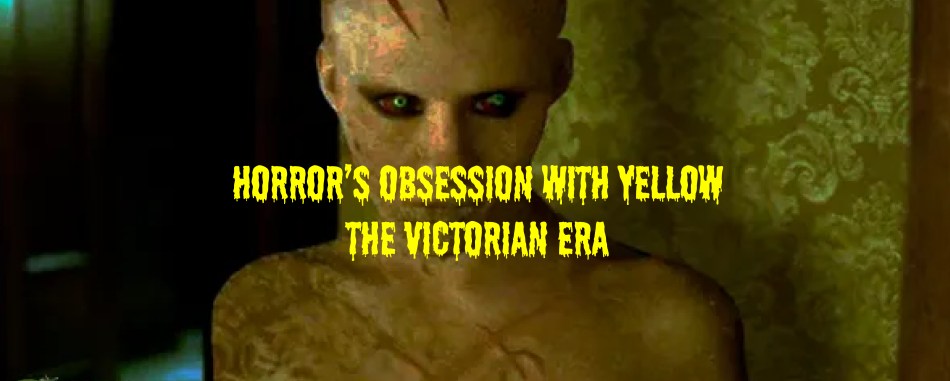
Yellow is often associated with sulfur which is closely linked with hell in biblical terms. The earliest forms of witchcraft were in pagan rituals so it is no surprise that when the followers of Satan or those suffering from demonic possession have yellow eyes. This season’s links to Lucifer are shown in the yellow irises surrounding black scleras of the Nightwalkers when they are casting. They also have a room filled with creepy dolls that they have used to steal the souls and powers of other people. One of the most memorable set pieces on the show. It is in that room that Vanessa meets her own doll.
These Nightcomers also have ritual scars – the hot iron branding of pentagrams and other demonic marks – when they are moving through Sir Malcolm Murray’s home. The silk wallpapers within the home are yellow and it’s an unsettling sight to see these witches blending their naked, scarred bodies into the walls when manipulated the household. They weaponize doubt and depression in their warfare.
Evelyn Poole also uses spiritual possession against Vanessa. This witch makes realistic looking dolls, a form of voodoo, against people and she makes one for Vanessa. It has real hair and in one wonderfully morbid scene, Evelyn uses a baby’s heart to bring the doll’s magic to life.
Patti LuPone stars as the Cut-Wife named Joan Clayton. As a rural witch, she performs practical magic for locals in the form of herbal remedies and salves. She is the person who takes Vanessa in and teaches her how to channel her supernatural gifts and to fight against the dark forces that track her. She ends up sacrificing herself and is burned at the hands of religious zealots – remember, I mentioned vigilantism was prominent in rural areas during that era – and rival dark witches. The profound effect this had on Vanessa meant she and Ethan went back to the Cut-Wife’s home during season 2 in an effort to distance Vanessa from the dark forces chasing her.
Evelyn Poole uses a tub of fresh blood to maintain her youth. Blood is what keeps us alive, circulating through our system. Here, it is used as the lifeforce for her youth which is the perfect connection for a season that is bookended by two other seasons populated by vampires. Throughout Penny Dreadful, red is the lifeforce of evil. Her dresses though, are green. Evelyn Poole is envious of Vanessa’s power and we see near the end of that season that those dolls were also keeping her young. With her youth and her beauty behind her, she can only steal from younger, more beautiful women to keep her looking young.
As a whole, Penny Dreadful used witchcraft in its Victorian setting perfectly to go along with the era. Long gone were the days of stake burning, and spirituality – the act of communicating with the dead through a conduit – had risen in popularity in such a way the upper classes of society gleaned much fun from having seances. The show used this to its advantage in color schemes, character, and set pieces. The fact that the show’s creators also intermixed this with werewolf lore, vampires, monsters, and doctors with selfish intentions show how very well the understood the Victorian era and the literature that came out of it.
Next blog, I talk about Mater Suspiriorum. IYKYK
Discover more from Becky Tyler Art and Photography
Subscribe to get the latest posts sent to your email.



Chapter 32
Horror in Victorian Literature Part 13
The Witchcraft Act of 1735 had marked a reversal in attitudes toward punishment for witchcraft. People with influence now believed that witchcraft wasn’t real, but they did believe that the pretense of using witchcraft was a punishable crime. Anyone who said they could tell the future or cast spells were punished with fines or imprisonment for being a con artist. In other words, the days of burning women at the stake with little to no evidence of any crime were gone. Unless, of course, you lived in a rural area where vigilantism and mob justice were still used.
By the time Queen Victoria ascended the throne in 1837, educated city folk were beginning to embrace scientific advances in medicine and spiritualism whilst rural communities still tended to use older folk traditions. You could still find healers willing to lift a curse or heal the sick, and the attitudes toward these people were that they were protectors against evil magic instead of servants of the devil. As the end of the century approached, ceremonial magic and astrology were popular among middle and upper classes. In other words, they loved a good séance.
They also loved a good gothic horror story in the form of Penny Dreadfuls. The witchcraft stories exaggerated historical anxieties about witches and the women portrayed in them were typically punished to satisfy Victorian morality. They also told superstitious tales set in Scotland or Welsh landscapes in contrast with life in London. Many of such short stories were written by women who went overlooked as writers. E. Lynn Linton. Mary Lewis. Anna Kinsgford. Beatrice Heron-Maxwell. One author published under Mrs. Hugh Fraser because it was probably easier to publish under her husband’s name.
One of the recurring themes in these stories from the female perspective was that of reclaiming feminine power. Accounts of perceived witches explored how the Georgian and Victorian eras viewed female autonomy and dark magic. One collection in particular is a wonderful read if you are interested. You can purchase The Witching Hour: A Collection of Victorian Tales Concerning Witchcraft and Wizardry at Barnes & Noble and on Amazon.
The Amber Witch
One of the short stories that stood out for me was The Amber Witch. The witch herself is described as being yellow of skin and eyes. The story involves a rejected suitor, a sheriff, who frames the woman out of revenge after she spurns his advances. When it was originally published in the 17th century, it was claimed that it was an authentic chronicle of a witch found in a church. It fooled experts and critics alike before the original author, Wilhelm Meinhold, admitted he wrote the story as a satirical take on historical criticism. It would be later translated from German to English by Lady Duff-Gordon and the story became a celebrated piece of romantic horror reading. There is no film adaptation of this story, but it was the yellow descriptors of the witch that stood out to me.
The X-Files
I was watching season seven of The X-Files this week and Agent Mulder made a reference to a Victorian era practice of communicating with the dead. In the episode Chimera, he speaks of a pshychomantium which is a darkened room with a tilted mirror for a person to stare into. This could either allow them to communicate with the dead or hallucinate. The monster featured in that episode ends up being a mirror monster, an entity summoned by the villain in the case Mulder and Scully are investigating. The mention of the Victorian era on the show I’m also blogging about (yes, I blog about The X-Files too) made me a bit giddy to be honest.
The X-Files wasn’t the last show to use mirrors with inspiration from the Victorian era. The series Penny Dreadful featured witches who used mirrors as a portal of travel. Specifically, mirrors were how they entered the home of Vanessa Ives to attack her, Ethan, and other members of the show. Mirrors also showed the duality of the series when it came to good versus evil, especially the differences between the Daywalkers and Nightcomers. Practicing witchcraft can go two directions and only one of them is good.
Penny Dreadful and the Nightcomers
The main protagonist Vanessa Ives (Eva Green) is possessed by Lucifer before Ethan (Josh Hartnett) exorcized the ancient demon from her. In season two, witchcraft becomes the main story arc as it is tied directly to the service of Lucifer. The show divided the good vs. evil themes into Daywalkers, or witches who use natural, healing folk magic, and Nightcomers, those devoted to serving the Devil. It is one of the most interesting takes on witchcraft put on film, in my honest opinion, and one of the best seasons of television to air in the 2010s.
How this season used color was also spectacular as it set the tone soundly in the gothic Victorian era of London society. The dark costuming of lead Nightcomer witch Evelyn Poole featured ornate garments in dark maroons and blacks because what baddie doesn’t need to blend in with the shadows? Vanessa, who was a Daywalker, often wore Victorian era mourning colors of dark blue and black which represented her internal demons and psychological vulnerability. Purity was still important in that era which is why neither of these women wore white. Vanessa even states at one point that white isn’t her color for deep down, she knows she was meant for a darker path in life.
Yellow is often associated with sulfur which is closely linked with hell in biblical terms. The earliest forms of witchcraft were in pagan rituals so it is no surprise that when the followers of Satan or those suffering from demonic possession have yellow eyes. This season’s links to Lucifer are shown in the yellow irises surrounding black scleras of the Nightwalkers when they are casting. They also have a room filled with creepy dolls that they have used to steal the souls and powers of other people. One of the most memorable set pieces on the show. It is in that room that Vanessa meets her own doll.
These Nightcomers also have ritual scars – the hot iron branding of pentagrams and other demonic marks – when they are moving through Sir Malcolm Murray’s home. The silk wallpapers within the home are yellow and it’s an unsettling sight to see these witches blending their naked, scarred bodies into the walls when manipulated the household. They weaponize doubt and depression in their warfare.
Evelyn Poole also uses spiritual possession against Vanessa. This witch makes realistic looking dolls, a form of voodoo, against people and she makes one for Vanessa. It has real hair and in one wonderfully morbid scene, Evelyn uses a baby’s heart to bring the doll’s magic to life.
Patti LuPone stars as the Cut-Wife named Joan Clayton. As a rural witch, she performs practical magic for locals in the form of herbal remedies and salves. She is the person who takes Vanessa in and teaches her how to channel her supernatural gifts and to fight against the dark forces that track her. She ends up sacrificing herself and is burned at the hands of religious zealots – remember, I mentioned vigilantism was prominent in rural areas during that era – and rival dark witches. The profound effect this had on Vanessa meant she and Ethan went back to the Cut-Wife’s home during season 2 in an effort to distance Vanessa from the dark forces chasing her.
Evelyn Poole uses a tub of fresh blood to maintain her youth. Blood is what keeps us alive, circulating through our system. Here, it is used as the lifeforce for her youth which is the perfect connection for a season that is bookended by two other seasons populated by vampires. Throughout Penny Dreadful, red is the lifeforce of evil. Her dresses though, are green. Evelyn Poole is envious of Vanessa’s power and we see near the end of that season that those dolls were also keeping her young. With her youth and her beauty behind her, she can only steal from younger, more beautiful women to keep her looking young.
As a whole, Penny Dreadful used witchcraft in its Victorian setting perfectly to go along with the era. Long gone were the days of stake burning, and spirituality – the act of communicating with the dead through a conduit – had risen in popularity in such a way the upper classes of society gleaned much fun from having seances. The show used this to its advantage in color schemes, character, and set pieces. The fact that the show’s creators also intermixed this with werewolf lore, vampires, monsters, and doctors with selfish intentions show how very well the understood the Victorian era and the literature that came out of it.
Next blog, I talk about Mater Suspiriorum. IYKYK
Discover more from Becky Tyler Art and Photography
Subscribe to get the latest posts sent to your email.
Share this: