Chapter 30 – Horror in Victorian Literature Part 11
Near the end of Robert Lewis Stevenson’s novella, The Strange Case of Dr. Jekyll and Mr. Hyde, when Dr. Jekyll wakes in his bed, he notices that pale yellow sunlight has come through the window and landed upon his hand. But it’s no longer his hand. It is the hand of Mr. Hyde, the man he turns into after taking his potion that splits the evil side of his persona from the good side, marking a permanent and uncontrollable change in the moral decay the man went through during his experiments on himself. The yellow coloring also references the polluted, foggy London air that dominated the Victorian era. The emphasis on this parallel between the murky London fog and the moral decay of the protagonist highlights what the era was known for. Dark gothic stories searching for light but often end with tragedy.
Much like werewolf lore, this story is about duality. In modern terms, inside each of us there are two wolves. The one that takes control is the one you feed. In the Victorian era, you had to hide anything that would be seen as morally corrupt, however small. Dr. Henry Jekyll was a man who seemed kind. A respected doctor. Underneath the surface, however, were dark, violent desires that can only be described as unbridled evil. Meet Mr. Edward Hyde. Much like an antibiotic, the potion that Dr. Jekyll creates to cause his transformation from one man to the other has its limits. If you take it too often, it becomes ineffective. And who do you become when the potion loses its potency? Who do you become permanently when you can no longer change into the other man? Which wolf takes over?
Loss of control is a theme that seems to follow Victorian literature. Mr. Hyde is the epitome of theme, showing that our most evil desires often win out when we don’t control ourselves. Dorian Gray was another character from literature who was stuck in such a duality. His portrait showed who rotted and disturbed his soul had become, but his physical form was as youthful as the day he received the portrait. Even Victor Frankenstein had to choose between making his creature a mate and putting the creature down. Who is the real monster in these stories? Are they not just two sides of a whole? Man is his own worst enemy, I guess.
Penny Dreadful
Dr. Jekyll does not appear on the series Penny Dreadful until the third season where he turns up as one of Victor Frankenstein’s old classmates. Jekyll is working at his laboratory in Bedlam Royal Hospital and he employs the help of Frankenstein to create a serum that would sedate the mentally ill by controlling deviant, aggressive behavior. A far cry from the character we knew from Stevenson’s novel. But… There’s always a but…
While Jekyll never transforms into Mr. Hyde physically, he is instead used as an internal form of suppressed rage because the show also chose to make Jekyll of Indian descent for the show. Being mixed race in Victorian ear London meant that no matter what Jekyll did, he would never be truly accepted by upper society. He teams up with Victor Frankenstein as a way of taming this inner beast by creating their serum which they plan on using on Brona, the third creature Victor reanimated from death and then fell in love with. However, Victor’s conscience gets the better of him and he allows Brona to leave without ever taking the serum. This ends the relationship between Victor and Jekyll, but Jekyll doesn’t leave empty handed. His estranged father has unexpectedly died leaving Jekyll his inheritance. The name he has been given is Hyde in association with the estate he is inheriting signaling that his evil side will still win out in the future when he is finally given the power he seeks.
The show was cancelled after season three, so we never found out how Jekyll’s new found riches played out. Jekyll’s late addition to the show didn’t really afford him much in the way of character development which is the opposite of how the show handled Dracula who arrived at the same time. Then again, Dracula already had connections to season one with the vampires, so maybe I’m nitpicking. Jekyll is the only character from Victorian era literature that goes underused in this show.
Mary Reilly – The Most Underrated Adaptation
Of all the adaptations that have come from The Strange Case of Dr. Jekyll and Mr. Hyde – the pre-code 1931 version, the version starring Ingrid Bergman and Lana Turner, or even the Sister Hyde 1971 version – my favorite is one that wasn’t well received when it came out and has largely been forgotten. It starred Julia Roberts, John Malkovich, and Glenn Close.
Mary Reilly tells this story from an Irish maid’s perspective as she falls in love with Dr. Jekyll whilst working in his house. The book is told from an investigator’s perspective, so this change was an interesting one to me. More so when the movie plays out and the viewer discovers that Mary Reilly also had an abusive father. Stephen King played with the idea that we never grow out of our childhood trauma in It, and this film plays with the same trope. Mary meets both Jekyll and Hyde. Jekyll is the one she loves for he is kind and smart, but Hyde is the handsome one with his longer dark hair. He’s also more violent and kills more than one prostitute as the movie progresses. This scares her and causes a lot of nightmares about her childhood, but that doesn’t stop her from trying to help Jekyll in the situation. Love is a funny thing. It makes us do things we know we shouldn’t.
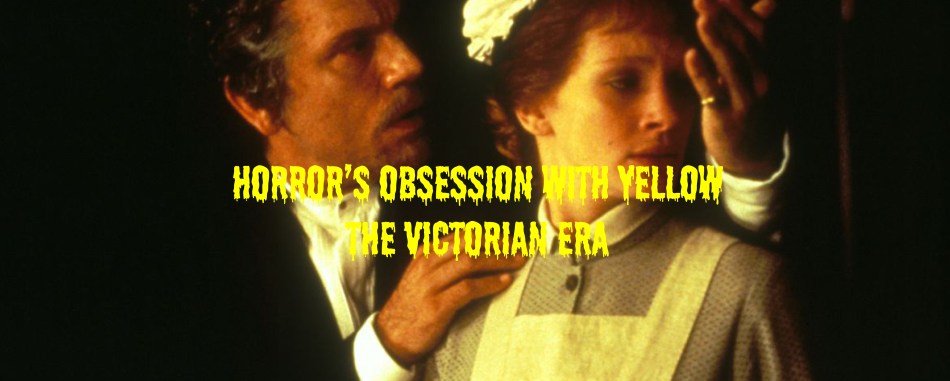
This film uses yellow on the lighting and in the interiors of Jekyll’s house and lab. Meant to be a calming color, in the context of the story, it really shows the moral decay with Dr. Jekyll as he continues to take his serum until the change from man to monster becomes uncontrollable. The use of red is great in this one too as the whorehouse owned by Glenn Close’s character is covered in vibrant red wallpaper. This house of depravity is also the site of Hyde’s murder of a prostitute. The scene he leaves behind is a bloody one. Red stains everywhere. And in a scene during which Mary is following Hyde through a fish market, buckets of blood and guts are literally poured down stone steps. The innards of fish are casually tossed aside onto the street. Unbeknownst to Mary, this scene foreshadowed her following Jekyll/Hyde to his/their death.
I always knew you’d be the death of us. That is one of the final lines that Hyde voices to Mary near the end of the film. He knows that Jekyll plans on poisoning them, he and Hyde, to stop the madness from taking over completely. And Hyde isn’t happy about it.
This film isn’t for everyone. The slow pace and female perspective will turn a lot of folks off, but it doesn’t bother me at all. Julia Roberts and John Malkovich are great in it, and it utilizes the London fog of the Victorian era in multitudes of moody scenes, one through a graveyard that is truly a beautiful moment.
I’ll be making my next post from the Paris Opera House. Figuratively, of course. I hope you’ll be there for the chandelier’s final performance.
Discover more from Becky Tyler Art and Photography
Subscribe to get the latest posts sent to your email.




Chapter 30 – Horror in Victorian Literature Part 11
Near the end of Robert Lewis Stevenson’s novella, The Strange Case of Dr. Jekyll and Mr. Hyde, when Dr. Jekyll wakes in his bed, he notices that pale yellow sunlight has come through the window and landed upon his hand. But it’s no longer his hand. It is the hand of Mr. Hyde, the man he turns into after taking his potion that splits the evil side of his persona from the good side, marking a permanent and uncontrollable change in the moral decay the man went through during his experiments on himself. The yellow coloring also references the polluted, foggy London air that dominated the Victorian era. The emphasis on this parallel between the murky London fog and the moral decay of the protagonist highlights what the era was known for. Dark gothic stories searching for light but often end with tragedy.
Much like werewolf lore, this story is about duality. In modern terms, inside each of us there are two wolves. The one that takes control is the one you feed. In the Victorian era, you had to hide anything that would be seen as morally corrupt, however small. Dr. Henry Jekyll was a man who seemed kind. A respected doctor. Underneath the surface, however, were dark, violent desires that can only be described as unbridled evil. Meet Mr. Edward Hyde. Much like an antibiotic, the potion that Dr. Jekyll creates to cause his transformation from one man to the other has its limits. If you take it too often, it becomes ineffective. And who do you become when the potion loses its potency? Who do you become permanently when you can no longer change into the other man? Which wolf takes over?
Loss of control is a theme that seems to follow Victorian literature. Mr. Hyde is the epitome of theme, showing that our most evil desires often win out when we don’t control ourselves. Dorian Gray was another character from literature who was stuck in such a duality. His portrait showed who rotted and disturbed his soul had become, but his physical form was as youthful as the day he received the portrait. Even Victor Frankenstein had to choose between making his creature a mate and putting the creature down. Who is the real monster in these stories? Are they not just two sides of a whole? Man is his own worst enemy, I guess.
Penny Dreadful
Dr. Jekyll does not appear on the series Penny Dreadful until the third season where he turns up as one of Victor Frankenstein’s old classmates. Jekyll is working at his laboratory in Bedlam Royal Hospital and he employs the help of Frankenstein to create a serum that would sedate the mentally ill by controlling deviant, aggressive behavior. A far cry from the character we knew from Stevenson’s novel. But… There’s always a but…
While Jekyll never transforms into Mr. Hyde physically, he is instead used as an internal form of suppressed rage because the show also chose to make Jekyll of Indian descent for the show. Being mixed race in Victorian ear London meant that no matter what Jekyll did, he would never be truly accepted by upper society. He teams up with Victor Frankenstein as a way of taming this inner beast by creating their serum which they plan on using on Brona, the third creature Victor reanimated from death and then fell in love with. However, Victor’s conscience gets the better of him and he allows Brona to leave without ever taking the serum. This ends the relationship between Victor and Jekyll, but Jekyll doesn’t leave empty handed. His estranged father has unexpectedly died leaving Jekyll his inheritance. The name he has been given is Hyde in association with the estate he is inheriting signaling that his evil side will still win out in the future when he is finally given the power he seeks.
The show was cancelled after season three, so we never found out how Jekyll’s new found riches played out. Jekyll’s late addition to the show didn’t really afford him much in the way of character development which is the opposite of how the show handled Dracula who arrived at the same time. Then again, Dracula already had connections to season one with the vampires, so maybe I’m nitpicking. Jekyll is the only character from Victorian era literature that goes underused in this show.
Mary Reilly – The Most Underrated Adaptation
Of all the adaptations that have come from The Strange Case of Dr. Jekyll and Mr. Hyde – the pre-code 1931 version, the version starring Ingrid Bergman and Lana Turner, or even the Sister Hyde 1971 version – my favorite is one that wasn’t well received when it came out and has largely been forgotten. It starred Julia Roberts, John Malkovich, and Glenn Close.
Mary Reilly tells this story from an Irish maid’s perspective as she falls in love with Dr. Jekyll whilst working in his house. The book is told from an investigator’s perspective, so this change was an interesting one to me. More so when the movie plays out and the viewer discovers that Mary Reilly also had an abusive father. Stephen King played with the idea that we never grow out of our childhood trauma in It, and this film plays with the same trope. Mary meets both Jekyll and Hyde. Jekyll is the one she loves for he is kind and smart, but Hyde is the handsome one with his longer dark hair. He’s also more violent and kills more than one prostitute as the movie progresses. This scares her and causes a lot of nightmares about her childhood, but that doesn’t stop her from trying to help Jekyll in the situation. Love is a funny thing. It makes us do things we know we shouldn’t.
This film uses yellow on the lighting and in the interiors of Jekyll’s house and lab. Meant to be a calming color, in the context of the story, it really shows the moral decay with Dr. Jekyll as he continues to take his serum until the change from man to monster becomes uncontrollable. The use of red is great in this one too as the whorehouse owned by Glenn Close’s character is covered in vibrant red wallpaper. This house of depravity is also the site of Hyde’s murder of a prostitute. The scene he leaves behind is a bloody one. Red stains everywhere. And in a scene during which Mary is following Hyde through a fish market, buckets of blood and guts are literally poured down stone steps. The innards of fish are casually tossed aside onto the street. Unbeknownst to Mary, this scene foreshadowed her following Jekyll/Hyde to his/their death.
I always knew you’d be the death of us. That is one of the final lines that Hyde voices to Mary near the end of the film. He knows that Jekyll plans on poisoning them, he and Hyde, to stop the madness from taking over completely. And Hyde isn’t happy about it.
This film isn’t for everyone. The slow pace and female perspective will turn a lot of folks off, but it doesn’t bother me at all. Julia Roberts and John Malkovich are great in it, and it utilizes the London fog of the Victorian era in multitudes of moody scenes, one through a graveyard that is truly a beautiful moment.
I’ll be making my next post from the Paris Opera House. Figuratively, of course. I hope you’ll be there for the chandelier’s final performance.
Discover more from Becky Tyler Art and Photography
Subscribe to get the latest posts sent to your email.
Share this: