Chapter 29 – Horror in Victorian Literature Part 10
Outside of the fashion and interior design that viewed yellow as a happy sunshiney color, the Victorian era associated the color yellow with sickness as maritime and medical practices relied heavily on the color. Yellow flags were flown on ships to indicate if crew were infected with yellow fever, cholera, or other contagious diseases common at the time. And then there was the third plague pandemic that began in the Yunnan province of China in 1850 and spread throughout the world by the end of the century.
In total, six pandemics proliferated the 19th century. Smallpox, typhus, yellow fever, scarlet fever, cholera, and bubonic plague all spread to large portions of the population. Antibiotics like penicillin weren’t invented until 1928, so figuring out what spread these diseases to stop their spread was essential to protect human life. Bubonic plague is carried by fleas that live on rats, mice, and squirrels. If you lived in a large city where rodents survived in multitudes in the dark recesses of human activity – like London – spread of bubonic plague can happen easily. This is especially true if a ship carrying infected flea infested rats from other parts of the world dock in a shipyard and let the rats into the city. That is why those yellow flags noting illness was aboard a ship were so important.
Penny Dreadful
The series Penny Dreadful dealt with this side of London life in a limited capacity by showing Sir Malcolm Murray putting on a mask and going into infected parts of the city to feed those who were suffering from various illnesses. He even brings Vanessa to show her that even if she thinks she is a terrible person for what she did to Mina, there are ways she can make amends with her guilt. Like helping the ill and unfortunate. Even if the darkness that resides within her was really Dracula manipulating her from abroad until the third and final season when he made himself known.
Nosferatu
In 1922, Frederich Wilhelm Murnau made an unauthorized adaptation of Bram Stoker’s Dracula. Character names were changed and it was a silent film as talkies weren’t a thing at that point, but it was such an obvious rip off of the novel that the Stoker estate sued for copyright infringement and demanded that all copies of the film be destroyed. This was mostly adhered to in Europe, but because the copyrights in the United States were never filed properly, several of the prints survived. The original music used has been lost as well as some of the integrity of the surviving prints, but the film still remains an integral part of vampire lore in film especially when it comes to lighting effects. Max Schreck’s method acting was so convincing that Willem Dafoe portrayed Schreck in 2000’s Shadow of the Vampire, a film that shows that he truly believed he was a vampire. I highly recommend if you can find it streaming anywhere (it usually isn’t and it is out of print on physical media).
That 1922 adaptation, though hated by the Stoker estate upon its release, has become so engrained in how we view vampire lore that Robert Eggers remade it into one of the most terrifying horror films in recent memory. The portrayal of the titular vampire, Count Orlok/Nosferatu in this adaptation, was terrifyingly done by Bill Skarsgard in the best vampire makeup I’ve ever seen. This 2024 film also uses shadow much in the way that the original film and Coppola’s Dracula adaptation did in 1992. But it also sees the shadow as a disease. One that spreads far and wide as Nosferatu’s shadow darkens anything it touches.
Lilacs in the Victorian era represented the first emotions of love. They are also associated with memory, nostalgia, and past bonds which is why they often appeared in mourning bouquets or were planted near gravesites. Victorians used floriography – the language of flowers – to send coded messages through floral arrangements. If a woman gave a lilac to a protentional suiter, it meant she had a growing affection for him. In Eggers’ adaptation, he used lilacs for all the symbolism within the context of the era. Ellen Hutter (Mina Harker’s character in this film and Nosferatu’s muse) sends her fiancé to meet Count Orlok with a pendant filled with lilacs to show her affection. Orlok takes the necklace and it is obvious that he to associates the scent with Ellen and believes she sent it for him. Later, lilacs are thrown into caskets and upon places where death has occurred because they were associated with mourning loved ones in that era.
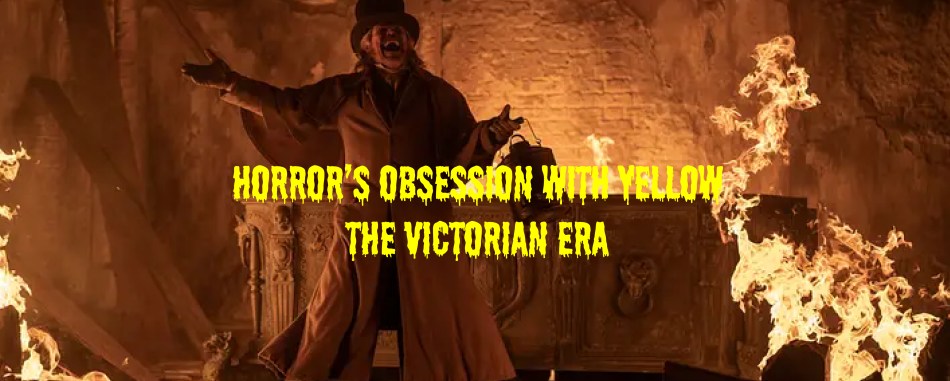
This film has a muted color pallet, but uses yellow in an interesting way primarily through lighting. Candlelight often casts dancing deep shadows on the proceedings and gives a sickly yellow glow as Ellen Hutter descends into a form delirium as Nosferatu nears her location. When her fiancé, Thomas (Jonathon Harker’s character), meets with Count Orlok at his remote castle, every one of Thomas’ meetings with the Count are done in sickly yellow lighting with Orlok’s shadow mysteriously moving around him of its own will. Nicholas Hoult’s performance of sheer terror in being in the presence of the Count genuinely feels real, especially when Orlok’s movements are too fast to be seen or noticed.
In the bowels of an asylum, Knock (Renfield in this adaptation) also loses his mind. His scenes are lit by candlelight as he talks to bugs as a way of communicating with Nosferatu. It isn’t until Professor Everhart von Franz (the Van Helsing of this narrative) discovers what Knock has left behind in his home and cell that he realizes that Nosferatu is at fault for what has been going on. This same yellow lighting is used in scenes where Everhart von Franz hopes to ensnare Nosferatu in a trap, but nothing is as it seems and the yellow lighting only adds to the off-putting sense of dread the film portrays.
Like Penny Dreadful, the 2024 adaptation of Nosferatu also utilizes chapter seven of Bram Stoker’s novel. That chapter features the captain’s log aboard a ship that was carrying Dracula in the novel and Nosferatu in this adaptation in boxes filled with soil from his homeland. During the voyage, the vampire feasts upon the crew leaving no one helming the ship when it finally crashes ashore at the city where his love, Ellen, is living. Rats exit the ship, multitudes of them, and plague quickly spreads throughout the city. It infects Ellen’s family and friends. Their society descends into illness and panic and the only way to stop Nosferatu is to entrap him with the only thing he cannot resist. Ellen, herself.
In that final scene when Ellen temps Nosferatu into bleeding her dry whilst the sun rises outside her open bedroom window. Neither she nor the vampire will survive and she has accepted her fate even if her husband is not ready to let her go. The yellow light now is pure hopeful sunlight, not the sickly lighting that has been throughout the movie. Sometimes hope and grief go hand in hand. Penny Dreadful used this theme as well when Ethan had to take the life of Vanessa to end the darkness Dracula had brought upon them. He and Sir Malcolm Murray cannot find hope in their grief yet as the series ends, but humanity will live on in the sunlight and that is what matters. Lilacs are thrown upon Ellen’s body. One last reminder that she will be mourned.
There is one more character from Penny Dreadful that I need to discuss, and he was a major player in Victorian literature and subsequent film adaptations. Hope you’ll visit again to find out who it is.
Discover more from Becky Tyler Art and Photography
Subscribe to get the latest posts sent to your email.




Chapter 29 – Horror in Victorian Literature Part 10
Outside of the fashion and interior design that viewed yellow as a happy sunshiney color, the Victorian era associated the color yellow with sickness as maritime and medical practices relied heavily on the color. Yellow flags were flown on ships to indicate if crew were infected with yellow fever, cholera, or other contagious diseases common at the time. And then there was the third plague pandemic that began in the Yunnan province of China in 1850 and spread throughout the world by the end of the century.
In total, six pandemics proliferated the 19th century. Smallpox, typhus, yellow fever, scarlet fever, cholera, and bubonic plague all spread to large portions of the population. Antibiotics like penicillin weren’t invented until 1928, so figuring out what spread these diseases to stop their spread was essential to protect human life. Bubonic plague is carried by fleas that live on rats, mice, and squirrels. If you lived in a large city where rodents survived in multitudes in the dark recesses of human activity – like London – spread of bubonic plague can happen easily. This is especially true if a ship carrying infected flea infested rats from other parts of the world dock in a shipyard and let the rats into the city. That is why those yellow flags noting illness was aboard a ship were so important.
Penny Dreadful
The series Penny Dreadful dealt with this side of London life in a limited capacity by showing Sir Malcolm Murray putting on a mask and going into infected parts of the city to feed those who were suffering from various illnesses. He even brings Vanessa to show her that even if she thinks she is a terrible person for what she did to Mina, there are ways she can make amends with her guilt. Like helping the ill and unfortunate. Even if the darkness that resides within her was really Dracula manipulating her from abroad until the third and final season when he made himself known.
Nosferatu
In 1922, Frederich Wilhelm Murnau made an unauthorized adaptation of Bram Stoker’s Dracula. Character names were changed and it was a silent film as talkies weren’t a thing at that point, but it was such an obvious rip off of the novel that the Stoker estate sued for copyright infringement and demanded that all copies of the film be destroyed. This was mostly adhered to in Europe, but because the copyrights in the United States were never filed properly, several of the prints survived. The original music used has been lost as well as some of the integrity of the surviving prints, but the film still remains an integral part of vampire lore in film especially when it comes to lighting effects. Max Schreck’s method acting was so convincing that Willem Dafoe portrayed Schreck in 2000’s Shadow of the Vampire, a film that shows that he truly believed he was a vampire. I highly recommend if you can find it streaming anywhere (it usually isn’t and it is out of print on physical media).
That 1922 adaptation, though hated by the Stoker estate upon its release, has become so engrained in how we view vampire lore that Robert Eggers remade it into one of the most terrifying horror films in recent memory. The portrayal of the titular vampire, Count Orlok/Nosferatu in this adaptation, was terrifyingly done by Bill Skarsgard in the best vampire makeup I’ve ever seen. This 2024 film also uses shadow much in the way that the original film and Coppola’s Dracula adaptation did in 1992. But it also sees the shadow as a disease. One that spreads far and wide as Nosferatu’s shadow darkens anything it touches.
Lilacs in the Victorian era represented the first emotions of love. They are also associated with memory, nostalgia, and past bonds which is why they often appeared in mourning bouquets or were planted near gravesites. Victorians used floriography – the language of flowers – to send coded messages through floral arrangements. If a woman gave a lilac to a protentional suiter, it meant she had a growing affection for him. In Eggers’ adaptation, he used lilacs for all the symbolism within the context of the era. Ellen Hutter (Mina Harker’s character in this film and Nosferatu’s muse) sends her fiancé to meet Count Orlok with a pendant filled with lilacs to show her affection. Orlok takes the necklace and it is obvious that he to associates the scent with Ellen and believes she sent it for him. Later, lilacs are thrown into caskets and upon places where death has occurred because they were associated with mourning loved ones in that era.
This film has a muted color pallet, but uses yellow in an interesting way primarily through lighting. Candlelight often casts dancing deep shadows on the proceedings and gives a sickly yellow glow as Ellen Hutter descends into a form delirium as Nosferatu nears her location. When her fiancé, Thomas (Jonathon Harker’s character), meets with Count Orlok at his remote castle, every one of Thomas’ meetings with the Count are done in sickly yellow lighting with Orlok’s shadow mysteriously moving around him of its own will. Nicholas Hoult’s performance of sheer terror in being in the presence of the Count genuinely feels real, especially when Orlok’s movements are too fast to be seen or noticed.
In the bowels of an asylum, Knock (Renfield in this adaptation) also loses his mind. His scenes are lit by candlelight as he talks to bugs as a way of communicating with Nosferatu. It isn’t until Professor Everhart von Franz (the Van Helsing of this narrative) discovers what Knock has left behind in his home and cell that he realizes that Nosferatu is at fault for what has been going on. This same yellow lighting is used in scenes where Everhart von Franz hopes to ensnare Nosferatu in a trap, but nothing is as it seems and the yellow lighting only adds to the off-putting sense of dread the film portrays.
Like Penny Dreadful, the 2024 adaptation of Nosferatu also utilizes chapter seven of Bram Stoker’s novel. That chapter features the captain’s log aboard a ship that was carrying Dracula in the novel and Nosferatu in this adaptation in boxes filled with soil from his homeland. During the voyage, the vampire feasts upon the crew leaving no one helming the ship when it finally crashes ashore at the city where his love, Ellen, is living. Rats exit the ship, multitudes of them, and plague quickly spreads throughout the city. It infects Ellen’s family and friends. Their society descends into illness and panic and the only way to stop Nosferatu is to entrap him with the only thing he cannot resist. Ellen, herself.
In that final scene when Ellen temps Nosferatu into bleeding her dry whilst the sun rises outside her open bedroom window. Neither she nor the vampire will survive and she has accepted her fate even if her husband is not ready to let her go. The yellow light now is pure hopeful sunlight, not the sickly lighting that has been throughout the movie. Sometimes hope and grief go hand in hand. Penny Dreadful used this theme as well when Ethan had to take the life of Vanessa to end the darkness Dracula had brought upon them. He and Sir Malcolm Murray cannot find hope in their grief yet as the series ends, but humanity will live on in the sunlight and that is what matters. Lilacs are thrown upon Ellen’s body. One last reminder that she will be mourned.
There is one more character from Penny Dreadful that I need to discuss, and he was a major player in Victorian literature and subsequent film adaptations. Hope you’ll visit again to find out who it is.
Discover more from Becky Tyler Art and Photography
Subscribe to get the latest posts sent to your email.
Share this: