Chapter 28 – Horror in Victorian Literature Part 9
The consumption of blood by a vampire in horror is seen as a blasphemy. In New Testament Christian terms, communion was established by Jesus on the day before his crucifixion where he broke bread as his body and shared a cup of wine as the blood of the new covenant. “Do this in remembrance of me,” he said. Modern priests say, “The body of Christ.” Anglican and Episcopal ministers often say, “The blood of Christ, the cup of salvation.” Orthodox churches use, “…the holy body and blood,” in their wording. When a vampire drinks blood from the body of a living person, they are trading the spiritual grace associated with blood for eternal life while taking another. In literature and film, vampires are seen as soulless unholy demons. Buffy the Vampire Slayer’s Angel is the anthesis of this after he is given a soul which prevents him from harming a human. This can all be linked to literature’s most famous vampire. You know his name and the color often associated with him in film and television is red.
The color red was the color of passion and power during the Victorian era. Shades of crimson, scarlet, and maroon proliferated in fashion for their vitality and drama. In horror stories, it was the color of blood. The substance of life. And of death. It is no surprise that Francis Ford Coppola used the color significantly in his adaptation of Bram Stoker’s Dracula.
Bram Stoker wasn’t the first writer to feature vampires, but he did take inspiration from stories like John Polidori’s The Vampyre and Joseph Sheridan le Fanu’s Carmilla. For the main character, Bram Stoker also took direct inspiration form Vlad the Impaler. If you’re not up on Romanian history, Vlad Dracula or Vlad III lived from 1428-1476. He was notoriously mean spirited and cruel in his torture methods. Stoker kept the location for his novel, specifically using the state of Transylvania for the location of Dracula’s castle, and named his character Dracula.
The original cover for the published novel was yellow with red lettering in 1897. The colors were perfect for the novel. Red, the color of blood, juxtaposed over yellow, the color of infection. Of puss. And of sulfur which, biblically speaking, is associated with hell. In Stoker’s novel, he suggests that Dracula made himself a vampire by some form of dark alchemy or supernatural forces after studying necromancy and dark magic, but it is never explicitly stated. The yellow cover of the original novel is perfect for this.
Francis Ford Coppola’s Adaptation
The adaptations of this novel began early in the United States after the estate filed the copyrights wrong leaving the story and character in the public domain. Universal produced one of my favorites starring Bela Lugosi in 1931, the same year as The Vampyr based off of le Fanu’s Carmilla. Dracula would proliferate in horror movies over the years with Christopher Lee taking up the reigns several times and Peter Cushing taking on the park of Professor Van Helsing. In was in 1992 that the stylized adaptation from Francis Ford Coppola hit the screens with Gary Oldman taking the reigns as Dracula. While the film feels laughably over the top by today’s standards, it does stand as a shining example of how adapting the Victorian era through color can help a film shine when half the cast is grossly miscast in their roles (Keanu Reeves, I’m looking at you, and Winona Ryder’s horrible try at the British accent).
Dracula has red armor in the opening events of the film. The design looks so much like the muscle underneath skin that the effect is terrifying. Imagine being on the battlefield and coming across this guy looking like a skinless terror. I’d run far, far away as quickly as possible. Even the battlefield is set against a blood red sky with the features of everything else simply being black. Symbolically, this shows the toll of such a war on both those that fought and those that survived. After he returns home and finds his wife dead, this version of Dracula renounces God in a church which is what turns him into a Vampire.
When Jonathon Harker (Keanu Reeves) first meets Dracula, the old vampire has wrinkled, yellowed skin and golden grey hair. He is dressed in a long red silk robe with gold adornments. He manages to look both sick and regal, but somehow terrifying at the same time as his shadow moves of its own accord.
Dracula’s brides wear white draped gowns with gold, lace, and pink embellishments. The effect is beautiful and it highlights their power of seduction. How could Jonathon Harker possibly resist? These three women drain Harker of all sense of purpose and hope until he realizes that he must leave if he is to get back to Mina, his fiancée. Much like Carmilla adaptations, female sexuality is used to seduce and control people. Dracula does the same when it comes to Mina and Lucy.
Mina (Winona Ryder) and her fiery redhead friend, Lucy, both wear dresses that show the era for what it was. Opulent fabrics in green that highlighted their wealth and place in society. After they each have contact with Dracula – either in their heads or in person – each dons a red dress. The color of passion. Of blood. Their innocence lost. Deviant feminine sexuality told through the color red and in Victorian culture, a female exhibiting uninhibited desires was viewed as dangerous. The red is also a warning. The effect of Dracula on these women cannot be understated.
The Aesthetic Movement rose during the Victorian era and was kind of an anti-Industrial age way of viewing mass produced furniture and art. This movement took inspiration from nature and often incorporated peacock feathers into its design. He drew inspiration from The Peacock Room designed by James McNeill Whistler, which is one of the most famous surviving examples of the Aesthetic Movement. The room has gold painted peacocks over a peacock blue wall in a Japanese inspired design. It currently resides in the Freer Gallery of Art in Washington, D.C.
Coppola used real peacock feathers in a garden scene as a romantic way to obscure an intimate moment between Mina and Jonathon. The feathers were also used to create an optical illusion as the eyes of the feathers to furl into flame. Some of the painted and embroidered gold on some of Dracula’s costumes, most notably the red robe with gold accents, were also inspired by The Peacock Room in design style.
Penny Dreadful and Dracula
The show Penny Dreadful adapted parts of this novel with care but updated it to fit their gothic Victorian London narrative in combining multiple novels into one show. It also uses the symbolism of a scorpion for the protagonist Vanessa Ives. The scorpion is often associated with protection, hidden danger, and rebirth. These themes run throughout the show, but especially with Vanessa.
In season one, Mina’s character goes missing after her friend, in this instance it is Vanessa Ives (Eva Green), betrays her by sleeping with Mina’s fiancé. Mina often appears to Vanessa in visions and dreams dressed in white, but it’s a sickly yellowish white. Normally an innocent color, the off white dresses here show Mina’s moral decay. Vanessa was always dressed in black, navy, and maroons – mourning colors – embroidered with jewels and lace. This showed her connection with wealthy Sir Malcolm Murray (Mina’s father) and also the guilt she carries as she feels responsible for ruining Mina’s marriage and for her disappearance.
Olivia Llewellyn as Mina and Eva Green as Vanessa Ives in Penny Dreadful (season 1, episode 8). – Photo: Jonathan Hession/SHOWTIME – Photo ID: PennyDreadful_108_2297
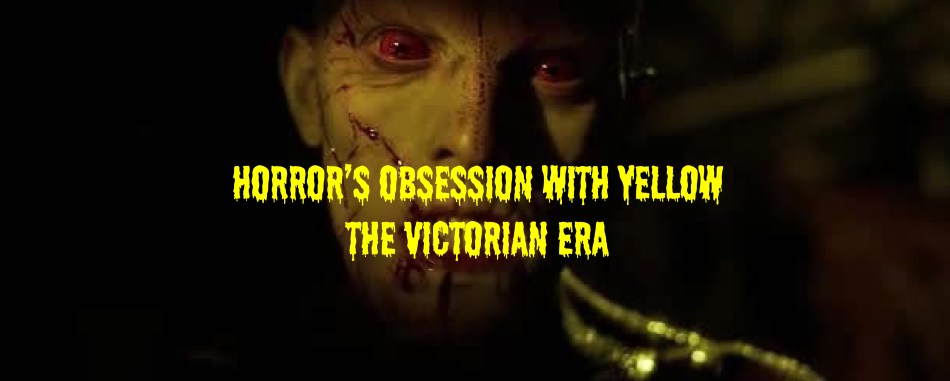
Vampires arrive on a ship during season one as well – a sequence inspired by the Demeter; the ship featured in chapter seven of Bram Stoker’s novel during which Dracula made the crossing over the ocean hidden in crates of dirt and fed upon the passengers during the voyage. Dracula himself does not appear until season three, but the vampires featured in season one are more akin to Nosferatu. Yellowed skin, red eyes, and sharp teeth give these creatures such an evil presence that even without Dracula showing his face, they are terrifying. Also aboard this ship are vampire women dressed in off-white dresses – a throwback to Dracula’s brides in the book – who attack when Malcolm Murray and friends board this ship looking for Mina.
In the context of Penny Dreadful, Lucifer and Dracula are enemies – fallen angels – who both lust after Vanessa’s clairvoyant power. Vanessa is possessed by both Lucifer and Amunet during the first season, and her character being framed as a chosen one who must confront evil shows her inner strength. She is tested many times, and it isn’t until Dracula’s arrival that she becomes the Mother of Evil. During their first meeting, Vanessa is in a museum that houses dead insects and animals. It has yellow walls, meant to be a soothing color. In reality, it is meant as a warning to Vanessa and the viewer that nothing about the situation is as pure as it seems.
The final time we see Vanessa alive it is when she is finally reunited with Ethan who realizes that he must end her life because of what Dracula has turned her into. The candles surrounding her cast a yellow light, something that should be calming. Here though, the illness within Vanessa must be stopped and the lighting casts sad light over the proceedings. Once she has passed away, the fog clears in London allowing the sun to cast daylight upon the city. Humanity is reborn, but at a great cost to Vanessa.
While Carmilla adaptations showed patriarchal control in the context of stomping out female strength, sexuality, and rebellion in order to save humanity from vampires (and women having any sort of agency), Dracula shows patriarchal control through a male vampire controlling women through his own form of manipulation. While it still imposes the constraints of Victorian sexuality, the story tends to concentrate more on the tensions between science and superstition and the clashes between good and evil. Restoration of order is still the moral of the story. The one thing both Carmilla and Dracula have in common though is their reflection on societal anxieties about sexual expression and deviant female sexuality.
I have one vampire left to talk about. He’s so terrifying, he deserves his own blog.
Discover more from Becky Tyler Art and Photography
Subscribe to get the latest posts sent to your email.




Chapter 28 – Horror in Victorian Literature Part 9
The consumption of blood by a vampire in horror is seen as a blasphemy. In New Testament Christian terms, communion was established by Jesus on the day before his crucifixion where he broke bread as his body and shared a cup of wine as the blood of the new covenant. “Do this in remembrance of me,” he said. Modern priests say, “The body of Christ.” Anglican and Episcopal ministers often say, “The blood of Christ, the cup of salvation.” Orthodox churches use, “…the holy body and blood,” in their wording. When a vampire drinks blood from the body of a living person, they are trading the spiritual grace associated with blood for eternal life while taking another. In literature and film, vampires are seen as soulless unholy demons. Buffy the Vampire Slayer’s Angel is the anthesis of this after he is given a soul which prevents him from harming a human. This can all be linked to literature’s most famous vampire. You know his name and the color often associated with him in film and television is red.
The color red was the color of passion and power during the Victorian era. Shades of crimson, scarlet, and maroon proliferated in fashion for their vitality and drama. In horror stories, it was the color of blood. The substance of life. And of death. It is no surprise that Francis Ford Coppola used the color significantly in his adaptation of Bram Stoker’s Dracula.
Bram Stoker wasn’t the first writer to feature vampires, but he did take inspiration from stories like John Polidori’s The Vampyre and Joseph Sheridan le Fanu’s Carmilla. For the main character, Bram Stoker also took direct inspiration form Vlad the Impaler. If you’re not up on Romanian history, Vlad Dracula or Vlad III lived from 1428-1476. He was notoriously mean spirited and cruel in his torture methods. Stoker kept the location for his novel, specifically using the state of Transylvania for the location of Dracula’s castle, and named his character Dracula.
The original cover for the published novel was yellow with red lettering in 1897. The colors were perfect for the novel. Red, the color of blood, juxtaposed over yellow, the color of infection. Of puss. And of sulfur which, biblically speaking, is associated with hell. In Stoker’s novel, he suggests that Dracula made himself a vampire by some form of dark alchemy or supernatural forces after studying necromancy and dark magic, but it is never explicitly stated. The yellow cover of the original novel is perfect for this.
Francis Ford Coppola’s Adaptation
The adaptations of this novel began early in the United States after the estate filed the copyrights wrong leaving the story and character in the public domain. Universal produced one of my favorites starring Bela Lugosi in 1931, the same year as The Vampyr based off of le Fanu’s Carmilla. Dracula would proliferate in horror movies over the years with Christopher Lee taking up the reigns several times and Peter Cushing taking on the park of Professor Van Helsing. In was in 1992 that the stylized adaptation from Francis Ford Coppola hit the screens with Gary Oldman taking the reigns as Dracula. While the film feels laughably over the top by today’s standards, it does stand as a shining example of how adapting the Victorian era through color can help a film shine when half the cast is grossly miscast in their roles (Keanu Reeves, I’m looking at you, and Winona Ryder’s horrible try at the British accent).
Dracula has red armor in the opening events of the film. The design looks so much like the muscle underneath skin that the effect is terrifying. Imagine being on the battlefield and coming across this guy looking like a skinless terror. I’d run far, far away as quickly as possible. Even the battlefield is set against a blood red sky with the features of everything else simply being black. Symbolically, this shows the toll of such a war on both those that fought and those that survived. After he returns home and finds his wife dead, this version of Dracula renounces God in a church which is what turns him into a Vampire.
When Jonathon Harker (Keanu Reeves) first meets Dracula, the old vampire has wrinkled, yellowed skin and golden grey hair. He is dressed in a long red silk robe with gold adornments. He manages to look both sick and regal, but somehow terrifying at the same time as his shadow moves of its own accord.
Dracula’s brides wear white draped gowns with gold, lace, and pink embellishments. The effect is beautiful and it highlights their power of seduction. How could Jonathon Harker possibly resist? These three women drain Harker of all sense of purpose and hope until he realizes that he must leave if he is to get back to Mina, his fiancée. Much like Carmilla adaptations, female sexuality is used to seduce and control people. Dracula does the same when it comes to Mina and Lucy.
Mina (Winona Ryder) and her fiery redhead friend, Lucy, both wear dresses that show the era for what it was. Opulent fabrics in green that highlighted their wealth and place in society. After they each have contact with Dracula – either in their heads or in person – each dons a red dress. The color of passion. Of blood. Their innocence lost. Deviant feminine sexuality told through the color red and in Victorian culture, a female exhibiting uninhibited desires was viewed as dangerous. The red is also a warning. The effect of Dracula on these women cannot be understated.
The Aesthetic Movement rose during the Victorian era and was kind of an anti-Industrial age way of viewing mass produced furniture and art. This movement took inspiration from nature and often incorporated peacock feathers into its design. He drew inspiration from The Peacock Room designed by James McNeill Whistler, which is one of the most famous surviving examples of the Aesthetic Movement. The room has gold painted peacocks over a peacock blue wall in a Japanese inspired design. It currently resides in the Freer Gallery of Art in Washington, D.C.
Coppola used real peacock feathers in a garden scene as a romantic way to obscure an intimate moment between Mina and Jonathon. The feathers were also used to create an optical illusion as the eyes of the feathers to furl into flame. Some of the painted and embroidered gold on some of Dracula’s costumes, most notably the red robe with gold accents, were also inspired by The Peacock Room in design style.
Penny Dreadful and Dracula
The show Penny Dreadful adapted parts of this novel with care but updated it to fit their gothic Victorian London narrative in combining multiple novels into one show. It also uses the symbolism of a scorpion for the protagonist Vanessa Ives. The scorpion is often associated with protection, hidden danger, and rebirth. These themes run throughout the show, but especially with Vanessa.
In season one, Mina’s character goes missing after her friend, in this instance it is Vanessa Ives (Eva Green), betrays her by sleeping with Mina’s fiancé. Mina often appears to Vanessa in visions and dreams dressed in white, but it’s a sickly yellowish white. Normally an innocent color, the off white dresses here show Mina’s moral decay. Vanessa was always dressed in black, navy, and maroons – mourning colors – embroidered with jewels and lace. This showed her connection with wealthy Sir Malcolm Murray (Mina’s father) and also the guilt she carries as she feels responsible for ruining Mina’s marriage and for her disappearance.
Vampires arrive on a ship during season one as well – a sequence inspired by the Demeter; the ship featured in chapter seven of Bram Stoker’s novel during which Dracula made the crossing over the ocean hidden in crates of dirt and fed upon the passengers during the voyage. Dracula himself does not appear until season three, but the vampires featured in season one are more akin to Nosferatu. Yellowed skin, red eyes, and sharp teeth give these creatures such an evil presence that even without Dracula showing his face, they are terrifying. Also aboard this ship are vampire women dressed in off-white dresses – a throwback to Dracula’s brides in the book – who attack when Malcolm Murray and friends board this ship looking for Mina.
In the context of Penny Dreadful, Lucifer and Dracula are enemies – fallen angels – who both lust after Vanessa’s clairvoyant power. Vanessa is possessed by both Lucifer and Amunet during the first season, and her character being framed as a chosen one who must confront evil shows her inner strength. She is tested many times, and it isn’t until Dracula’s arrival that she becomes the Mother of Evil. During their first meeting, Vanessa is in a museum that houses dead insects and animals. It has yellow walls, meant to be a soothing color. In reality, it is meant as a warning to Vanessa and the viewer that nothing about the situation is as pure as it seems.
The final time we see Vanessa alive it is when she is finally reunited with Ethan who realizes that he must end her life because of what Dracula has turned her into. The candles surrounding her cast a yellow light, something that should be calming. Here though, the illness within Vanessa must be stopped and the lighting casts sad light over the proceedings. Once she has passed away, the fog clears in London allowing the sun to cast daylight upon the city. Humanity is reborn, but at a great cost to Vanessa.
While Carmilla adaptations showed patriarchal control in the context of stomping out female strength, sexuality, and rebellion in order to save humanity from vampires (and women having any sort of agency), Dracula shows patriarchal control through a male vampire controlling women through his own form of manipulation. While it still imposes the constraints of Victorian sexuality, the story tends to concentrate more on the tensions between science and superstition and the clashes between good and evil. Restoration of order is still the moral of the story. The one thing both Carmilla and Dracula have in common though is their reflection on societal anxieties about sexual expression and deviant female sexuality.
I have one vampire left to talk about. He’s so terrifying, he deserves his own blog.
Discover more from Becky Tyler Art and Photography
Subscribe to get the latest posts sent to your email.
Share this: