Chapter 24 – Horror in Victorian Literature Part 5
Mary Shelley was born Mary Wollstonecraft Godwin in 1797. Her mother, Mary Wollstonecraft, a feminist writer and philosopher in her own right, died eleven days after her daughter’s birth. Her father, William Godwin, had anarchist political beliefs, so it came as no surprise that Mary Shelley ended up falling in love with a man within her father’s political spectrum. Percy Shelley was already married when he met Mary so they fled England together and when they returned, Mary was pregnant. The baby didn’t survive and the couple faced public ridicule and money troubles and were only allowed to marry after Percy’s wife died.
It was then that the couple, along with Mary’s stepsister, went to Switzerland to spend time with friends Lord Byron, who was living in Villa Diodati near Geneva, Switzerland at the time, and John Polidori. The summer was historically cold and wet forcing the group inside where they drank laudanum (alcohol mixed with opium powder), played pranks on each other, and conceived of scary stories to tell one another to pass the time.
Three things came from this drug-laced weekend near Lake Geneva. One – John Polidori would use a tale told by Lord Byron to write a vampire story that would later inspire Bram Stoker. Two – Mary Shelley would lay the groundwork for what would become Frankenstein: or The Modern Prometheus. Three – the night would widely be considered by historians to be when gothic horror as we know it was unleashed upon the world. And of course Hollywood made a film about it.
A Film About a Weekend of Debauchery
In 1986, Ken Russell directed a film that starred Gabriel Byrne, Natasha Richardson, Julian Sands, and Timothy Spall. Entitled Gothic, the film imagined what happened that fateful weekend. Polidori (Timothy Spall) pranked his friends with leeches in the food. Lord Byron (Gabriel Byrne) gave his guests drugs and encouraged debauchery – something he was in exile for himself. Percy (Julian Sands) didn’t seem to notice his wife still grieved the death of their daughter. And Mary (Natasha Richardson), when the drugs did their work on her grief soaked mind, imagined a world in which she could bring their daughter’s corpse back to life with science whilst also envisioning it a monster. Just because you can, doesn’t mean you should, right?
Visually, the film used color to its advantage. Lord Byron’s character was dressed in red often and a large red cloth draped around the entrance room to his villa showed him to be the corrupting force for the weekend. Polidori wore a yellow vest for the first part of the film showing his wealth. Mary and Percy wore white and lightly colored clothing showing their innocence even though their relationship until that point had been anything but. The house itself becomes their playground as they prank each other and say a whole lot of things that they shouldn’t.
While this film on its own is a watchable drug fueled mess, it does shed a bit of light on what it might have been like when Mary Shelley came up with the idea for the world’s most famous lonely creature and how she viewed men, or at least how she viewed their selfishness. The heart of the film is Mary’s grief and her husband’s complete lack of any awareness. I find it hard to believe Mary thought he would ever truly be there for her since he already left one wife behind for another woman even if that woman was her. With that said, its easy to see how she took inspiration from this situation to write a story about loneliness and the selfishness of man.
The film only tells the tale of that one weekend, but Mary’s grief didn’t end there. After leaving Geneva, Mary and Percy would have three more children but only one would survive and Percy would die at the age of 29 leaving Mary to raise their only remaining child alone. The heartbreak and loss she experienced in life comes out in her most famous novel that is about loneliness, grief, and the hubris of man. Who is the real monster? The creature or the man who created him? Moreover, where does such madness come from, and when all is said and done, do we learn from our mistakes?
Penny Dreadful and the Hubris of Doctor Frankenstein
These themes are carried heavily in the show Penny Dreadful. It utilizes Victor Frankenstein’s character as the selfish, flawed man who brought not one but three people back to life in the context of the show. The first, who later names itself John Clare, Victor abandons for all its perceived monstrosities. The second creature Victor reanimates is learning to think and love just as his first creature comes back to kill it in a jealous rage. The third creature is a woman, Brona, a demand of John Clare’s need for a mate. If you’ve read the book, you know that Victor never created a bride for the Monster, so this twist in the show plays more off of the Universal monster movies than it does the original source material.
For all Victor’s work at finally reanimating something beautiful, Victor falls in love with Brona, a woman who had consumption before her untimely death – one Victor caused by holding a pillow over her face. The one thing these creatures have in common is their eyes. Yellow eyes showing the death that once overtook their bodies. New life can’t fully erase the decay their bodies once experienced. John Clare in particular is scarred permanently, something he will have to live with forever. An immortal monster. With those haunted yellow eyes.
Rory Kinnear plays John Clare who is introduced as an angry beast by killing the second creature and then Professor Van Helsing in the first few episodes of the series but is later revealed to just be a lonely creature who eventually remembers he had a wife and a son before his death. It is Vanessa Ives (Eva Green) who helps John realize that not only was he kind before his death, but he is kind now and that his family deserves to know he is alive. The only problem is that his son is dying and when his wife demands that John bring their son to Victor to bring him back to life after his death, John Clare refuses because he knows what a curse it will be for the boy. Immortality isn’t all it’s cracked up to be when you’re constantly judged for looking like a monster.
As I already stated, Van Helsing was killed off early on in season one of this series. In season three, the show finally brought in Dracula which meant they needed someone to be the vampire hunter they unceremoniously killed off early on. That ended up being a female character named Catroina played by Perdita Weeks. While the actress breathed a lot of life into this character, she has no real backstory so her badassery is just that and no real character outside of knowing how to kill vampires. Unfortunate too because the actress does wonders with the role that didn’t offer much in the way of emotional value.
During that final season, Brona wants nothing to do with Victor when she realizes Dorian Gray can offer her everything in death that she never had in life. Money. Power. Passion. She realizes her female strength and wants to give other low born women – the prostitutes and poor, abused housewives – the strength to know they deserve more. In one scene, she sees suffragettes protesting to give women the vote. Brona takes inspiration from this and starts bringing in women to her cause. Unfortunately, this is also what causes Dorian Gray to realize their relationship is getting away from him. The woman became more than he bargained for and his immortal patriarchal rage took over.
The white silky, lacy gowns Brona wears don’t give off innocence. They give off the notion of power, something that was not afforded to her before her death. After Dorian decides Brona needs to be taken down a notch, he brings in Victor and Dr. Jekyll who had teamed up to create a serum that would separate the bad half of one’s self from the good. You know what I mean. The Mr. Hyde that resides in the darkest recesses of our minds. Dorian believed that if these two mad scientists gave Brona this serum that she would revert to the woman she was when he first met her. That the female urge to think for herself and lead must be something that needs to be stopped or destroyed. Victorian era misogyny, slapping us right across the face. Why must being a woman be so difficult?
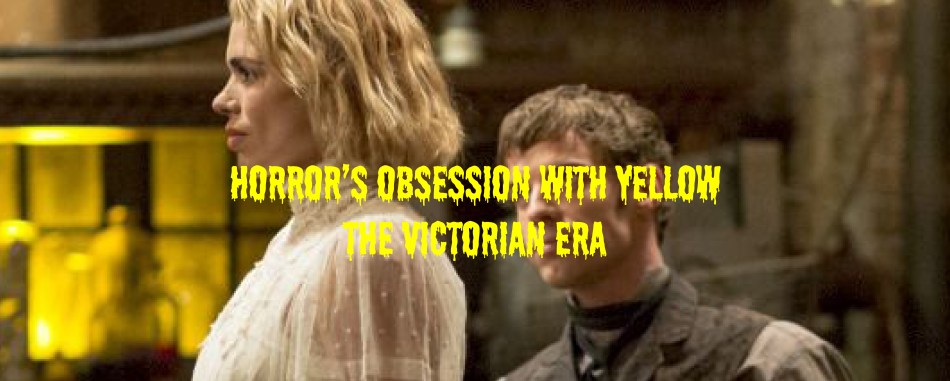
The two doctors bring Brona to Bedlam Asylum where they have set up their lab. The lab itself is much like the other residents of the asylum. It is dressed in yellow light signifying the sinister aspects of what the two men create in their lab. When Victor tries to administer the serum, Brona admits that she remembers the daughter she lost during her first life. The daughter she left at home alone to go work because they needed the money only to find her daughter dead when she arrived home. The memory that she was once a mother, once had that love in her life, is the only thing that makes her feel human. If they give her the serum, she will lose all memory of that daughter who died too young and she begs Victor to set her free. Finally, Victor shows his humanity and does so, giving the woman he loves her freedom.
This mirrors how Victor felt regret for the deaths he caused in the book (his brother and brother’s fiancée), and that his ambition and selfish hubris led to terrible failures in the book. Book Victor refuses to accept responsibility for what he has done. He chose vengeance over forgiveness and demands the creature’s destruction. In this adaptation on Penny Dreadful, he gives Brona what she wants and allows her to leave. He then helps Ethan and Malcolm Murray to defeat Dracula in an attempt to save Vanessa. This version of Victor chooses to do better, and this is what ends his working relationship with Dr. Jekyll who I’ll discuss on another blog.
That arc with Brona is a nod to Mary Shelley’s real life having lost three young children and the pain and grief she carried with her until her death in 1851. It even emulates Gothic a bit in that Mary discusses her grief openly in Gothic much like Brona does in Penny Dreadful. Brona also wants prostitutes and disadvantaged women to rise up in post-Jack-the-Ripper London in the final season even if she does not see it transpire. Given that this show took place three years after Jack the Ripper murdered five women who many believed to be prostitutes or women of ill repute, this shows how the serial killer affected Victorian era London even years later. Being a woman, especially an impoverished woman, was very dangerous indeed.
Dorian Gray is the person who allows Brona to be taken by Victor and Dr. Jekyll when he realizes her need to empower women has come between them. Even with his own immortality, he wasn’t a strong enough man to handle a strong woman. I believe this was also a nod to Shelley’s real life having been born to a feminist mother and raised by her father’s anarchist political beliefs. Perhaps the writers of Penny Dreadful invented Brona, whose character is not in the book, and used her as the main reanimated monster in later seasons. She served as the embodiment of everything Mary Shelley represented in life even in death. And I love it.
Mary Shelley remains a source of inspiration for filmmakers today. The Bride! directed by Maggie Gyllenhaal reimagines the Frankenstein mythos into a story about female agency and rage in the context of rebellion that inspires women to take to the streets to fight against the patriarchal trauma they suffered. It also bucks the trend that women exist just as companions or servants to men. It even uses Mary Shelley as a character so she can be the inner voice of feminine rage for the main character. Guillermo del Toro also adapted Mary Shelley’s most famous story in such a way that utilizes Victorian era fashion and Gothic sets to bring the story to life. And that, my good reader, will be the topic of my next blog.
Discover more from Becky Tyler Art and Photography
Subscribe to get the latest posts sent to your email.




Chapter 24 – Horror in Victorian Literature Part 5
Mary Shelley was born Mary Wollstonecraft Godwin in 1797. Her mother, Mary Wollstonecraft, a feminist writer and philosopher in her own right, died eleven days after her daughter’s birth. Her father, William Godwin, had anarchist political beliefs, so it came as no surprise that Mary Shelley ended up falling in love with a man within her father’s political spectrum. Percy Shelley was already married when he met Mary so they fled England together and when they returned, Mary was pregnant. The baby didn’t survive and the couple faced public ridicule and money troubles and were only allowed to marry after Percy’s wife died.
It was then that the couple, along with Mary’s stepsister, went to Switzerland to spend time with friends Lord Byron, who was living in Villa Diodati near Geneva, Switzerland at the time, and John Polidori. The summer was historically cold and wet forcing the group inside where they drank laudanum (alcohol mixed with opium powder), played pranks on each other, and conceived of scary stories to tell one another to pass the time.
Three things came from this drug-laced weekend near Lake Geneva. One – John Polidori would use a tale told by Lord Byron to write a vampire story that would later inspire Bram Stoker. Two – Mary Shelley would lay the groundwork for what would become Frankenstein: or The Modern Prometheus. Three – the night would widely be considered by historians to be when gothic horror as we know it was unleashed upon the world. And of course Hollywood made a film about it.
A Film About a Weekend of Debauchery
In 1986, Ken Russell directed a film that starred Gabriel Byrne, Natasha Richardson, Julian Sands, and Timothy Spall. Entitled Gothic, the film imagined what happened that fateful weekend. Polidori (Timothy Spall) pranked his friends with leeches in the food. Lord Byron (Gabriel Byrne) gave his guests drugs and encouraged debauchery – something he was in exile for himself. Percy (Julian Sands) didn’t seem to notice his wife still grieved the death of their daughter. And Mary (Natasha Richardson), when the drugs did their work on her grief soaked mind, imagined a world in which she could bring their daughter’s corpse back to life with science whilst also envisioning it a monster. Just because you can, doesn’t mean you should, right?
Visually, the film used color to its advantage. Lord Byron’s character was dressed in red often and a large red cloth draped around the entrance room to his villa showed him to be the corrupting force for the weekend. Polidori wore a yellow vest for the first part of the film showing his wealth. Mary and Percy wore white and lightly colored clothing showing their innocence even though their relationship until that point had been anything but. The house itself becomes their playground as they prank each other and say a whole lot of things that they shouldn’t.
While this film on its own is a watchable drug fueled mess, it does shed a bit of light on what it might have been like when Mary Shelley came up with the idea for the world’s most famous lonely creature and how she viewed men, or at least how she viewed their selfishness. The heart of the film is Mary’s grief and her husband’s complete lack of any awareness. I find it hard to believe Mary thought he would ever truly be there for her since he already left one wife behind for another woman even if that woman was her. With that said, its easy to see how she took inspiration from this situation to write a story about loneliness and the selfishness of man.
The film only tells the tale of that one weekend, but Mary’s grief didn’t end there. After leaving Geneva, Mary and Percy would have three more children but only one would survive and Percy would die at the age of 29 leaving Mary to raise their only remaining child alone. The heartbreak and loss she experienced in life comes out in her most famous novel that is about loneliness, grief, and the hubris of man. Who is the real monster? The creature or the man who created him? Moreover, where does such madness come from, and when all is said and done, do we learn from our mistakes?
Penny Dreadful and the Hubris of Doctor Frankenstein
These themes are carried heavily in the show Penny Dreadful. It utilizes Victor Frankenstein’s character as the selfish, flawed man who brought not one but three people back to life in the context of the show. The first, who later names itself John Clare, Victor abandons for all its perceived monstrosities. The second creature Victor reanimates is learning to think and love just as his first creature comes back to kill it in a jealous rage. The third creature is a woman, Brona, a demand of John Clare’s need for a mate. If you’ve read the book, you know that Victor never created a bride for the Monster, so this twist in the show plays more off of the Universal monster movies than it does the original source material.
For all Victor’s work at finally reanimating something beautiful, Victor falls in love with Brona, a woman who had consumption before her untimely death – one Victor caused by holding a pillow over her face. The one thing these creatures have in common is their eyes. Yellow eyes showing the death that once overtook their bodies. New life can’t fully erase the decay their bodies once experienced. John Clare in particular is scarred permanently, something he will have to live with forever. An immortal monster. With those haunted yellow eyes.
Rory Kinnear plays John Clare who is introduced as an angry beast by killing the second creature and then Professor Van Helsing in the first few episodes of the series but is later revealed to just be a lonely creature who eventually remembers he had a wife and a son before his death. It is Vanessa Ives (Eva Green) who helps John realize that not only was he kind before his death, but he is kind now and that his family deserves to know he is alive. The only problem is that his son is dying and when his wife demands that John bring their son to Victor to bring him back to life after his death, John Clare refuses because he knows what a curse it will be for the boy. Immortality isn’t all it’s cracked up to be when you’re constantly judged for looking like a monster.
As I already stated, Van Helsing was killed off early on in season one of this series. In season three, the show finally brought in Dracula which meant they needed someone to be the vampire hunter they unceremoniously killed off early on. That ended up being a female character named Catroina played by Perdita Weeks. While the actress breathed a lot of life into this character, she has no real backstory so her badassery is just that and no real character outside of knowing how to kill vampires. Unfortunate too because the actress does wonders with the role that didn’t offer much in the way of emotional value.
During that final season, Brona wants nothing to do with Victor when she realizes Dorian Gray can offer her everything in death that she never had in life. Money. Power. Passion. She realizes her female strength and wants to give other low born women – the prostitutes and poor, abused housewives – the strength to know they deserve more. In one scene, she sees suffragettes protesting to give women the vote. Brona takes inspiration from this and starts bringing in women to her cause. Unfortunately, this is also what causes Dorian Gray to realize their relationship is getting away from him. The woman became more than he bargained for and his immortal patriarchal rage took over.
The white silky, lacy gowns Brona wears don’t give off innocence. They give off the notion of power, something that was not afforded to her before her death. After Dorian decides Brona needs to be taken down a notch, he brings in Victor and Dr. Jekyll who had teamed up to create a serum that would separate the bad half of one’s self from the good. You know what I mean. The Mr. Hyde that resides in the darkest recesses of our minds. Dorian believed that if these two mad scientists gave Brona this serum that she would revert to the woman she was when he first met her. That the female urge to think for herself and lead must be something that needs to be stopped or destroyed. Victorian era misogyny, slapping us right across the face. Why must being a woman be so difficult?
The two doctors bring Brona to Bedlam Asylum where they have set up their lab. The lab itself is much like the other residents of the asylum. It is dressed in yellow light signifying the sinister aspects of what the two men create in their lab. When Victor tries to administer the serum, Brona admits that she remembers the daughter she lost during her first life. The daughter she left at home alone to go work because they needed the money only to find her daughter dead when she arrived home. The memory that she was once a mother, once had that love in her life, is the only thing that makes her feel human. If they give her the serum, she will lose all memory of that daughter who died too young and she begs Victor to set her free. Finally, Victor shows his humanity and does so, giving the woman he loves her freedom.
This mirrors how Victor felt regret for the deaths he caused in the book (his brother and brother’s fiancée), and that his ambition and selfish hubris led to terrible failures in the book. Book Victor refuses to accept responsibility for what he has done. He chose vengeance over forgiveness and demands the creature’s destruction. In this adaptation on Penny Dreadful, he gives Brona what she wants and allows her to leave. He then helps Ethan and Malcolm Murray to defeat Dracula in an attempt to save Vanessa. This version of Victor chooses to do better, and this is what ends his working relationship with Dr. Jekyll who I’ll discuss on another blog.
That arc with Brona is a nod to Mary Shelley’s real life having lost three young children and the pain and grief she carried with her until her death in 1851. It even emulates Gothic a bit in that Mary discusses her grief openly in Gothic much like Brona does in Penny Dreadful. Brona also wants prostitutes and disadvantaged women to rise up in post-Jack-the-Ripper London in the final season even if she does not see it transpire. Given that this show took place three years after Jack the Ripper murdered five women who many believed to be prostitutes or women of ill repute, this shows how the serial killer affected Victorian era London even years later. Being a woman, especially an impoverished woman, was very dangerous indeed.
Dorian Gray is the person who allows Brona to be taken by Victor and Dr. Jekyll when he realizes her need to empower women has come between them. Even with his own immortality, he wasn’t a strong enough man to handle a strong woman. I believe this was also a nod to Shelley’s real life having been born to a feminist mother and raised by her father’s anarchist political beliefs. Perhaps the writers of Penny Dreadful invented Brona, whose character is not in the book, and used her as the main reanimated monster in later seasons. She served as the embodiment of everything Mary Shelley represented in life even in death. And I love it.
Mary Shelley remains a source of inspiration for filmmakers today. The Bride! directed by Maggie Gyllenhaal reimagines the Frankenstein mythos into a story about female agency and rage in the context of rebellion that inspires women to take to the streets to fight against the patriarchal trauma they suffered. It also bucks the trend that women exist just as companions or servants to men. It even uses Mary Shelley as a character so she can be the inner voice of feminine rage for the main character. Guillermo del Toro also adapted Mary Shelley’s most famous story in such a way that utilizes Victorian era fashion and Gothic sets to bring the story to life. And that, my good reader, will be the topic of my next blog.
Discover more from Becky Tyler Art and Photography
Subscribe to get the latest posts sent to your email.
Share this: