Chapter 23 – Horror in Victorian Literature Part 4
Lycanthrope (lay-kan-throhp): 1. A person affected with lycanthropy. 2. A werewolf or alien spirit who takes the physical form of a bloodthirsty wolf.
Lycanthropy (lay-kan-throhp-ee): 1. The delusion of believing you are a wolf. 2. The mythical assumption of the appearance of a wolf by a human being.
The werewolf has been a part of human folklore and mythology for thousands of years beginning in Ancient Greece and the Middle East. In Greece, myths spoke of Zeus turning King Lycaon of Arcadia into a wolf as punishment for serving human flesh, which is where the word lycanthrope comes form. Norse warriors wore wolf pelts into battle thinking it would help them channel the fierce spirit of the wolf which inspired myths of man-beasts. The English word werwulf – meaning man-wolf – appeared in the 11th century. In medieval Europe, people accused of certain forms of witchcraft were sometimes charged with turning into wolves. The full moon was often the catalyst for transformation, though traditional European folklore described werewolves as a quadruped with human eyes which is a far cry from modern cinematic versions of the creature who walk around on two legs. And that part of the folklore about how a bite or scratch would turn you into a werewolf? That came from cinema as well. Yellow eyes would become commonplace in depictions of cinematic werewolves, signifying the illness within.
It was during the Victorian era that shape-shifting tropes in werewolf myths started to take hold. Sutherland Menzies wrote Hugues, the Wer-Wolf in 1838. It was one of the earliest stories to use the trope. In 1847, George W.M. Reynolds wrote Wagner, the Wehr-Wolf which was released as a serialized Penny Dreadful. That particular story is derivative of Varney the Vampyre, another popular Penny Dreadful of the era, and is probably why Reynolds’ story isn’t more popular in our modern times. In 1871, The Gray-Wolf by George MacDonald was a short story about supernatural beasts in Scotland and the moral culpability that came with the transformation. Bram Stoker even took inspiration from werewolf lore when he wrote Dracula’s Guest in 1892 as part of his vampire mythos.
What these stories all have in common is the embodiment of duality. Moreover, they are often allegory for the underlying fear about well brought up gentlemen who harbor primitive, violent, and blood thirsty instincts underneath their civilized demeanor. The Strange Case of Dr. Jekyll and Mr. Hyde is another example of similar duality in man that shares similar tropes with werewolf myths so it was a common theme in Victorian literature. Fear of that type of inner violence in others, especially men, is something that is still prevalent today if I may say so from a female perspective. Perhaps it is rooted in patriarchal undertones throughout the generations. Perhaps it is rooted in the knowledge that we never really know someone, male or female, until we see them at their worst. Perhaps the Victorian era literature – with all its hubris of man and duality tropes – exists in large part because of that underlying fear.
What I really noticed during my foray into this literature and the subsequent film adaptations that came from it over the decades is that men are often not held to the same account for their behavior as women – just wait until I get to witches later in my blog series. For the context of the werewolf, we are often led to believe that the man – and it’s always a man in these stories – had no control over his actions whilst in wolf form therefor garnering sympathy for such creatures even when they are shot with silver bullets (also a cinematic addition to werewolf lore). If a woman had such violent tendencies, she would be accused of being a witch and burned at the stake like women were during the Puritan era. **shakes head at patriarchal hypocrisy**
Lupus Dei
Lupus Dei is Latin for ‘Wolf of God’. This concept of a werewolf serving divine or holy forces rather than demonic ones has historical roots in Swedish Livonia in 1692. A man named Thiess of Kaltenbrun was suspected of witchcraft and admitted to being a werewolf. He claimed that werewolves weren’t agents of Satan but were the “Hounds of God” and that werewolves descended into Hell to battle the Devil and witches were made under the guise of recovering stolen grain or livestock for the betterment of humanity. He was judged guilty and sentenced to a flogging and was banished for life from the community. He gets to live his life out elsewhere while women were being burned at the stake in England for – checks notes – supposed yet unproven witchcraft.
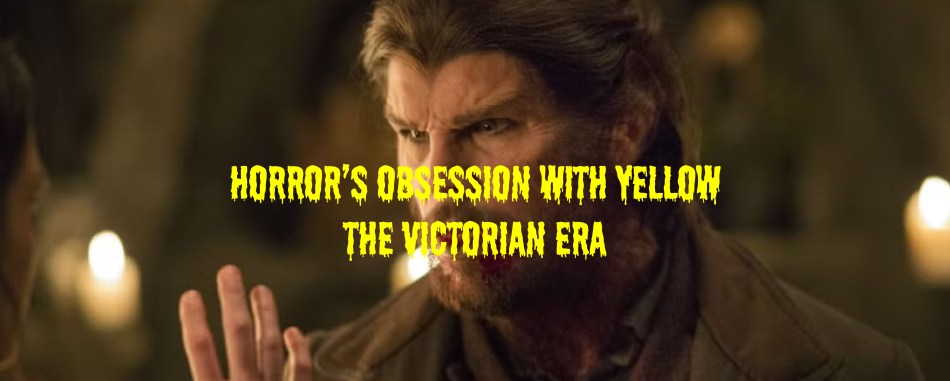
Anyway, the real reason I mention Lupus Dei is that the show Penny Dreadful used it within the show’s biblical mythology where a werewolf is the protector of the “Mother of Evil” against rival fallen angels – Dracula and Lucifer. This role was given to Josh Hartnett’s character, giving the standard werewolf curse a higher purpose and it elevated the show to something truly special. It also subverted standard werewolf tropes of the Victorian era that saw them as demons and makes Ethan far more interesting a character as the series progressed.
Penny Dreadful’s Use of Werewolf Lore
Penny Dreadful used characters from famous gothic Victorian era literature to tell the three-season arc of how Dracula, Lucifer, and witchcraft affected London mere years after Jack the Ripper killed those unfortunate five women. While the show used characters from Dracula, Frankenstein, The Picture of Dorian Gray, and The Strange Case of Dr. Jekyll and Mr. Hyde, it also invented two original characters to be its protagonists. Eva Green would play Vanessa Ives, clairvoyant woman with witchcraft in her blood and the Mother of Evil – a tidbit we would find out in season three when Dracula finally appears.
Josh Hartnett, though, plays a gunslinging American on the run from a dangerous past. And he has a dark secret. He is also a werewolf, though he keeps this mostly hidden through season one. While the character is not based directly on literature, the writers of the series did loosely base Ethan on Universal’s The Wolf Man (1941). By loosely, I mean that Ethan’s birth name is Ethan Lawrence Talbot, a nod to Lawrence Talbot played by Lon Chaney in the 1941 Universal film. His character also feeds off of the trope of an American in a foreign country dealing with ancient curses in a gothic setting often used in horror films like An American Werewolf in London and The Mummy movies from the 1990s. The series mixes this Wild West character with Victorian London so well that it is almost jarring when, in season three, Ethan is brought back to his New Mexico home to account for his past and must find a way back to London to save Vanessa.
But I’m getting ahead. I always get ahead of myself when I’m excited. Ethan’s backstory starts when his ruthless American industrialist father steals land from Native Americans before sending Ethan into the U.S. army to toughen him up. Under the command of a violent commanding officer, Ethan was forced to take part in the killing of the majority of an Apache tribe. Ethan was wracked with guilt over this and killed his commanding officer before turning himself over to the remaining members of the Apache tribe. Penny Dreadful never shied away from the worst parts of human history, so including this awful part of American history made Ethan’s character a standout in the show.
The Apache took him in and eventually embraced him as one of their own, showing them not as the savages that white people portrayed them to be, but the real family that Ethan needed to become a better man. Unfortunately, Ethan inadvertently leaked intel that led to a raid where most of his real family was slaughtered. This was when he was given his werewolf curse/mark by his Apache adoptive father before Ethan parted ways with the Apache and fled to London whilst working on a Wild Wild West show.
Biblical side note incoming. Did you know that Judas Iscariot is frequently depicted wearing yellow in art and folklore? If you’re unfamiliar with Judas’ biblical story, he betrayed Jesus to religious authorities in the Garden of Gethsemane. He used a kiss to the cheek as a signal – a way of pointing Jesus out in a crowd. He was also unwilling to face the consequences of his actions, and the depictions of him in yellow garbs is where the term yellow bellied coward comes from. Ethan’s arc in this show early on mimics that of Judas. Man on the run after accidentally getting his family killed. But Ethan, unlike Judas, does atone for his sins as the series goes on, exorcising Lucifer from possessing Vanessa Ives in season one, helping her escape a witch’s coven in season two, and ending her curse as the Mother of Evil in season three, which lifted Dracula’s fog that was hanging over London. Atonement for one’s sins is one of the main themes of Penny Dreadful, and Ethan is testament to that.
When Ethan transforms into a wolf, he is still more man than wolf. His face changes into something eviler, the eyes yellow and the fur longer, but he still maintains a piece of his humanity. In season two when he and Vanessa are hiding from the coven that is after Vanessa, Ethan protects her by transforming into his animalistic side and it is the first time Vanessa sees who he is underneath the human mask. At the end of that season, he infiltrates the Gothic house the coven calls home to extricate her only to find that Vanessa has mostly saved herself by choosing light over darkness (made my feminist heart happy, that).
In season three when Ethan is forced back to the United States, witch coven member Hecate follows him. While his journey through the desert is hard and having to hear his father retell the trauma Ethan caused was harder, Ethan manages to overcome these hardships with the help of Sir Malcolm Murray who had become a father figure and friend to him. There is a church that Ethan’s ruthless American father forces Ethan to atone for his sins in. It has walls painted yellow with southwestern style designs decorating the church, an off-putting color given the dead bodies and destruction Ethan had left in his wake when he fled. Regardless of where this show’s scenes are located, yellow always seems to be a part of set pieces or lighting or character design.
The werewolf has always been about duality. The uncontrollable beast within brought out by either moonlight or an angry mood depending on the telling. Ethan’s character is one of my favorite tellings of werewolf lore, using it as a form of protection against Dracula’s evil. The lore the show built around itself is something truly special for it uses familiar characters but gives us such an inventive story that it all feels new.
The next chapter of my blog tells the story of one of my favorite doctors for his hubris can’t go ignored.
Discover more from Becky Tyler Art and Photography
Subscribe to get the latest posts sent to your email.



Chapter 23 – Horror in Victorian Literature Part 4
Lycanthrope (lay-kan-throhp): 1. A person affected with lycanthropy. 2. A werewolf or alien spirit who takes the physical form of a bloodthirsty wolf.
Lycanthropy (lay-kan-throhp-ee): 1. The delusion of believing you are a wolf. 2. The mythical assumption of the appearance of a wolf by a human being.
The werewolf has been a part of human folklore and mythology for thousands of years beginning in Ancient Greece and the Middle East. In Greece, myths spoke of Zeus turning King Lycaon of Arcadia into a wolf as punishment for serving human flesh, which is where the word lycanthrope comes form. Norse warriors wore wolf pelts into battle thinking it would help them channel the fierce spirit of the wolf which inspired myths of man-beasts. The English word werwulf – meaning man-wolf – appeared in the 11th century. In medieval Europe, people accused of certain forms of witchcraft were sometimes charged with turning into wolves. The full moon was often the catalyst for transformation, though traditional European folklore described werewolves as a quadruped with human eyes which is a far cry from modern cinematic versions of the creature who walk around on two legs. And that part of the folklore about how a bite or scratch would turn you into a werewolf? That came from cinema as well. Yellow eyes would become commonplace in depictions of cinematic werewolves, signifying the illness within.
It was during the Victorian era that shape-shifting tropes in werewolf myths started to take hold. Sutherland Menzies wrote Hugues, the Wer-Wolf in 1838. It was one of the earliest stories to use the trope. In 1847, George W.M. Reynolds wrote Wagner, the Wehr-Wolf which was released as a serialized Penny Dreadful. That particular story is derivative of Varney the Vampyre, another popular Penny Dreadful of the era, and is probably why Reynolds’ story isn’t more popular in our modern times. In 1871, The Gray-Wolf by George MacDonald was a short story about supernatural beasts in Scotland and the moral culpability that came with the transformation. Bram Stoker even took inspiration from werewolf lore when he wrote Dracula’s Guest in 1892 as part of his vampire mythos.
What these stories all have in common is the embodiment of duality. Moreover, they are often allegory for the underlying fear about well brought up gentlemen who harbor primitive, violent, and blood thirsty instincts underneath their civilized demeanor. The Strange Case of Dr. Jekyll and Mr. Hyde is another example of similar duality in man that shares similar tropes with werewolf myths so it was a common theme in Victorian literature. Fear of that type of inner violence in others, especially men, is something that is still prevalent today if I may say so from a female perspective. Perhaps it is rooted in patriarchal undertones throughout the generations. Perhaps it is rooted in the knowledge that we never really know someone, male or female, until we see them at their worst. Perhaps the Victorian era literature – with all its hubris of man and duality tropes – exists in large part because of that underlying fear.
What I really noticed during my foray into this literature and the subsequent film adaptations that came from it over the decades is that men are often not held to the same account for their behavior as women – just wait until I get to witches later in my blog series. For the context of the werewolf, we are often led to believe that the man – and it’s always a man in these stories – had no control over his actions whilst in wolf form therefor garnering sympathy for such creatures even when they are shot with silver bullets (also a cinematic addition to werewolf lore). If a woman had such violent tendencies, she would be accused of being a witch and burned at the stake like women were during the Puritan era. **shakes head at patriarchal hypocrisy**
Lupus Dei
Lupus Dei is Latin for ‘Wolf of God’. This concept of a werewolf serving divine or holy forces rather than demonic ones has historical roots in Swedish Livonia in 1692. A man named Thiess of Kaltenbrun was suspected of witchcraft and admitted to being a werewolf. He claimed that werewolves weren’t agents of Satan but were the “Hounds of God” and that werewolves descended into Hell to battle the Devil and witches were made under the guise of recovering stolen grain or livestock for the betterment of humanity. He was judged guilty and sentenced to a flogging and was banished for life from the community. He gets to live his life out elsewhere while women were being burned at the stake in England for – checks notes – supposed yet unproven witchcraft.
Anyway, the real reason I mention Lupus Dei is that the show Penny Dreadful used it within the show’s biblical mythology where a werewolf is the protector of the “Mother of Evil” against rival fallen angels – Dracula and Lucifer. This role was given to Josh Hartnett’s character, giving the standard werewolf curse a higher purpose and it elevated the show to something truly special. It also subverted standard werewolf tropes of the Victorian era that saw them as demons and makes Ethan far more interesting a character as the series progressed.
Penny Dreadful’s Use of Werewolf Lore
Penny Dreadful used characters from famous gothic Victorian era literature to tell the three-season arc of how Dracula, Lucifer, and witchcraft affected London mere years after Jack the Ripper killed those unfortunate five women. While the show used characters from Dracula, Frankenstein, The Picture of Dorian Gray, and The Strange Case of Dr. Jekyll and Mr. Hyde, it also invented two original characters to be its protagonists. Eva Green would play Vanessa Ives, clairvoyant woman with witchcraft in her blood and the Mother of Evil – a tidbit we would find out in season three when Dracula finally appears.
Josh Hartnett, though, plays a gunslinging American on the run from a dangerous past. And he has a dark secret. He is also a werewolf, though he keeps this mostly hidden through season one. While the character is not based directly on literature, the writers of the series did loosely base Ethan on Universal’s The Wolf Man (1941). By loosely, I mean that Ethan’s birth name is Ethan Lawrence Talbot, a nod to Lawrence Talbot played by Lon Chaney in the 1941 Universal film. His character also feeds off of the trope of an American in a foreign country dealing with ancient curses in a gothic setting often used in horror films like An American Werewolf in London and The Mummy movies from the 1990s. The series mixes this Wild West character with Victorian London so well that it is almost jarring when, in season three, Ethan is brought back to his New Mexico home to account for his past and must find a way back to London to save Vanessa.
But I’m getting ahead. I always get ahead of myself when I’m excited. Ethan’s backstory starts when his ruthless American industrialist father steals land from Native Americans before sending Ethan into the U.S. army to toughen him up. Under the command of a violent commanding officer, Ethan was forced to take part in the killing of the majority of an Apache tribe. Ethan was wracked with guilt over this and killed his commanding officer before turning himself over to the remaining members of the Apache tribe. Penny Dreadful never shied away from the worst parts of human history, so including this awful part of American history made Ethan’s character a standout in the show.
The Apache took him in and eventually embraced him as one of their own, showing them not as the savages that white people portrayed them to be, but the real family that Ethan needed to become a better man. Unfortunately, Ethan inadvertently leaked intel that led to a raid where most of his real family was slaughtered. This was when he was given his werewolf curse/mark by his Apache adoptive father before Ethan parted ways with the Apache and fled to London whilst working on a Wild Wild West show.
Biblical side note incoming. Did you know that Judas Iscariot is frequently depicted wearing yellow in art and folklore? If you’re unfamiliar with Judas’ biblical story, he betrayed Jesus to religious authorities in the Garden of Gethsemane. He used a kiss to the cheek as a signal – a way of pointing Jesus out in a crowd. He was also unwilling to face the consequences of his actions, and the depictions of him in yellow garbs is where the term yellow bellied coward comes from. Ethan’s arc in this show early on mimics that of Judas. Man on the run after accidentally getting his family killed. But Ethan, unlike Judas, does atone for his sins as the series goes on, exorcising Lucifer from possessing Vanessa Ives in season one, helping her escape a witch’s coven in season two, and ending her curse as the Mother of Evil in season three, which lifted Dracula’s fog that was hanging over London. Atonement for one’s sins is one of the main themes of Penny Dreadful, and Ethan is testament to that.
When Ethan transforms into a wolf, he is still more man than wolf. His face changes into something eviler, the eyes yellow and the fur longer, but he still maintains a piece of his humanity. In season two when he and Vanessa are hiding from the coven that is after Vanessa, Ethan protects her by transforming into his animalistic side and it is the first time Vanessa sees who he is underneath the human mask. At the end of that season, he infiltrates the Gothic house the coven calls home to extricate her only to find that Vanessa has mostly saved herself by choosing light over darkness (made my feminist heart happy, that).
In season three when Ethan is forced back to the United States, witch coven member Hecate follows him. While his journey through the desert is hard and having to hear his father retell the trauma Ethan caused was harder, Ethan manages to overcome these hardships with the help of Sir Malcolm Murray who had become a father figure and friend to him. There is a church that Ethan’s ruthless American father forces Ethan to atone for his sins in. It has walls painted yellow with southwestern style designs decorating the church, an off-putting color given the dead bodies and destruction Ethan had left in his wake when he fled. Regardless of where this show’s scenes are located, yellow always seems to be a part of set pieces or lighting or character design.
The werewolf has always been about duality. The uncontrollable beast within brought out by either moonlight or an angry mood depending on the telling. Ethan’s character is one of my favorite tellings of werewolf lore, using it as a form of protection against Dracula’s evil. The lore the show built around itself is something truly special for it uses familiar characters but gives us such an inventive story that it all feels new.
The next chapter of my blog tells the story of one of my favorite doctors for his hubris can’t go ignored.
Discover more from Becky Tyler Art and Photography
Subscribe to get the latest posts sent to your email.
Share this: