Chapter 22 – Horror in Victorian Literature Part 3
During the Victorian era, the color yellow was associated with decadence. It was the signature color of the Aesthetic Movement that championed art for the sake of art. That movement originated in Britain as it rejected Victorian moralism and industrial era uniformity. In other words, it prioritized natural beauty, sensuality and craftmanship over practical function. Peacocks, sunflowers, bamboo, cherry blossom, and ginkgo leaves were used heavily as design took inspiration from Japanese culture. Gilt highlights and ebonized nature motifs proliferated on furniture. Do a google search for furniture made during this era and you’ll see some seriously beautiful artfully made pieces that didn’t really have much functionality beyond looking great.
The Aesthetic Movement rebelled against the drab, heavily decorated mass-produced products that proliferated everywhere during the Industrial Revolution. It influenced later design aesthetics – my college art history professors would be so proud right now – and helped society transition to the arts and crafts movement as well as Art Nouveau stylization that featured nature motifs and asymmetrical design in France. Artists like Vincent van Gogh often used yellow in his paintings during this time. A daring step forward for modern art as it represented emotional vitality and the light of the sun.
Meanwhile, in literature, the French were releasing what some considered to be risqué, decadent novels that openly dealt with taboo themes for the time period. They were wrapped in yellow paper to signify potentially shocking content. This earned them the title of “yellow-backs”. In London, a publishing house called The Bodley Head embraced this yellow aesthetic and created a periodical entitled The Yellow Book. The original art director, Aubrey Beardsley, intentionally chose yellow for these books because of the reputation of the French yellow-backs. If a woman were caught reading one of these yellow publications, she was seen as independent, dangerous, or rebellious. Beardsley also illustrated Oscar Wilde’s one act tragedy Salome which brings me to my subject today.
Oscar Wilde’s The Picture of Dorian Gray
Oscar Wilde was a playwright and poet. His most successful plays, The Importance of Being Ernest and An Ideal Husband, were later overshadowed by rumored indecency that he served two years hard labor from 1895-1897. Before then, he wrote exactly one novel. The Picture of Dorian Gray, first released as a short story for a magazine in 1890, was criticized for its homoerotic undertones and decadence. In 1891, Wilde reworked it into a novel for publication with some of the more explicit writing removed. He defended the work claiming, “If a work of art is rich and vital and complete, those who have artistic instincts will see its beauty and those to whom ethics appeal more strongly will see its moral lesson.”
If you are unfamiliar, Dorian Gray is gifted a portrait of himself by his friend, Basil Hallward, who was infatuated with Dorian’s beauty as a young man. Like I said, homoerotic undertones. Basil introduces Dorian to Lord Henry Wotton, an aristocrat who believes beauty and sensual fulfillment are the only things in life worth pursuing. Dorian, afraid of losing his youthful appearance, sells his soul to Satan so that his portrait will age instead of him. From then on, Dorian’s life is one of immorality and indecency. His portrait records every one of his sins and only it shows the moral decay upon the man’s soul.
Before he sells his soul, Dorian Gray receives a “yellow book” from Lord Henry Wotton. While the yellow book is never directly named in Wilde’s story, scholars believe it represents Against Nature by Joris-Karl Huysmans which was published in 1884. That book tells the story a reclusive man who explores bizarre sensory experiences and morbid curiosities. Dorian, to his credit, sees the book as a poisonous text but he becomes so obsessed that he purchases many copies of it. As a whole, the book sees aestheticism as destructive when divorced from morality. Dorian, though his love for the book was merely an innocent pursuit of beauty at first, eventually turns the obsession into sin and cruelty.
Dorian Gray on Film
Film adaptations of Oscar Wilde’s novel have been hit or miss throughout the years. A 1945 adaptation starred Hurd Hatfield, Angela Lansbury, and Donna Reed is certainly watchable. Most of the film was shot on black and white film with the exception of the portraits of Dorian – the original and the decayed version after Dorian’s years of sin – were filmed in color and superimposed over the black and white film. The effect is convincing enough to elevate the film in a more artful way. The Aesthetic Movement would have been proud.
Poster art for the adaptations of this book often used yellow to show the inner moral decay of the titular character. Dorian lives his life as though nothing can harm him and this destructive path often harmed the people around him.
The 2009 adaptation leaves something to be desired and doesn’t quite go far enough in terms of showing how far Dorian’s soul had been corrupted, but Ben Barnes does a descent job in the role of Dorian. His portrait in this film has him set against a dark background with sickly looking yellow light brightening his features and the dark curtain behind him. That seemed to be a common thread when it comes to adapting Dorian Gray. Candlelight gives him a yellow glow to show the moral decay within.
Dorian Gray in Penny Dreadful
In the modern television show Penny Dreadful, Dorian Gray is used in a similar capacity. His homoerotic tendencies are there alongside his drug and alcohol use and promiscuous lifestyle. In season one, he has an affair with the main protagonist Vanessa Ives adeptly played by Eva Green whilst she is possessed by Amunet and other demons. When Vanessa finds that her affections lay elsewhere, with Ethan Chandler later in season two, Dorian meets Brona, one of Victor Frankenstein’s creatures brought back to life after her death. This partnership between Dorian and Brona is the catalyst for their arc in season three which shows that even when you find someone to spend your immortality with, you can still feel very lonely.
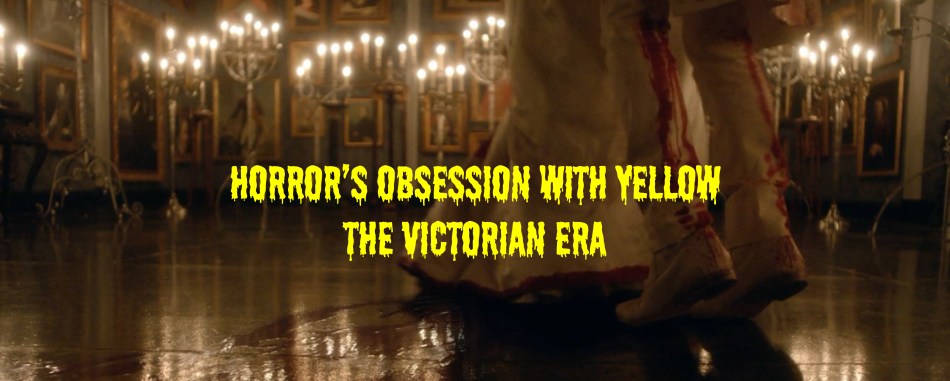
The London home Dorian lives in has an entire room dedicated to painted portraits of people, each in a gilded gold frame. He brings friends into the room just to gaze upon these works of art as if expecting the mundane portraits of strangers would be as interesting to his guests as they were to him. In one of his final scenes, Dorian explains to Brona that he has essentially become one of those paintings. That eventually, being immortal drained him of feeling human and he became a painted version of himself. That version of him frozen in time, unchanging for all eternity. This explains his obsession with these portraits of people he has never met. Their gold frames stand out against the dark blue walls, the metallic paint catching the candlelight from the candelabras Dorian used extensively.
Dorian’s portrait, the one that keeps him young and vibrant by taking all of his sins upon itself, is alone in a top story room of his home. He only visits it when he needs healing and the sickly yellow candlelight in the room surrounds him like the decay that rots his very soul. He goes to gaze upon it. To see the ugly creature his portrait has become. He smiles at it mischievously and then goes through another day of debauchery and he will likely continue to do so even after he gets his heartbroken by Brona.
I’ll say this for the cinematography of Penny Dreadful; there is never a moment when Dorian is in his room of portraits that I’m not in awe of how beautifully it was filmed. One scene in particular features Victor Frankenstein storming into the room in a jealous rage and finds Brona and Dorian dancing in the candlelit room. Brona in a stunning white dress, Dorian in a suit sans coat. Victor, gun in hand, first shoots Brona in the chest and then Dorian only to realize that both characters are immortal. Brona because of Victor’s experiment on her and Dorian because of his portrait. Their bullet wounds bleed continuously, Brona’s exit wound flowing blood down the back of her dress. As Dorain and Brona begin to dance again, her dress leaves a trail of blood on the marble floor. Eerie yellow candlelight surrounds their walz as the trail of blood symbolizes all the people they have hurt throughout their time together. That alone deserved an Emmy.
I’ll discuss Victor and Brona again on future blogs, but first, there will be werewolves. Beware the moonlight.
Discover more from Becky Tyler Art and Photography
Subscribe to get the latest posts sent to your email.




Chapter 22 – Horror in Victorian Literature Part 3
During the Victorian era, the color yellow was associated with decadence. It was the signature color of the Aesthetic Movement that championed art for the sake of art. That movement originated in Britain as it rejected Victorian moralism and industrial era uniformity. In other words, it prioritized natural beauty, sensuality and craftmanship over practical function. Peacocks, sunflowers, bamboo, cherry blossom, and ginkgo leaves were used heavily as design took inspiration from Japanese culture. Gilt highlights and ebonized nature motifs proliferated on furniture. Do a google search for furniture made during this era and you’ll see some seriously beautiful artfully made pieces that didn’t really have much functionality beyond looking great.
The Aesthetic Movement rebelled against the drab, heavily decorated mass-produced products that proliferated everywhere during the Industrial Revolution. It influenced later design aesthetics – my college art history professors would be so proud right now – and helped society transition to the arts and crafts movement as well as Art Nouveau stylization that featured nature motifs and asymmetrical design in France. Artists like Vincent van Gogh often used yellow in his paintings during this time. A daring step forward for modern art as it represented emotional vitality and the light of the sun.
Meanwhile, in literature, the French were releasing what some considered to be risqué, decadent novels that openly dealt with taboo themes for the time period. They were wrapped in yellow paper to signify potentially shocking content. This earned them the title of “yellow-backs”. In London, a publishing house called The Bodley Head embraced this yellow aesthetic and created a periodical entitled The Yellow Book. The original art director, Aubrey Beardsley, intentionally chose yellow for these books because of the reputation of the French yellow-backs. If a woman were caught reading one of these yellow publications, she was seen as independent, dangerous, or rebellious. Beardsley also illustrated Oscar Wilde’s one act tragedy Salome which brings me to my subject today.
Oscar Wilde’s The Picture of Dorian Gray
Oscar Wilde was a playwright and poet. His most successful plays, The Importance of Being Ernest and An Ideal Husband, were later overshadowed by rumored indecency that he served two years hard labor from 1895-1897. Before then, he wrote exactly one novel. The Picture of Dorian Gray, first released as a short story for a magazine in 1890, was criticized for its homoerotic undertones and decadence. In 1891, Wilde reworked it into a novel for publication with some of the more explicit writing removed. He defended the work claiming, “If a work of art is rich and vital and complete, those who have artistic instincts will see its beauty and those to whom ethics appeal more strongly will see its moral lesson.”
If you are unfamiliar, Dorian Gray is gifted a portrait of himself by his friend, Basil Hallward, who was infatuated with Dorian’s beauty as a young man. Like I said, homoerotic undertones. Basil introduces Dorian to Lord Henry Wotton, an aristocrat who believes beauty and sensual fulfillment are the only things in life worth pursuing. Dorian, afraid of losing his youthful appearance, sells his soul to Satan so that his portrait will age instead of him. From then on, Dorian’s life is one of immorality and indecency. His portrait records every one of his sins and only it shows the moral decay upon the man’s soul.
Before he sells his soul, Dorian Gray receives a “yellow book” from Lord Henry Wotton. While the yellow book is never directly named in Wilde’s story, scholars believe it represents Against Nature by Joris-Karl Huysmans which was published in 1884. That book tells the story a reclusive man who explores bizarre sensory experiences and morbid curiosities. Dorian, to his credit, sees the book as a poisonous text but he becomes so obsessed that he purchases many copies of it. As a whole, the book sees aestheticism as destructive when divorced from morality. Dorian, though his love for the book was merely an innocent pursuit of beauty at first, eventually turns the obsession into sin and cruelty.
Dorian Gray on Film
Film adaptations of Oscar Wilde’s novel have been hit or miss throughout the years. A 1945 adaptation starred Hurd Hatfield, Angela Lansbury, and Donna Reed is certainly watchable. Most of the film was shot on black and white film with the exception of the portraits of Dorian – the original and the decayed version after Dorian’s years of sin – were filmed in color and superimposed over the black and white film. The effect is convincing enough to elevate the film in a more artful way. The Aesthetic Movement would have been proud.
Poster art for the adaptations of this book often used yellow to show the inner moral decay of the titular character. Dorian lives his life as though nothing can harm him and this destructive path often harmed the people around him.
The 2009 adaptation leaves something to be desired and doesn’t quite go far enough in terms of showing how far Dorian’s soul had been corrupted, but Ben Barnes does a descent job in the role of Dorian. His portrait in this film has him set against a dark background with sickly looking yellow light brightening his features and the dark curtain behind him. That seemed to be a common thread when it comes to adapting Dorian Gray. Candlelight gives him a yellow glow to show the moral decay within.
Dorian Gray in Penny Dreadful
In the modern television show Penny Dreadful, Dorian Gray is used in a similar capacity. His homoerotic tendencies are there alongside his drug and alcohol use and promiscuous lifestyle. In season one, he has an affair with the main protagonist Vanessa Ives adeptly played by Eva Green whilst she is possessed by Amunet and other demons. When Vanessa finds that her affections lay elsewhere, with Ethan Chandler later in season two, Dorian meets Brona, one of Victor Frankenstein’s creatures brought back to life after her death. This partnership between Dorian and Brona is the catalyst for their arc in season three which shows that even when you find someone to spend your immortality with, you can still feel very lonely.
The London home Dorian lives in has an entire room dedicated to painted portraits of people, each in a gilded gold frame. He brings friends into the room just to gaze upon these works of art as if expecting the mundane portraits of strangers would be as interesting to his guests as they were to him. In one of his final scenes, Dorian explains to Brona that he has essentially become one of those paintings. That eventually, being immortal drained him of feeling human and he became a painted version of himself. That version of him frozen in time, unchanging for all eternity. This explains his obsession with these portraits of people he has never met. Their gold frames stand out against the dark blue walls, the metallic paint catching the candlelight from the candelabras Dorian used extensively.
Dorian’s portrait, the one that keeps him young and vibrant by taking all of his sins upon itself, is alone in a top story room of his home. He only visits it when he needs healing and the sickly yellow candlelight in the room surrounds him like the decay that rots his very soul. He goes to gaze upon it. To see the ugly creature his portrait has become. He smiles at it mischievously and then goes through another day of debauchery and he will likely continue to do so even after he gets his heartbroken by Brona.
I’ll say this for the cinematography of Penny Dreadful; there is never a moment when Dorian is in his room of portraits that I’m not in awe of how beautifully it was filmed. One scene in particular features Victor Frankenstein storming into the room in a jealous rage and finds Brona and Dorian dancing in the candlelit room. Brona in a stunning white dress, Dorian in a suit sans coat. Victor, gun in hand, first shoots Brona in the chest and then Dorian only to realize that both characters are immortal. Brona because of Victor’s experiment on her and Dorian because of his portrait. Their bullet wounds bleed continuously, Brona’s exit wound flowing blood down the back of her dress. As Dorain and Brona begin to dance again, her dress leaves a trail of blood on the marble floor. Eerie yellow candlelight surrounds their walz as the trail of blood symbolizes all the people they have hurt throughout their time together. That alone deserved an Emmy.
I’ll discuss Victor and Brona again on future blogs, but first, there will be werewolves. Beware the moonlight.
Discover more from Becky Tyler Art and Photography
Subscribe to get the latest posts sent to your email.
Share this: