Chapter 21 – Horror in Victorian Literature Part 2
Mary Ann Nichols. Annie Chapman. Elizabeth Stride. Catherine Eddowes. Mary Jane Kelly. These five women are known as the canonical five, linked by Scotland Yard in 1888 as victims of the serial killer Jack the Ripper. Whilst around a dozen murders are speculatively linked to the Ripper between 1888 and 1892, those five are believed to be the known victims of the most famous serial killer in London history. And he – or she – was never apprehended.
What did these five women have in common? Some say they were all prostitutes and murdered whilst soliciting on the street, with the exception of Mary Jane Kelly. In 2019, British historian Hallie Rubenhold argued that three of the women were never prostitutes and that Elizabeth Stride only resorted to soliciting out of desperation due to poverty. The only verified prostitute among the canonical five was Mary Jane Kelly and Rubenhold believed that the notion that the Ripper was after prostitutes was based in class-based misogynistic prejudices that existed in the Victorian era. You’ll probably notice me side-eyeing the patriarchy a lot during this series. It’s with good reason.
Each victim had their throat cut and was mutilated in such a way that suggested that the murderer had a medical background, or at least some working knowledge of human anatomy. The name Jack the Ripper came from letters received by authorities from the supposed killer who gave himself the name. Public sentiment about the lack of arrests in the case was not kind and given the uproarious reactions in modern day life to both minor inconveniences and larger news stories, I can only imagine what it must have been like to have all of London in a state of panic over this killer roaming the streets unabated.
Serial killers were so rare at the time that, while fear peaked over the assailant’s lingering anonymity and freedom, public obsession with the Ripper remained high long after the murders stopped. Perhaps this was due to sensational stories run by magazines in an effort sell their papers. Perhaps the era of Penny Dreadfuls that proliferated during that time helped everyone’s imaginations run wild. Regardless, Jack the Ripper remains to this day a popular subject among historians and horror fans alike.
As the 20th century began, the Penny Dreadful waned in popularity and gave way to comic books and longer length horror stories in novels. In 1913, Marie Adelaide Lowndes published The Lodger, a fictional take on a woman believing the man renting a room in her house was, in fact, the Ripper. One of Alfred Hitchcock’s earliest films was also one of the earliest film adaptations of the Jack the Ripper narrative. In modern times, the BBC ran a five-season television show that took place six months after the Ripper murders stopped and showed just how volatile London was at the time with everyone believing the serial killer was still on the loose. Ripper Street starred Matthew Macfadyen, Jerome Flynn, and MyAnna Buring and is worth a watch if you like a Scotland Yard procedural set in the Victorian era.
From Hell – a graphic novel
What I really want to discuss is the From Hell graphic novel released by writer Alan Moore and artist Eddie Campbell. Much like penny dreadful stories during the Victorian era, From Hell was published in serial form between 1989 and 1998. The title comes from a “From Hell” letter received by authorities in 1888 and Moore pulled the plot from Stephen Knight’s theory that Jack the Ripper was part of a conspiracy to conceal the birth on an illegitimate royal baby. It sets up physician William Gull as Jack the Ripper.
Historically, Gull was one of the persons of interest during the original investigation of the Ripper murders with authorities believing he either know who the Ripper was or was the man himself though he was never formally charged. During his medical career, he named and described anorexia, identified myxoedema, and did research on Bright’s disease and paraplegia.
I don’t often read comics, so imagine my surprise when I ordered the latest hardcover edition of the colorized graphic novel and saw how thick it was. It took me three weeks to get through. The art is beautiful and the theories about the fourth dimension proposing that time is spatial and co-exists was a lot to process. For the purposes of this blog, what interested me most was the use of the color red. Like in any art about murder, shades of crimson, cherry, ruby, wine, rose, and garnet are widely used to portray the gorier aspects of the crimes. It stands out, lurid in the way you can’t miss it. That holds especially true for a graphic novel that has a limited color pallet using muted yellows and greys throughout. The red is the exclamation point as blood usually is in murder stories.
A Film Adaptation – Worthy and Unworthy
Of the multitudes of Ripper adaptations over the decades, From Hell which pulls directly from the graphic novel, is a fine example of a good adaptation as long as you don’t compare it to the source material too rigidly. Since I read the color version of the comic, I really wanted the film to match the color scheme. The film doesn’t, nor does it linger on the ideations of time at length as the graphic novel does.
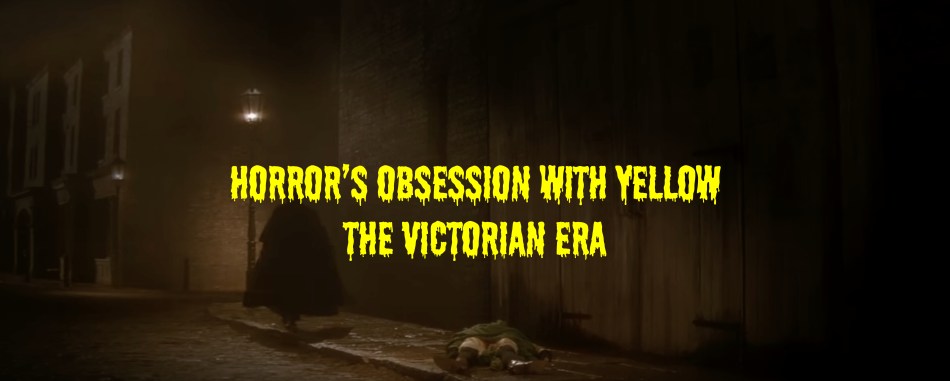
If I don’t compare it to the graphic novel much in the way that I don’t compare Stanley Kubrick’s The Shining to the source material, then I end up with a movie that I find watchable. It employs the foggy, claustrophobic alleyways that I often think of when I think of Victorian era London. The gas streetlights give off long shadows and eerie yellow light to the proceedings. Johnny Depp’s detective character is addicted to laudanum, a common opioid at the time which I’ll discuss more later in this blog series, and scenes of him taking the drug are often set against candlelight. This shows the moral decay often associated with addiction and the toll it takes on those addicted.
Ian Holm plays William Gull and when he is out killing his victims, he brings with him a case full of medical tools set against red velvet. How he manages to evade detection carrying around such a thing is a bit ridiculous, but the shiny, sharp knives and saws glinting against the red velvet inside the case is effective and a bit frightening.
What is most interesting about this version of Jack the Ripper is that Ian Holm’s eyes turn black when his violent nature is at its worst symbolizing the madness and absolute darkness that has consumed him. Cinematically, this is what I remember most of the film when I look back on the theater experience back in 2001.
Perhaps we will never know who Jack the Ripper really was, but the mythos surrounding this enigmatic figure endures today. So do the social issues. While modern advances in technology and the internet have made it easier for us to have information at our fingertips, false narratives proliferate online and misleading article titles for the purposes of clickbait have made finding the truth all that more difficult. It’s almost as if the people feeding us the information are hiding something, much in the way that the Royal family was trying to hide an illegitimate baby in the graphic novel. What baby? Is that another dead prostitute over there? Smoke and mirrors are not a new problem. The internet just made evasion of the truth easier.
The undercurrent about how women were treated and viewed at the time that I picked up on when I was reading through the literature based on this era isn’t something I can ignore. The prostitutes, often forced into soliciting for money so they can feed their kids or themselves, are frowned upon more than the men who pay for their services. Even Sweeney Todd’s scarred wife from my previous blog went ignored by society because of her flawed appearance. I’ll speak more on this as I go along, more so perhaps when I get to Mary Shelley.
My next several blogs will move away from Jack the Ripper and dive deeper into fictional literature that came out during the Victorian era, comparing these works to the fantastic horror show Penny Dreadful which took place in 1891 London in a post Jack the Ripper world and took inspiration from the likes of Bram Stoker and Mary Shelley.
Discover more from Becky Tyler Art and Photography
Subscribe to get the latest posts sent to your email.




Chapter 21 – Horror in Victorian Literature Part 2
Mary Ann Nichols. Annie Chapman. Elizabeth Stride. Catherine Eddowes. Mary Jane Kelly. These five women are known as the canonical five, linked by Scotland Yard in 1888 as victims of the serial killer Jack the Ripper. Whilst around a dozen murders are speculatively linked to the Ripper between 1888 and 1892, those five are believed to be the known victims of the most famous serial killer in London history. And he – or she – was never apprehended.
What did these five women have in common? Some say they were all prostitutes and murdered whilst soliciting on the street, with the exception of Mary Jane Kelly. In 2019, British historian Hallie Rubenhold argued that three of the women were never prostitutes and that Elizabeth Stride only resorted to soliciting out of desperation due to poverty. The only verified prostitute among the canonical five was Mary Jane Kelly and Rubenhold believed that the notion that the Ripper was after prostitutes was based in class-based misogynistic prejudices that existed in the Victorian era. You’ll probably notice me side-eyeing the patriarchy a lot during this series. It’s with good reason.
Each victim had their throat cut and was mutilated in such a way that suggested that the murderer had a medical background, or at least some working knowledge of human anatomy. The name Jack the Ripper came from letters received by authorities from the supposed killer who gave himself the name. Public sentiment about the lack of arrests in the case was not kind and given the uproarious reactions in modern day life to both minor inconveniences and larger news stories, I can only imagine what it must have been like to have all of London in a state of panic over this killer roaming the streets unabated.
Serial killers were so rare at the time that, while fear peaked over the assailant’s lingering anonymity and freedom, public obsession with the Ripper remained high long after the murders stopped. Perhaps this was due to sensational stories run by magazines in an effort sell their papers. Perhaps the era of Penny Dreadfuls that proliferated during that time helped everyone’s imaginations run wild. Regardless, Jack the Ripper remains to this day a popular subject among historians and horror fans alike.
As the 20th century began, the Penny Dreadful waned in popularity and gave way to comic books and longer length horror stories in novels. In 1913, Marie Adelaide Lowndes published The Lodger, a fictional take on a woman believing the man renting a room in her house was, in fact, the Ripper. One of Alfred Hitchcock’s earliest films was also one of the earliest film adaptations of the Jack the Ripper narrative. In modern times, the BBC ran a five-season television show that took place six months after the Ripper murders stopped and showed just how volatile London was at the time with everyone believing the serial killer was still on the loose. Ripper Street starred Matthew Macfadyen, Jerome Flynn, and MyAnna Buring and is worth a watch if you like a Scotland Yard procedural set in the Victorian era.
From Hell – a graphic novel
What I really want to discuss is the From Hell graphic novel released by writer Alan Moore and artist Eddie Campbell. Much like penny dreadful stories during the Victorian era, From Hell was published in serial form between 1989 and 1998. The title comes from a “From Hell” letter received by authorities in 1888 and Moore pulled the plot from Stephen Knight’s theory that Jack the Ripper was part of a conspiracy to conceal the birth on an illegitimate royal baby. It sets up physician William Gull as Jack the Ripper.
Historically, Gull was one of the persons of interest during the original investigation of the Ripper murders with authorities believing he either know who the Ripper was or was the man himself though he was never formally charged. During his medical career, he named and described anorexia, identified myxoedema, and did research on Bright’s disease and paraplegia.
I don’t often read comics, so imagine my surprise when I ordered the latest hardcover edition of the colorized graphic novel and saw how thick it was. It took me three weeks to get through. The art is beautiful and the theories about the fourth dimension proposing that time is spatial and co-exists was a lot to process. For the purposes of this blog, what interested me most was the use of the color red. Like in any art about murder, shades of crimson, cherry, ruby, wine, rose, and garnet are widely used to portray the gorier aspects of the crimes. It stands out, lurid in the way you can’t miss it. That holds especially true for a graphic novel that has a limited color pallet using muted yellows and greys throughout. The red is the exclamation point as blood usually is in murder stories.
A Film Adaptation – Worthy and Unworthy
Of the multitudes of Ripper adaptations over the decades, From Hell which pulls directly from the graphic novel, is a fine example of a good adaptation as long as you don’t compare it to the source material too rigidly. Since I read the color version of the comic, I really wanted the film to match the color scheme. The film doesn’t, nor does it linger on the ideations of time at length as the graphic novel does.
If I don’t compare it to the graphic novel much in the way that I don’t compare Stanley Kubrick’s The Shining to the source material, then I end up with a movie that I find watchable. It employs the foggy, claustrophobic alleyways that I often think of when I think of Victorian era London. The gas streetlights give off long shadows and eerie yellow light to the proceedings. Johnny Depp’s detective character is addicted to laudanum, a common opioid at the time which I’ll discuss more later in this blog series, and scenes of him taking the drug are often set against candlelight. This shows the moral decay often associated with addiction and the toll it takes on those addicted.
Ian Holm plays William Gull and when he is out killing his victims, he brings with him a case full of medical tools set against red velvet. How he manages to evade detection carrying around such a thing is a bit ridiculous, but the shiny, sharp knives and saws glinting against the red velvet inside the case is effective and a bit frightening.
What is most interesting about this version of Jack the Ripper is that Ian Holm’s eyes turn black when his violent nature is at its worst symbolizing the madness and absolute darkness that has consumed him. Cinematically, this is what I remember most of the film when I look back on the theater experience back in 2001.
Perhaps we will never know who Jack the Ripper really was, but the mythos surrounding this enigmatic figure endures today. So do the social issues. While modern advances in technology and the internet have made it easier for us to have information at our fingertips, false narratives proliferate online and misleading article titles for the purposes of clickbait have made finding the truth all that more difficult. It’s almost as if the people feeding us the information are hiding something, much in the way that the Royal family was trying to hide an illegitimate baby in the graphic novel. What baby? Is that another dead prostitute over there? Smoke and mirrors are not a new problem. The internet just made evasion of the truth easier.
The undercurrent about how women were treated and viewed at the time that I picked up on when I was reading through the literature based on this era isn’t something I can ignore. The prostitutes, often forced into soliciting for money so they can feed their kids or themselves, are frowned upon more than the men who pay for their services. Even Sweeney Todd’s scarred wife from my previous blog went ignored by society because of her flawed appearance. I’ll speak more on this as I go along, more so perhaps when I get to Mary Shelley.
My next several blogs will move away from Jack the Ripper and dive deeper into fictional literature that came out during the Victorian era, comparing these works to the fantastic horror show Penny Dreadful which took place in 1891 London in a post Jack the Ripper world and took inspiration from the likes of Bram Stoker and Mary Shelley.
Discover more from Becky Tyler Art and Photography
Subscribe to get the latest posts sent to your email.
Share this: