Screenwriter Vince Gilligan ended up writing and producing episodes for The X-Files after he submitted a screenplay for an episode entitled Soft Light which would air in season two of the show. Throughout the course of the series, he would write thirty total episodes including the one I’m discussing today, season six episode Drive that guest starred Bryan Cranston. A decade later, Gilligan and Cranston would join forces again for one of the best shows to ever grace television screens. You’ve probably heard of it, but before I get to that, I’m going to discuss the episode that changed the course of television forever with this partnership.
Bryan Cranston in The X-Files episode Drive.
In Drive, Cranston plays a man driving erratically through the Nevada desert as the police give chase. It’s such a crazy scene that they are also being pursued by the media who are broadcasting footage of the chase live. It is believed that the female passenger with this driver has been kidnapped. When Patrick Crump (Cranston) is finally apprehended and the woman moved to a police cruiser, she suddenly dies after her head explodes.
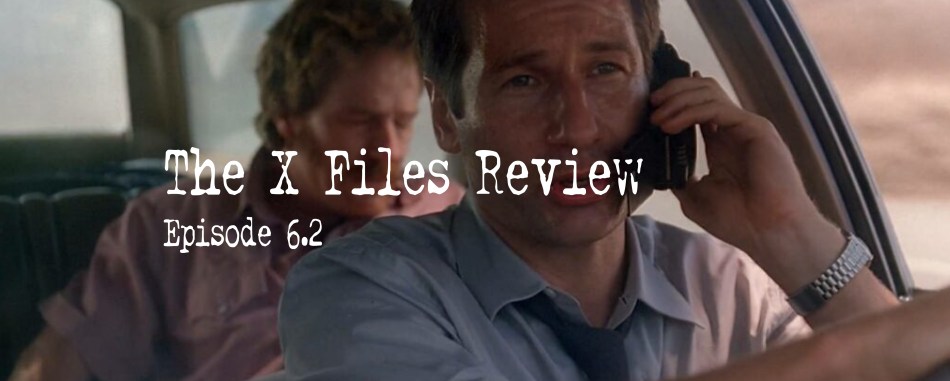
Meanwhile, Mulder and Scully are stuck investigating possible domestic terrorism in Idaho. Mulder sees the chase unfold and convinces Scully to detour to Nevada because he believes it’s an X-File. Patrick Crump is now exhibiting the same symptoms as the female passenger he had in the car with him and is transported from jail to a hospital in an ambulance that Mulder follows. Crump manages to escape police custody and kidnaps Mulder, forcing him to drive away.
It isn’t long before Mulder realizes that Crump is suffering from some form of medical emergency that is made worse by not moving. In fact, if the vehicle Mulder and Crump occupy isn’t moving fast in a westerly direction, Crump’s head begins to feel like it will explode. It is Scully who discovers that a US Navy antenna array emitting ELF waves had been below Crump’s property and that an abnormal surge of these waves caused a rising in pressure of the inner ear of those who were near it. Before Scully can find Mulder so she can relieve Crump’s symptoms, Mulder’s car reaches the west coast and Crump dies. The two agents are reprimanded by Assistant Director Kersch and warned off of investigating any other X-Files.
This episode is one of my favorites of the series largely because of Cranston’s performance and it is just about the muttonchops and mustache that are shot right out of the 1970s. I won’t lie, though. I hadn’t realized it was Cranston until I did a rewatch of The X-Files in 2021, the first rewatch I had done in over a decade. What made that ah-ha moment so great back in 2021 was that I discovered Breaking Bad since the last time I had rewatched this series. I’m notorious for not watching shows when they originally air and then discovering them years later (Gilmore Girls, Battlestar Gallactica, Fringe). I hadn’t discovered Breaking Bad until at least 2015 when I came across it on Netflix and loved it. Knowing Bryan Cranston has that connection between these two shows made me really look forward to watching this episode again when it came up. I made a point of rewatching Breaking Bad before I wrote this and I have to say that the show has only gotten better with time.
Cranston isn’t the only connection to Breaking Bad throughout The X-Files. Actor Dean Norris who played DEA agent Hank Schrader on Breaking Bad, also starred as Federal Marshal Tapia in season two episode F. Emasculata. Norris also guest starred on Millennium in the season three episode Seven and One as FBI Agent Del Boxer. That episode would air less than tree months after Drive. While Norris plays different characters on Chris Carter’s two shows, his appearance in Millennium is meant to be part of The X-Files universe. One thing is for certain. Norris loves playing law enforcement characters though his turn in Breaking Bad ends up being one of the very few characters on the show with a moral conscience much in the way that Mulder and Scully are for The X-Files and Frank Black for Millennium. That parallel can’t be understated.
Dean Norris as Federal Marshal Tapia, Season 2 of The X_Files
Those parallels between the shows and how characters are portrayed in both The X-Files and in Breaking Bad go beyond Dean Norris. The enigmatic villains like Cigarette Smoking Man and Gus Fring added an untrustworthy menace to both series. Whenever these characters were in a scene, whether it was silently smoking a cigarette in a corner of a meeting room or watching Walter through video cameras, the view knew that something nefarious was in play. Some move that would put our protagonists in danger or make their lives difficult. And then the viewer would find out they weren’t the top of the food chain and someone else was pulling the strings.
Then there are the characters for whom morality was more ambiguous. The X-Files always played with Walter Skinner’s role in whether he was protecting Mulder and Scully. His hand always seemed forced by powers out of his control much in the way that Walter White and Jesse Pinkman often felt like they had no other choice when their backs were against the wall. Breaking Bad was so well written with this type of character – Saul Goodman, Mike Ehmantraut, and Skyler White – that it made both hating them and rooting for them go hand in hand even if you knew that the things they were doing were irredeemable. The X-Files had antagonist Alex Krycek fill a similar role. He was always up to no good but on occasion, he’d help an FBI agent out even if it was for selfish reasons.
Vince Gilligan writing of Drive for The X-Files goes along the same lines where it seems ambiguous as to whether Cranston’s character is doing the right thing until the viewer sees that he is forced into the situation by things out of his control. Crump getting exposed to the ELF waves is similar to Walter White getting cancer and realizing he can’t pay for the treatment. Situations that were out of each character’s control. Both situations are so fundamentally American – Government doing things without our knowledge and our healthcare system being so broken – that it makes both of these shows all the more relevent. These characters share a resounding humanity while also being loathsome in a way. Walter White is down right scary by the end of Breaking Bad.
Gilligan also was the showrunner for the short-lived spinoff The Lone Gunmen. The thirteen episode series ended on a cliffhanger and Gilligan and Chris Carter gave the show a proper ending by doing one last crossover later in the series of The X-Files which I’ll get to at the end of this year. I’ll be discussing that further in depth when I hit season seven of The X-Files which is then The Lone Gunman aired.
Most recently, Gilligan created Pluribus which currently airs on Apple TV. This series, one I happen to really love, is a return to Gilligan’s science fiction roots as it follows a woman immune to an alien virus that made most of humanity into a hive mind that tries to assimilate her. The production is located in Albuquerque, New Mexico which was where Breaking Bad and Better Call Saul took place and stars Rhea Seehorn fresh off of her tenure on Better Call Saul. The parallels between The X-Files and Pluribus are rooted in what makes us human as both deal with alien colonization via virus and the erasure of what makes us fundamentally human without our consent. I love that Gilligan is still exploring this trope long after The X-Files ended. Like I said, Bryan Cranston starring in one episode of The X-Files changed the course of television history in ways that I personally think should be studied.
Until next week, the truth is out there. And so are some really great shows by Vince Gilligan if you haven’t already sought them out.
Discover more from Becky Tyler Art and Photography
Subscribe to get the latest posts sent to your email.




Screenwriter Vince Gilligan ended up writing and producing episodes for The X-Files after he submitted a screenplay for an episode entitled Soft Light which would air in season two of the show. Throughout the course of the series, he would write thirty total episodes including the one I’m discussing today, season six episode Drive that guest starred Bryan Cranston. A decade later, Gilligan and Cranston would join forces again for one of the best shows to ever grace television screens. You’ve probably heard of it, but before I get to that, I’m going to discuss the episode that changed the course of television forever with this partnership.
In Drive, Cranston plays a man driving erratically through the Nevada desert as the police give chase. It’s such a crazy scene that they are also being pursued by the media who are broadcasting footage of the chase live. It is believed that the female passenger with this driver has been kidnapped. When Patrick Crump (Cranston) is finally apprehended and the woman moved to a police cruiser, she suddenly dies after her head explodes.
Meanwhile, Mulder and Scully are stuck investigating possible domestic terrorism in Idaho. Mulder sees the chase unfold and convinces Scully to detour to Nevada because he believes it’s an X-File. Patrick Crump is now exhibiting the same symptoms as the female passenger he had in the car with him and is transported from jail to a hospital in an ambulance that Mulder follows. Crump manages to escape police custody and kidnaps Mulder, forcing him to drive away.
It isn’t long before Mulder realizes that Crump is suffering from some form of medical emergency that is made worse by not moving. In fact, if the vehicle Mulder and Crump occupy isn’t moving fast in a westerly direction, Crump’s head begins to feel like it will explode. It is Scully who discovers that a US Navy antenna array emitting ELF waves had been below Crump’s property and that an abnormal surge of these waves caused a rising in pressure of the inner ear of those who were near it. Before Scully can find Mulder so she can relieve Crump’s symptoms, Mulder’s car reaches the west coast and Crump dies. The two agents are reprimanded by Assistant Director Kersch and warned off of investigating any other X-Files.
This episode is one of my favorites of the series largely because of Cranston’s performance and it is just about the muttonchops and mustache that are shot right out of the 1970s. I won’t lie, though. I hadn’t realized it was Cranston until I did a rewatch of The X-Files in 2021, the first rewatch I had done in over a decade. What made that ah-ha moment so great back in 2021 was that I discovered Breaking Bad since the last time I had rewatched this series. I’m notorious for not watching shows when they originally air and then discovering them years later (Gilmore Girls, Battlestar Gallactica, Fringe). I hadn’t discovered Breaking Bad until at least 2015 when I came across it on Netflix and loved it. Knowing Bryan Cranston has that connection between these two shows made me really look forward to watching this episode again when it came up. I made a point of rewatching Breaking Bad before I wrote this and I have to say that the show has only gotten better with time.
Cranston isn’t the only connection to Breaking Bad throughout The X-Files. Actor Dean Norris who played DEA agent Hank Schrader on Breaking Bad, also starred as Federal Marshal Tapia in season two episode F. Emasculata. Norris also guest starred on Millennium in the season three episode Seven and One as FBI Agent Del Boxer. That episode would air less than tree months after Drive. While Norris plays different characters on Chris Carter’s two shows, his appearance in Millennium is meant to be part of The X-Files universe. One thing is for certain. Norris loves playing law enforcement characters though his turn in Breaking Bad ends up being one of the very few characters on the show with a moral conscience much in the way that Mulder and Scully are for The X-Files and Frank Black for Millennium. That parallel can’t be understated.
Those parallels between the shows and how characters are portrayed in both The X-Files and in Breaking Bad go beyond Dean Norris. The enigmatic villains like Cigarette Smoking Man and Gus Fring added an untrustworthy menace to both series. Whenever these characters were in a scene, whether it was silently smoking a cigarette in a corner of a meeting room or watching Walter through video cameras, the view knew that something nefarious was in play. Some move that would put our protagonists in danger or make their lives difficult. And then the viewer would find out they weren’t the top of the food chain and someone else was pulling the strings.
Then there are the characters for whom morality was more ambiguous. The X-Files always played with Walter Skinner’s role in whether he was protecting Mulder and Scully. His hand always seemed forced by powers out of his control much in the way that Walter White and Jesse Pinkman often felt like they had no other choice when their backs were against the wall. Breaking Bad was so well written with this type of character – Saul Goodman, Mike Ehmantraut, and Skyler White – that it made both hating them and rooting for them go hand in hand even if you knew that the things they were doing were irredeemable. The X-Files had antagonist Alex Krycek fill a similar role. He was always up to no good but on occasion, he’d help an FBI agent out even if it was for selfish reasons.
Vince Gilligan writing of Drive for The X-Files goes along the same lines where it seems ambiguous as to whether Cranston’s character is doing the right thing until the viewer sees that he is forced into the situation by things out of his control. Crump getting exposed to the ELF waves is similar to Walter White getting cancer and realizing he can’t pay for the treatment. Situations that were out of each character’s control. Both situations are so fundamentally American – Government doing things without our knowledge and our healthcare system being so broken – that it makes both of these shows all the more relevent. These characters share a resounding humanity while also being loathsome in a way. Walter White is down right scary by the end of Breaking Bad.
Gilligan also was the showrunner for the short-lived spinoff The Lone Gunmen. The thirteen episode series ended on a cliffhanger and Gilligan and Chris Carter gave the show a proper ending by doing one last crossover later in the series of The X-Files which I’ll get to at the end of this year. I’ll be discussing that further in depth when I hit season seven of The X-Files which is then The Lone Gunman aired.
Most recently, Gilligan created Pluribus which currently airs on Apple TV. This series, one I happen to really love, is a return to Gilligan’s science fiction roots as it follows a woman immune to an alien virus that made most of humanity into a hive mind that tries to assimilate her. The production is located in Albuquerque, New Mexico which was where Breaking Bad and Better Call Saul took place and stars Rhea Seehorn fresh off of her tenure on Better Call Saul. The parallels between The X-Files and Pluribus are rooted in what makes us human as both deal with alien colonization via virus and the erasure of what makes us fundamentally human without our consent. I love that Gilligan is still exploring this trope long after The X-Files ended. Like I said, Bryan Cranston starring in one episode of The X-Files changed the course of television history in ways that I personally think should be studied.
Until next week, the truth is out there. And so are some really great shows by Vince Gilligan if you haven’t already sought them out.
Discover more from Becky Tyler Art and Photography
Subscribe to get the latest posts sent to your email.
Share this: