Had you told me back in 1998 that part of the inspiration for an X-File was an Audrey Hepburn movie, I would have told you that you were nuts. At the time, Hepburn wasn’t on my radar at all. I was only seventeen and horror was my jam. I would have been wrong, however, in telling you that you were nuts because episode sixteen of season five was, in fact, partly inspired by an Audrey Hepburn movie.
In 1967, Wait Until Dark told the story of a recently blinded woman who is terrorized by a few men who believe she is in possession of their heroin which they hid inside a doll. It stars Audrey Hepburn, Alan Arkin, and Richard Crenna. I only just watched it recently and the parallels between it and the episode I’m talking about today, Mind’s Eye, would have proved me so wrong had I actually told someone that this episode weren’t inspired, at least partially, by this movie. Hepburn and Lili Taylor have different takes on being blind, but both are great in their roles.
And, yes, the episode I’m discussing today stars Lili Taylor. Whether you recognize her from Mystic Pizza, Ransom, The Haunting, High Fidelity, Six Feet Under, Hemlock Grove, The Conjuring, or Outer Range, there is no mistaking the impact her decades long career has had on television and film and more specifically, in horror and science fiction projects.
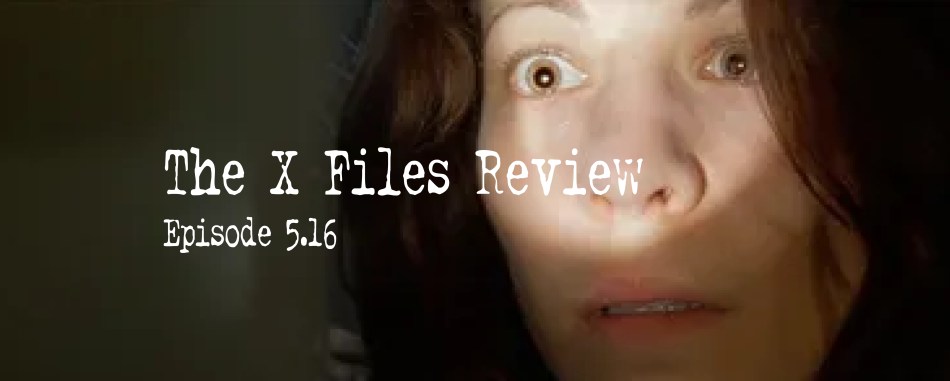
Blind woman Marty Glenn (Taylor) sees a vision of a man murdering someone with a knife. Later, police arrive at a crime scene identical to Marty’s vision. Marty is found in the shower and is assumed to be the killer until police realize she is blind. Detective Penneck contacts Mulder and Scully to help him investigate.
After Marty has another vision of a woman getting attacked, she calls a bar to warn the murderer to leave her alone. Afterwards, Scully shows a glove from the first crime scene with Marty’s prints on it to her and it also fits her. Now, if you lived through any amount of pop culture in the 1990s, visions of O.J. Simson trying on gloves in court in 1995 probably are running through your head. Mulder even states, “Even if the gloves do fit – you can still acquit.” Pop culture in the 90s was its own beast, to be sure. Marty cannot explain away the glove and it is enough to get her charged even though Mulder is skeptical and Scully believes that Marty isn’t actually blind.
Scully so firmly believes that Marty is faking her blindness that she has Marty undergo a test to prove she is blind. During the test, Marty has another vision. Mulder says that Marty is seeing through her Mind’s Eye, a term used for being clairvoyant. The examiner running the test believes Marty is truly blind which gets her released. On her way home, she again has a vision of the man she called in the bar attacking the same woman from the other vision. Marty is too late to save her after asking for directions on the street from strangers who only help her when she walks into oncoming traffic. Marty ends up confessing to the murder even though she didn’t commit it.
Mulder asks her about her mother’s death and it eventually gets confirmed that the man in her visions is her father who had killed her mother when Marty was still in the womb and this led to Marty having visions with her Mind’s Eye. Turns out, Marty’s father had spent her entire life in prison until he was paroled weeks before her visions started. Penneck takes Marty to her home to pack some belongings, but she has a vision of her father at her building. She takes Penneck’s gun and waits. When Mulder and Scully arrive, Marty has killed her father and ends up in prison. Mulder believes that she had been seeing visions through her father’s eyes her entire life, which meant she was always in prison. With him. Until now.
Tim Minnear wrote this episode after learning about remote viewing – or seeing visions through your Mind’s Eye – using extrasensory perception, or ESP. While trying to conceptualize this, he thought of making the character blind. He intentionally made the character as “not Audrey Hepburn”, meaning he wanted his character to not be so innocent. In fact, he wanted her to be unlikable as if the ability made her rude or bitchy in a way.
Lili Taylor’s casting was all on her. She approached the show wanting to be on the series since she was a fan. It is her performance as this character that sells this episode because it doesn’t quite expand on her condition enough. Mulder explains away a lot of plot points with his Mind’s Eye theory, but I would have liked to see the agents use Marty’s condition to solve the case instead of trying to disprove it exists. With the character being blind, producers suggested that she not have lights or lamps in her home though the lighting department did not want the episode being that dark.
As I said, Audrey Hepburn’s character is decidedly upbeat. She is sweet in demeanor and innocently calls the police when she smells smoke in her home because she can’t find where it is coming from. While it just ends up being a cigarette in an ash tray, it shows her inability to think through her condition without panic since she is new to her blindness. She is also tested by a girl in her apartment building who intentionally lies to her and destroys her kitchen because Hepburn’s character said something mean out of stress from the situation. The make amends and it shows how deeply nice and forgiving Hepburn’s character is.
Marty’s character, having been blind her entire life, is fully self sufficient, but the situation has made her blunt and a bit stubborn. The fact that she likely only saw visions of her father in jail probably didn’t help her demeanor either. Minnear’s writing of this character goes along with not wanting her to be anything like Hepburn’s. In that it was successful.
I’m reminded of the 2021 film Malignant during which the main character sees visions of murders and tries to report them to the police. She wasn’t blind though, just seeing what was actually happening around her because the twist of the film is that she had parasitic evil growth living at the back of her brain and a knock to the head had reawakened it. It’s one of the more bonkers horror movies to be released in the last decade and was inspired a bit in style by the giallo era of Italian cinema from the 1960s and 1970s. While the episode isn’t giallo style in nature, it does share similarities with Malignant in regards to the visions the two main characters have.
There are also clairvoyant characters on the series Buffy the Vampire Slayer which was also airing during this season of The X-Files. Vampire antagonist Drusilla had strong precognitive abilities. Buffy herself used prophetic dreams and visions to warn against future threats. It also gave her views of former slayer histories. Her mentor, Giles, helped her through this era of her life and was as much a father figure to her as he was a mentor. The show’s spinoff, Angel, saw Cordelia Chase’s character had the ability to see people in distress in her mind passed down to her by a demon. Angel’s own mentor, Whistler, had the ability to astral project and was able to foresee events.
On a Buffy side note – we lost Anthony Head yesterday. Since Buffy the Vampire Slayer carried me through the end of high school and into college much like The X-Files did, many a fan my age considered his character Rupert Giles as much a mentor for us as he was for Buffy. A sad moment indeed to see that he had passed. This is the third actor from the series we have lost since I started my X-Files blog at the beginning of last year. Michelle Trachtenberg and Nicholas Brendon have also died. Perhaps a rewatch is needed on my part. It’s been far too long.
Until next week, the truth is out there.
Discover more from Becky Tyler Art and Photography
Subscribe to get the latest posts sent to your email.


 Becky Tyler Art and Photography
Had you told me back in 1998 that part of the inspiration for an X-File was an Audrey Hepburn movie, I would have told you that you were nuts. At the time, Hepburn wasn’t on my radar at all. I was only seventeen and horror was my jam. I would have been wrong, however, in telling you that you were nuts because episode sixteen of season five was, in fact, partly inspired by an Audrey Hepburn movie.
In 1967, Wait Until Dark told the story of a recently blinded woman who is terrorized by a few men who believe she is in possession of their heroin which they hid inside a doll. It stars Audrey Hepburn, Alan Arkin, and Richard Crenna. I only just watched it recently and the parallels between it and the episode I’m talking about today, Mind’s Eye, would have proved me so wrong had I actually told someone that this episode weren’t inspired, at least partially, by this movie. Hepburn and Lili Taylor have different takes on being blind, but both are great in their roles.
And, yes, the episode I’m discussing today stars Lili Taylor. Whether you recognize her from Mystic Pizza, Ransom, The Haunting, High Fidelity, Six Feet Under, Hemlock Grove, The Conjuring, or Outer Range, there is no mistaking the impact her decades long career has had on television and film and more specifically, in horror and science fiction projects.
Blind woman Marty Glenn (Taylor) sees a vision of a man murdering someone with a knife. Later, police arrive at a crime scene identical to Marty’s vision. Marty is found in the shower and is assumed to be the killer until police realize she is blind. Detective Penneck contacts Mulder and Scully to help him investigate.
After Marty has another vision of a woman getting attacked, she calls a bar to warn the murderer to leave her alone. Afterwards, Scully shows a glove from the first crime scene with Marty’s prints on it to her and it also fits her. Now, if you lived through any amount of pop culture in the 1990s, visions of O.J. Simson trying on gloves in court in 1995 probably are running through your head. Mulder even states, “Even if the gloves do fit – you can still acquit.” Pop culture in the 90s was its own beast, to be sure. Marty cannot explain away the glove and it is enough to get her charged even though Mulder is skeptical and Scully believes that Marty isn’t actually blind.
Scully so firmly believes that Marty is faking her blindness that she has Marty undergo a test to prove she is blind. During the test, Marty has another vision. Mulder says that Marty is seeing through her Mind’s Eye, a term used for being clairvoyant. The examiner running the test believes Marty is truly blind which gets her released. On her way home, she again has a vision of the man she called in the bar attacking the same woman from the other vision. Marty is too late to save her after asking for directions on the street from strangers who only help her when she walks into oncoming traffic. Marty ends up confessing to the murder even though she didn’t commit it.
Mulder asks her about her mother’s death and it eventually gets confirmed that the man in her visions is her father who had killed her mother when Marty was still in the womb and this led to Marty having visions with her Mind’s Eye. Turns out, Marty’s father had spent her entire life in prison until he was paroled weeks before her visions started. Penneck takes Marty to her home to pack some belongings, but she has a vision of her father at her building. She takes Penneck’s gun and waits. When Mulder and Scully arrive, Marty has killed her father and ends up in prison. Mulder believes that she had been seeing visions through her father’s eyes her entire life, which meant she was always in prison. With him. Until now.
Tim Minnear wrote this episode after learning about remote viewing – or seeing visions through your Mind’s Eye – using extrasensory perception, or ESP. While trying to conceptualize this, he thought of making the character blind. He intentionally made the character as “not Audrey Hepburn”, meaning he wanted his character to not be so innocent. In fact, he wanted her to be unlikable as if the ability made her rude or bitchy in a way.
Lili Taylor’s casting was all on her. She approached the show wanting to be on the series since she was a fan. It is her performance as this character that sells this episode because it doesn’t quite expand on her condition enough. Mulder explains away a lot of plot points with his Mind’s Eye theory, but I would have liked to see the agents use Marty’s condition to solve the case instead of trying to disprove it exists. With the character being blind, producers suggested that she not have lights or lamps in her home though the lighting department did not want the episode being that dark.
As I said, Audrey Hepburn’s character is decidedly upbeat. She is sweet in demeanor and innocently calls the police when she smells smoke in her home because she can’t find where it is coming from. While it just ends up being a cigarette in an ash tray, it shows her inability to think through her condition without panic since she is new to her blindness. She is also tested by a girl in her apartment building who intentionally lies to her and destroys her kitchen because Hepburn’s character said something mean out of stress from the situation. The make amends and it shows how deeply nice and forgiving Hepburn’s character is.
Marty’s character, having been blind her entire life, is fully self sufficient, but the situation has made her blunt and a bit stubborn. The fact that she likely only saw visions of her father in jail probably didn’t help her demeanor either. Minnear’s writing of this character goes along with not wanting her to be anything like Hepburn’s. In that it was successful.
I’m reminded of the 2021 film Malignant during which the main character sees visions of murders and tries to report them to the police. She wasn’t blind though, just seeing what was actually happening around her because the twist of the film is that she had parasitic evil growth living at the back of her brain and a knock to the head had reawakened it. It’s one of the more bonkers horror movies to be released in the last decade and was inspired a bit in style by the giallo era of Italian cinema from the 1960s and 1970s. While the episode isn’t giallo style in nature, it does share similarities with Malignant in regards to the visions the two main characters have.
There are also clairvoyant characters on the series Buffy the Vampire Slayer which was also airing during this season of The X-Files. Vampire antagonist Drusilla had strong precognitive abilities. Buffy herself used prophetic dreams and visions to warn against future threats. It also gave her views of former slayer histories. Her mentor, Giles, helped her through this era of her life and was as much a father figure to her as he was a mentor. The show’s spinoff, Angel, saw Cordelia Chase’s character had the ability to see people in distress in her mind passed down to her by a demon. Angel’s own mentor, Whistler, had the ability to astral project and was able to foresee events.
On a Buffy side note – we lost Anthony Head yesterday. Since Buffy the Vampire Slayer carried me through the end of high school and into college much like The X-Files did, many a fan my age considered his character Rupert Giles as much a mentor for us as he was for Buffy. A sad moment indeed to see that he had passed. This is the third actor from the series we have lost since I started my X-Files blog at the beginning of last year. Michelle Trachtenberg and Nicholas Brendon have also died. Perhaps a rewatch is needed on my part. It’s been far too long.
Until next week, the truth is out there.
Discover more from Becky Tyler Art and Photography
Subscribe to get the latest posts sent to your email.
Share this: