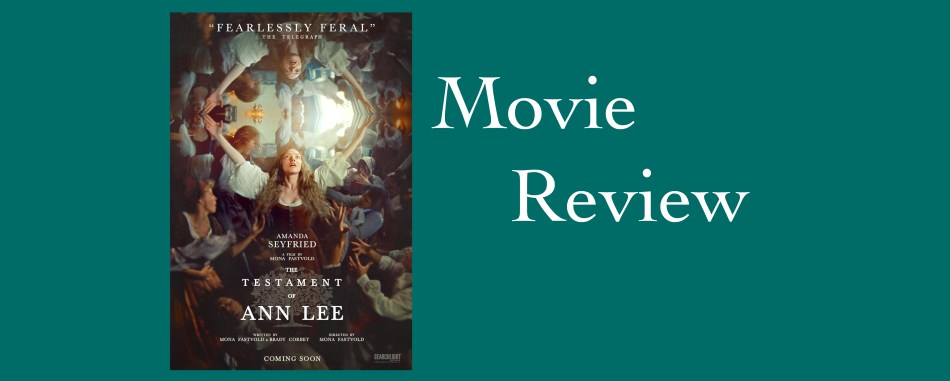
This film is a speculative take on the life of Ann Lee, the leader of an offshoot of the Quaker religion who were called Shaker Quakers, or just Shakers. She came to America in 1774 so she and her followers could have religious freedom. They believed in a dual gender deity who had given visions to Ann Lee who her followers called Mother. Celibacy, hard work, pacifism, and racial and gender equality were the fundamentals they lived their lives on. Though at the height of their popularity they had 6000 members, the religion has fallen out of favor due to the celibacy rule. Hard to keep numbers up if you aren’t allowed to breed.
Ann Lee was illiterate so there are no written records from her about what her life was like, so this film fills in the holes. Ann’s early life was filled with tragedy as all four of her babies died. She blamed their deaths on sexual desire which is what lead her to a life of celibacy. It caused her husband to abandon her as well as a couple of early followers.
The film utilizes a lot of montages showing the shaking, moaning aspects of the worshipping this group was known for intermixed with their work ethic. Shakers were known for the construction skills with buildings and furniture as well as their loud worshiping so juxtaposing these two things was a great way to show what life was like for them.
As in England, the Shakers also faced persecution for their beliefs in America from people who believed that Ann Lee was a witch. Ann Lee died in 1784, less than a hundred years after the Salem Witch Trials. Her being accused as being a witch is in line with the time period. Gender equality was one of the tentpoles of their religion and some people could not handle a woman leading a church of any kind, let alone one that didn’t allow men to breed.
As a whole, I found this film to be a bit slow even if the musical aspect of this was enjoyable. The montages of their shaking and working set against singing and music grew long and repetitive. Long sequences of camerawork showing trees in a forest that really didn’t need to be there while flashes of Ann Lee’s visions were met with quick edits that didn’t really allow the viewer to see what she was seeing. It’s an odd decision to show things that don’t really have much to do with the plot but quickly skip over something that seemed important. That said, director Mona Fastvold gives us a feminine musical told with love and honesty even if she had to fill in the missing parts with speculative fiction.
Amanda Seyfried is wonderful as Ann Lee. Lewis Pullman is a standout as her brother, though I would have liked to see a bit more of his travels in America where he sought out new followers. The most evidence we see of him doing this is Ann Lee helping heal the blisters on his feet from walking everywhere in uncomfortable 18th century shoes. Apparently he couldn’t afford a horse.
This film has a lot to say about religious freedom as even in America, Ann Lee and her followers were attacked by people who could not let them have their own beliefs. An issue that still presides over us today in modern society. For all the talk about freedoms that go on in the United States, we still have a lot to learn about letting each other have our own beliefs in life without hating each other. That is the film’s strength. It’s too bad Searchlight Pictures bungled the release of this film by only having it in a limited number of cities until this week. It could have been in the Oscar discussion had it gotten a wide release in December.
3.5 out of 5 stars.
Discover more from Becky Tyler Art and Photography
Subscribe to get the latest posts sent to your email.


 Becky Tyler Art and Photography
This film is a speculative take on the life of Ann Lee, the leader of an offshoot of the Quaker religion who were called Shaker Quakers, or just Shakers. She came to America in 1774 so she and her followers could have religious freedom. They believed in a dual gender deity who had given visions to Ann Lee who her followers called Mother. Celibacy, hard work, pacifism, and racial and gender equality were the fundamentals they lived their lives on. Though at the height of their popularity they had 6000 members, the religion has fallen out of favor due to the celibacy rule. Hard to keep numbers up if you aren’t allowed to breed.
Ann Lee was illiterate so there are no written records from her about what her life was like, so this film fills in the holes. Ann’s early life was filled with tragedy as all four of her babies died. She blamed their deaths on sexual desire which is what lead her to a life of celibacy. It caused her husband to abandon her as well as a couple of early followers.
The film utilizes a lot of montages showing the shaking, moaning aspects of the worshipping this group was known for intermixed with their work ethic. Shakers were known for the construction skills with buildings and furniture as well as their loud worshiping so juxtaposing these two things was a great way to show what life was like for them.
As in England, the Shakers also faced persecution for their beliefs in America from people who believed that Ann Lee was a witch. Ann Lee died in 1784, less than a hundred years after the Salem Witch Trials. Her being accused as being a witch is in line with the time period. Gender equality was one of the tentpoles of their religion and some people could not handle a woman leading a church of any kind, let alone one that didn’t allow men to breed.
As a whole, I found this film to be a bit slow even if the musical aspect of this was enjoyable. The montages of their shaking and working set against singing and music grew long and repetitive. Long sequences of camerawork showing trees in a forest that really didn’t need to be there while flashes of Ann Lee’s visions were met with quick edits that didn’t really allow the viewer to see what she was seeing. It’s an odd decision to show things that don’t really have much to do with the plot but quickly skip over something that seemed important. That said, director Mona Fastvold gives us a feminine musical told with love and honesty even if she had to fill in the missing parts with speculative fiction.
Amanda Seyfried is wonderful as Ann Lee. Lewis Pullman is a standout as her brother, though I would have liked to see a bit more of his travels in America where he sought out new followers. The most evidence we see of him doing this is Ann Lee helping heal the blisters on his feet from walking everywhere in uncomfortable 18th century shoes. Apparently he couldn’t afford a horse.
This film has a lot to say about religious freedom as even in America, Ann Lee and her followers were attacked by people who could not let them have their own beliefs. An issue that still presides over us today in modern society. For all the talk about freedoms that go on in the United States, we still have a lot to learn about letting each other have our own beliefs in life without hating each other. That is the film’s strength. It’s too bad Searchlight Pictures bungled the release of this film by only having it in a limited number of cities until this week. It could have been in the Oscar discussion had it gotten a wide release in December.
3.5 out of 5 stars.
Discover more from Becky Tyler Art and Photography
Subscribe to get the latest posts sent to your email.
Share this: